








- How to Know When It’s Time to Re-Architect a Data Management Platform
- Are You Ignoring the Data?
- Do You Have Products Built on Different Platforms?
- Is Your Product Keeping Up With Modern User Interface Design?
- Do You Have ‘Duct Tape’ Syndrome?
- Is Your Data Platform Mobile-Enabled?
- What Are Your Customers Saying?
- Where Does the Market Opportunity Exist?
- Is Your Technology Stack Outdated?
How to Know When It’s Time to Re-Architect a Data Management Platform
Making the strategic decision to re-architect your data management platform isn’t a task to take lightly. Re-architecting takes significant time, money and resources. The best architectural decisions are all about speed and delivering value through extensibility, insights and enablement. Upgrades to an onsite or mobile architecture to deliver more value should get top billing. Some platform transformations can take years to complete, but the finished project should lead to increased customer satisfaction, increased revenue, overall company growth and more. In this eWEEK slide show, using industry information from Steve Elliott, CEO of AgileCraft, we offer eight ways to know when it is time to re-architect your platform.
Are You Ignoring the Data?
If your data usability appears to be declining or your architecture lacks certain features or capabilities, it could be time to re-architect. Does the effort users make to get results from the architecture outweigh the perceived value? You need to ensure that your product provides an effective solution to customer business needs or it won’t be adopted or retained, which leads to declining revenue.
Do You Have Products Built on Different Platforms?
Platform consolidation can drive efficiency and cost savings. Companies with multiple products that standardize on a single platform can reduce their maintenance costs. Increased allocation of resources across multiple products that drive overhead also enables your brand to have a consistent look and feel.
Is Your Product Keeping Up With Modern User Interface Design?
Is your application interface design stuck five years in the past? Companies need to keep up with trends or their product will be considered outdated. And once the market notices, it’s hard to catch up. If users don’t see your product to be current or ahead of the trends, they may move on.
Do You Have ‘Duct Tape’ Syndrome?
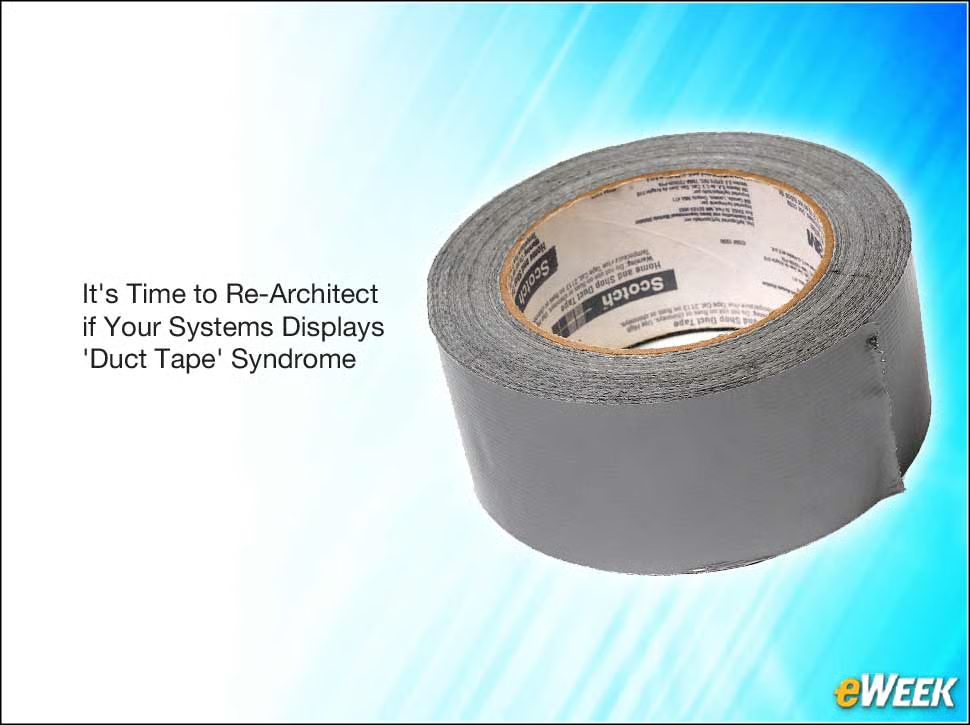
Too many times companies add new features to data systems piecemeal—they add one feature and then customers ask for another that may not connect with the system’s core value proposition. Architecting this way leads to “duct-tape” syndrome, wherein features are grafted on without consideration of their effect on system performance or efficiency. At this point, the company’s product-development strategy is reactive, not proactive. If so, it’s time to re-architect the system.
Is Your Data Platform Mobile-Enabled?

You do not need a full-blown mobile application to support an enterprise platform, but key features and functionalities should be mobile-enabled. Whether it’s quickly accessing a high-level status report or consuming all their information on an iPad, users should be able to consume the data or access your product in the way they need.
What Are Your Customers Saying?

We have all heard the saying, “The customer is always right.” If your surveys, sales teams, product management teams and others tell you it’s time for a change, it probably is. Your data management system must ensure users can promptly complete tasks, find answers and produce actionable data. You may think your product is easy to use when it really isn’t. Let your customers’ voices count.
Where Does the Market Opportunity Exist?

It’s important to monitor your company growth, but also consider where the market is heading in the next year to five years. Are you able to create value where others are not? Understand which trends will have an impact on your business, then align your platform to support it.
Is Your Technology Stack Outdated?
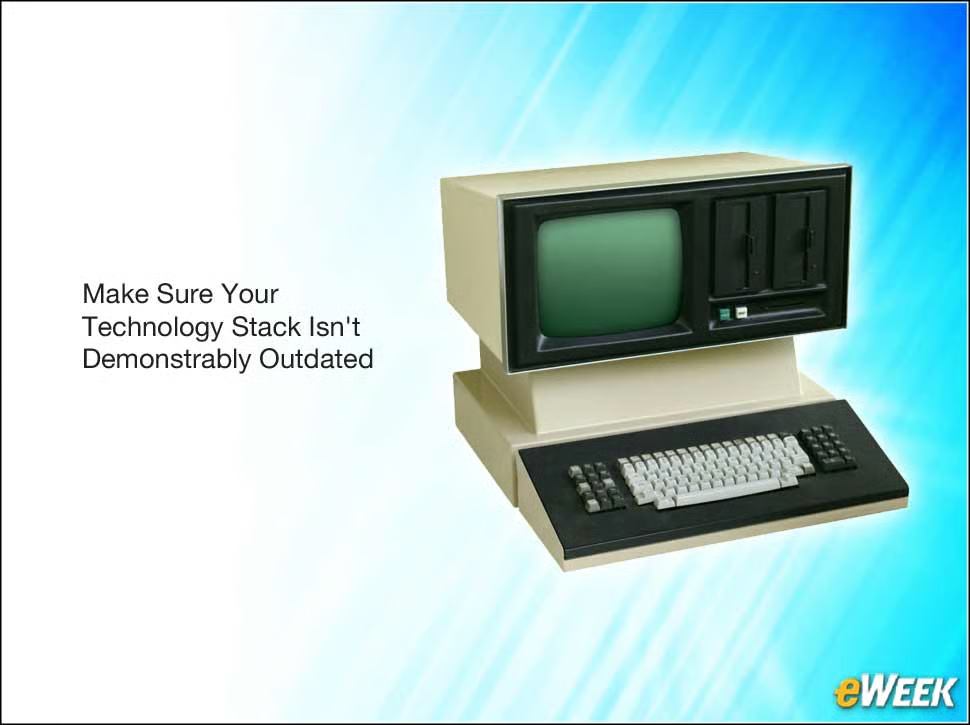
This consideration may rank as a lower priority than others if done for the sake of experimenting with new technology. However, an outdated technology stack can impact your ability to compete and recruit top talent. The longer-term viability remaining on outdated technology will become obvious if it’s ignored for too long.