








- 10 Facts About Windows XP’s Enduring PC Market Presence
- Windows XP Is Still Ubiquitous
- Even With Support, Windows XP Is Scary
- Internet Explorer Is Still Wildly Popular
- Windows 7 Is More Popular–by a Small Bit
- Uh, Windows 95 Is Still Around?
- Customers Don’t Want Windows 8
- OS X, Linux Aren’t Threats
- Your ATM: Coming to You Courtesy of Windows XP
- It’s a Web-Linked World, Regardless of OS
- Will Hackers Leave Windows XP Alone?
10 Facts About Windows XP’s Enduring PC Market Presence

by Don Reisinger
Windows XP Is Still Ubiquitous
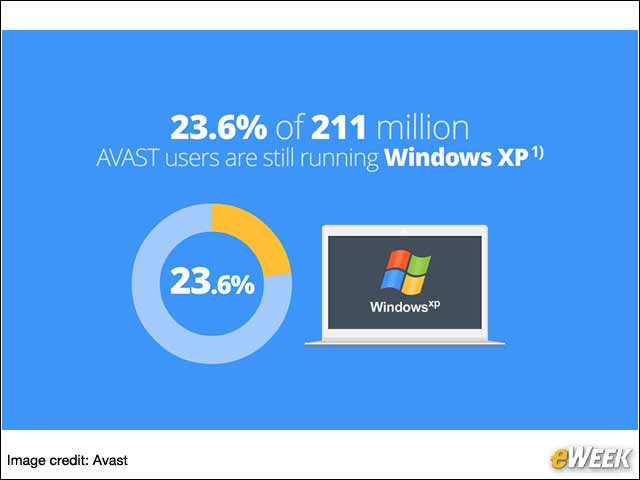
Windows XP isn’t going anywhere anytime soon. According to Avast, 23.6 percent of its 211 million users around the world are still running Windows XP. That figure is in line with the 29.5 percent of people globally who are still running Windows XP, according to data from Netmarketshare. It appears Microsoft hasn’t been able to convince these holdouts that it is time to move away from XP. Image credit: Avast.
Even With Support, Windows XP Is Scary
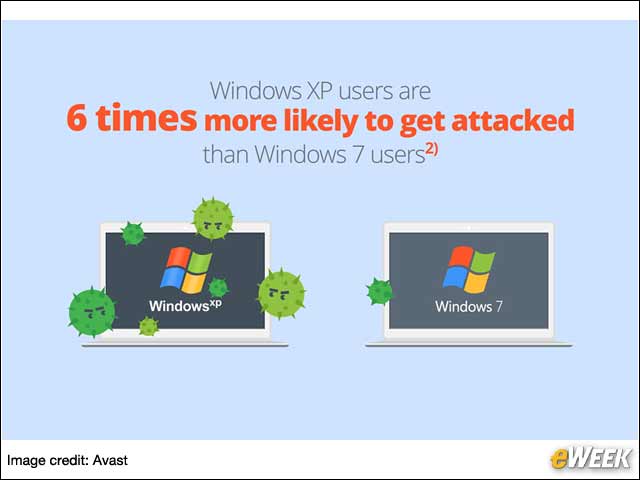
If Windows XP is a comparably unsafe operating system today with support, what will the software look like when Microsoft isn’t patching holes? According to Avast’s data, Windows XP users are six times more likely to be hit with malware than Windows 7 users. Image credit: Avast.
Internet Explorer Is Still Wildly Popular
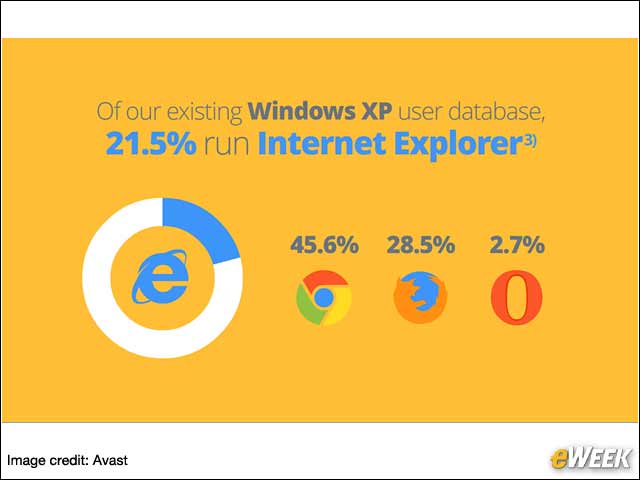
As Avast noted, Windows XP can only support Internet Explorer up to version 8, which means users aren’t getting the best protection when surfing the Web on that software. To make matters worse, Avast found that 21.5 percent of Windows XP users are still running Internet Explorer. That sounds like a security issue waiting to happen. Image credit: Avast.
Windows 7 Is More Popular–by a Small Bit
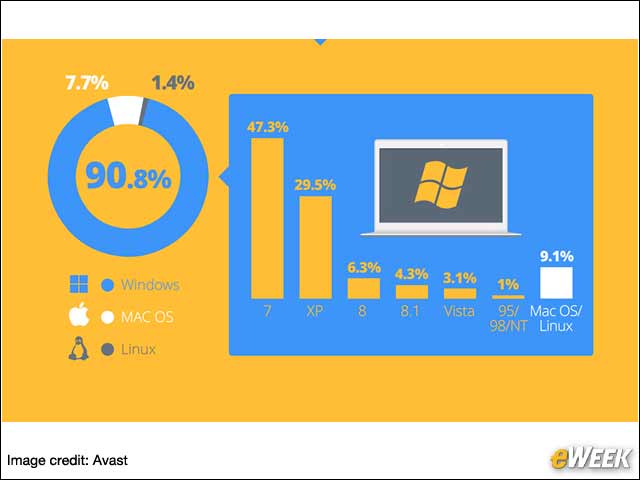
One of the good things about the Windows ecosystem is that the safer Windows 7 is the most popular Microsoft distribution in the world, with 47.3 percent market share. But there’s just one issue: At 29.5 percent share, Windows XP is still the second-most-popular platform, beating out all versions of OS X and Windows 8 combined. How can Microsoft turn its back on such a popular operating system? Image credit: Avast.
Uh, Windows 95 Is Still Around?
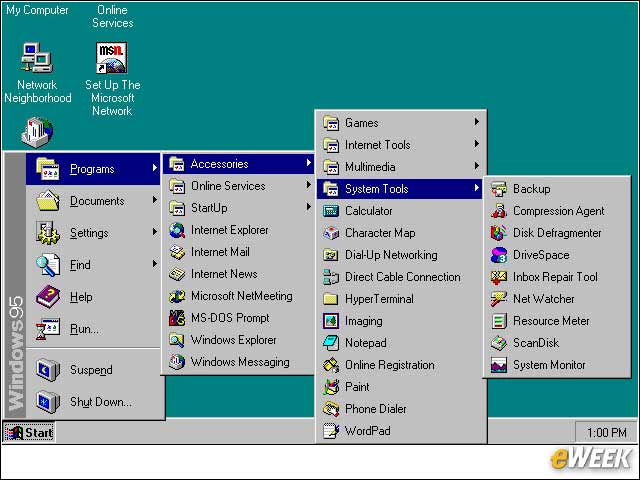
No discussion on Windows XP could go by without acknowledging this rather interesting finding: Windows 95, Windows 98 and Windows NT account for 1 percent market share worldwide, according to Netmarketshare. If those operating systems have lasted this long, how long might it take XP to finally die?
Customers Don’t Want Windows 8

Microsoft has been pushing Windows XP users to go to Windows 8 or Windows 8.1. There’s just one issue: Nobody wants to get in on that opportunity. According to the Avast and Netmarketshare data, Windows 8 and Windows 8.1 combine for only 10.6 percent market share worldwide. Microsoft is obviously hoping users switch from XP to Windows 8, but given the statistics, that appears unlikely.
OS X, Linux Aren’t Threats
Much has been made about the possible impact users who are migrating away from XP could have on OS X and Linux. Some argue that Apple’s operating system is popular and will attract users. Although Apple Macintosh sales are up and Linux is still the favorite among the hard-core geeks, data from Avast and Netmarketshare seems to indicate that those operating systems have little impact on Microsoft and Windows. In fact, despite all of their seeming success, they combine for just 9.1 percent of PC operating system market share, putting them behind the combined share of Windows 8 and 8.1. It looks like Microsoft doesn’t need to worry about losing too many XP users to Mac or Linux.
Your ATM: Coming to You Courtesy of Windows XP
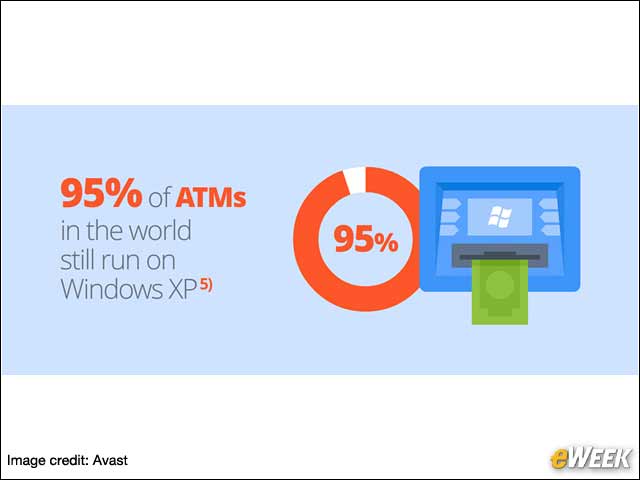
Here’s an extremely scary prospect: 95 percent of the world’s ATMs are currently running Windows XP, potentially putting credit and debit card data at extreme risk. As Avast points out in its blog post, the security issues that could impact ATMs could cause a breach that would dwarf Target’s recent credit card theft. Image credit: Avast.
It’s a Web-Linked World, Regardless of OS
Avast makes a very important point in its blog post discussing Windows XP. The security firm argues that although other operating systems might be more secure, the fact that Windows XP machines could be so easily targeted could mean that the security of all operating systems could decline. Windows XP machines could be turned into spam bots, they could serve more malware, or they could find ways to impact newer Windows operating systems. All of those Windows XP machines out there are a real threat to all users and platforms.
Will Hackers Leave Windows XP Alone?
Debate rages over the way hackers will respond to Windows XP’s end of life. Some say that hackers won’t attack XP because it’s slim pickings and the focus now is on mobile. Avast, however, has committed to supporting its XP security products for three years under the belief that hackers will heavily target XP. Perhaps time will tell, but if Avast is concerned, perhaps so should everyone else.