







One of the current impediments to a smooth online experience on any device is when the user needs to switch from one native app to another in the same session. Typically, the session is truncated by the user being redirected back to the device home page or browser and having to re-log in to the next app he or she wants to use.
These redirections, besides taking precious extra time, become even more frustrating when external pressures, such as deadlines, are involved.
Research has shown that 70 to 80 percent of users who come to this point simply move away from the app when confronted with such a session-ender and close the device or go somewhere else, leaving the native app sites–and their businesses–as losers in the deal.
Facebook now has an app for that: App Links, an open-source developer tool that it wants to see go viral into all Websites as soon as possible. The app was soft-launched last April at the company’s F8 conference and was re-introduced to media folks Aug. 21.
More Than 3 Billion App Links Already Created
Since the company’s open source group launched App Links, it has seen more than 3 billion unique App Links created across hundreds of apps that include Spotify, Mailbox, Hulu, Vimeo and Airbnb.
“Apps are still in siloes. This breaks the siloes and lets the world know how to get to your app,” Facebook’s Vijay Shankar, product manager for App Links open source development application, told a group of journalists Aug. 21. “There will be very few instances in which sites don’t want people to see their content.”
App Links uses your email client box to help users connect apps. When a site has App Links installed on it, a user clicking on a native app on a site will be sent a notification to his/her mailbox; this notification will contain a second link to the site. The user clicks on that one to open a new gate to the site that will be remembered by the device. The next time, and for every instance thereafter, the user will have an open door to that app and won’t have to go back to the device to re-log into it again.
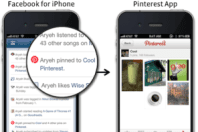
For example, say a Pinterest.com user with the Apps Link app on a device sees something he or she wants to buy, but the item is on Fancy.com. Both sites are App Links-enabled. The user clicks on Fancy.com and is immediately redirected to his/her mailbox (whether an on-device client or a Web-based client), clicks on the new link from Fancy (which is generated automatically when the user clicks on Fancy), and then open unencumbered access to Fancy forevermore. That’s all there is to it.
Easy for Site Developers to Deploy
“For site developers to set this up, all they need to do is go to Pinterest, look at URL, find the site’s public tags, then link their site to Pinterest,” Shankar said.
Eventually, Facebook believes, all sites will have this ability, and App Links will become part of the standard IT structure, like Java, HTML, TCP/IP and many other technologies from over the years.
“This is all about the basic concept of cross-platform for app-linking,” Shankar told eWEEK. “A scenario that’s interesting for businesses that have an ecosystem of apps within the business. Apps that you make available to all your employees, for example. You can use App Links to interconnect the business apps within each other, to talk to them.”
Typically, Facebook finds that on average businesses have four or five different apps (such as an expense-accounting app like Concur, a customer relationship management app or a travel planning site like Egencia) that employees share and use regularly, Shankar said.
“If you want to seamlessly go between each app, using App Links is going to be a lot more straightforward than hard-coding it,” Shankar said.
Exposes Content for Best User Experience
App Links is all about providing and exposing the content in the best possible user experience, based on the device and the platform, Shankar said. “This is done by leveraging the URL, which we are all familiar with. That’s what makes it simple, yet effective, cross-platform,” he said.
Starting Aug. 21, Facebook’s Bolts SDK now supports sending events so that developers can measure the traffic associated with their app’s App Links integration. This will help developers understand how traffic is flowing to and from any App Links integrated mobile app, Facebook’s Ashley Smith wrote in the App Links blog.