







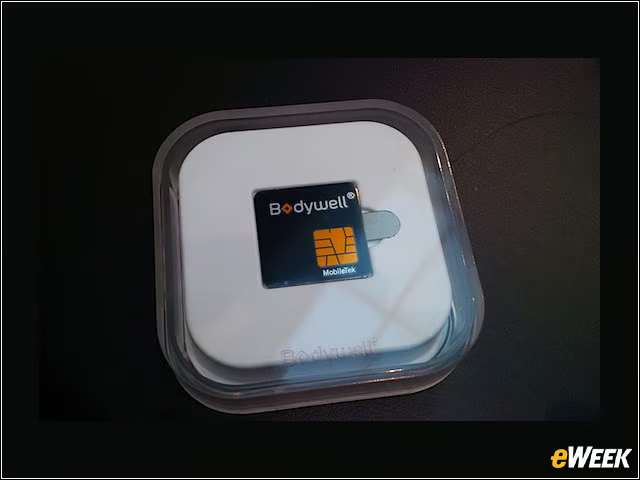
Bodywell Chip
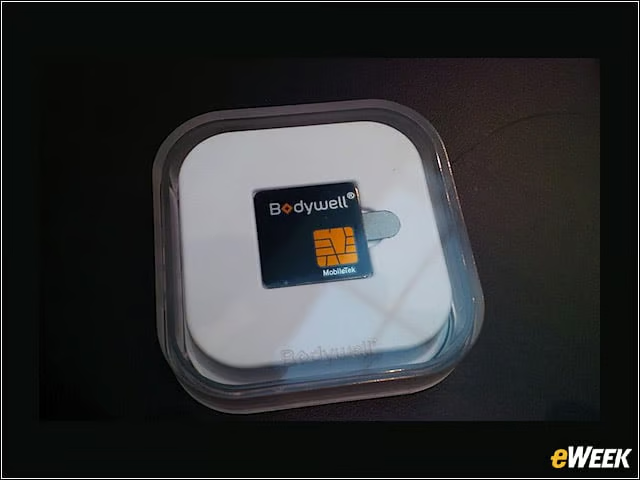
The Bodywell Chip is designed to dramatically reduce a cell phone’s specific absorption rate (SAR), which is the amount of cell phone radiation that’s absorbed by a user. The chip has a sticky back and can be stuck to the backside of a phone or inside its back cover.
Bodywell Effect
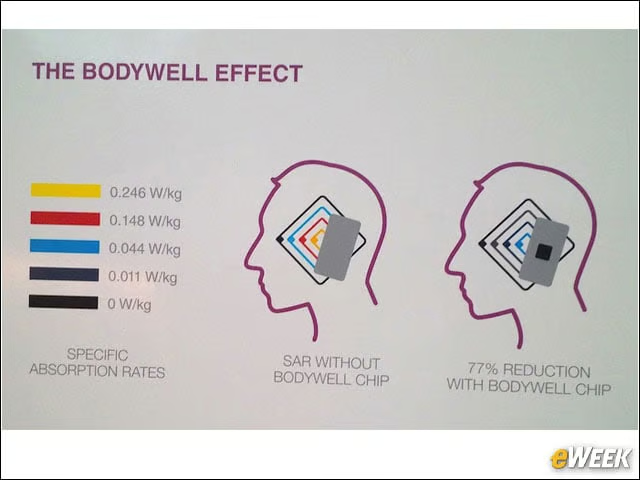
EZ Technologies officials said that testing shows the Bodywell Chip to reduce SAR by an average of 77 percent. While cell phone radiation hasn’t conclusively been proven to be dangerous, there’s concern about the long-term effects of exposure. In 2012, Israel’s parliament approved a bill requiring cell phones to carry a label: “Warning—the Health Ministry cautions that heavy use and carrying the device next to the body may increase the risk of cancer, especially among children.”
EZ Technologies

EZ Technologies CEO Haim Einhorn cited tobacco as an example of a product that was considered “cool and harmless.” Today, he said, “we have the technology to know what it does to our bodies.” In case cell phone radiation follows suit, Haim said, the Bodywell Chip is a preventive measure. He called it a “seat belt for cell phones,” adding that users are “better safe than sorry.”
Moshe Einat
Researcher Moshe Einat explained how wavelengths work and that when a user puts a phone to his head, “radiation covers the head.” He also noted that information naturally travels through the body via currents, and the fear is that electric currents from cell phones could disrupt natural body currents.
FCC

The Federal Communications Commission has different SAR levels that it considers safe for consumers and occupational exposure. For consumers, the limit is 1.6 watts per kilogram.
Nachaat Mazeh
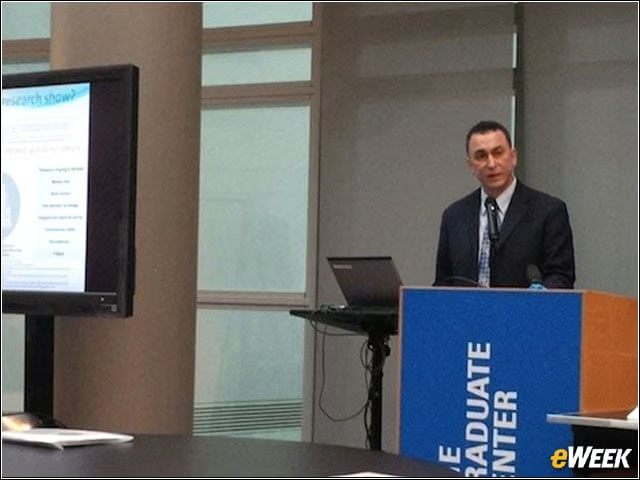
Research Associate Nachaat Mazeh said that testing found that the chip doesn’t impede reception, but does reduce exposure. Any reduction in exposure, he said, “is just a safety factor.”
Samsung Galaxy S III
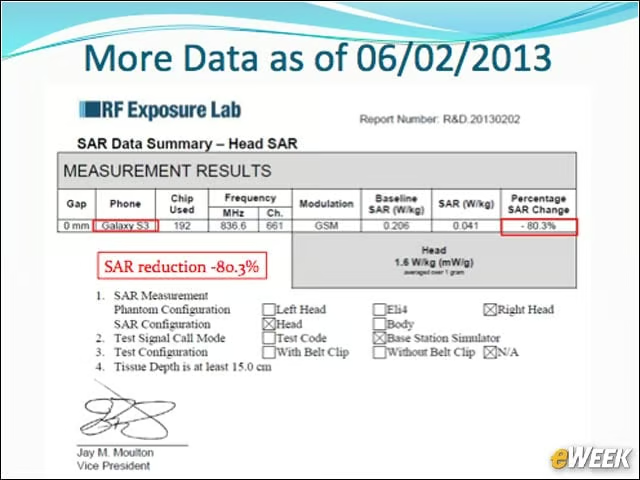
When the Bodywell Chip was tested with the Samsung Galaxy S III, said Mazeh, SAR was reduced 80.3 percent. The testing was done in an FCC-certified lab in San Diego.
SAR Test
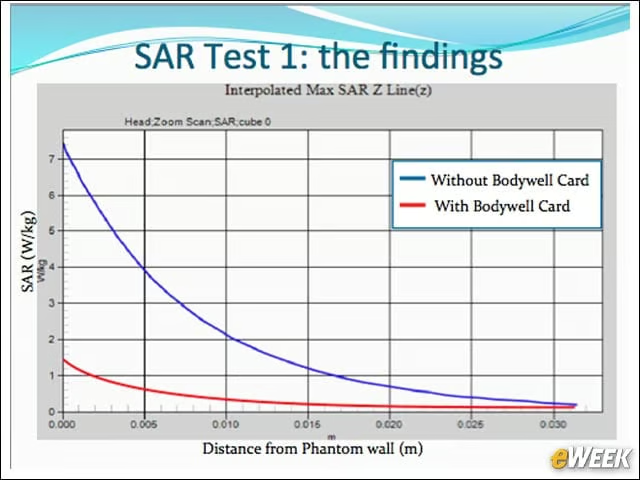
“We don’t have concrete evidence,” said neurologist Nancy Mueller, because studies can’t be conducted with humans; that would be illegal and immoral. Instead, she said, we need to err on the side of caution. “I think it’s not just your brain that’s affected, but your entire nervous system,” she said.
Bodywell Chip
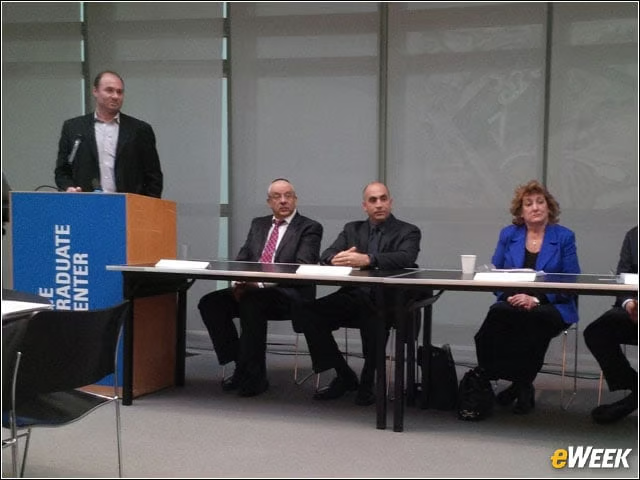
All the panelists have been using the chip on their phones. “This is not an ad,” said Mazeh, pulling off the cover on his phone to reveal a chip. “I’ve been using this for years.” As far as EZ Technologies can tell, the chips don’t expire. Chips being used for several years have been shown to block the same amount of radiation.
Two Sizes
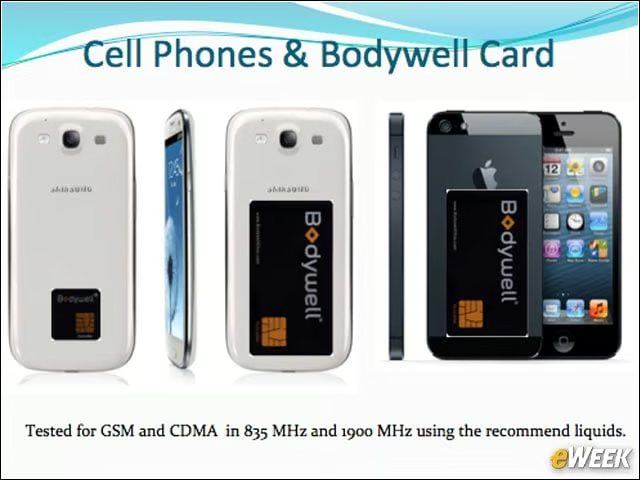
The Bodywell Chips have been created in two sizes. Without offering more details, Einhorn said there is a difference between the two, but only the smaller one is now sold commercially. Amazon is now selling it for $29.99, and soon a few retailers will, as well.