







- Xfinity, Verizon Win Top Spots in Ookla Broadband Performance Study
- U.S. Broadband Speeds Aren’t the World’s Fastest
- Speeds Are on the Rise
- Xfinity Reigns Supreme
- Verizon FiOS Is a Close Second
- Cox Rounds Out the Top Three
- Frontier and CenturyLink Are Slow
- Do We Get ‘Acceptable’ Speeds?
- Speeds Vary Significantly by Region
- These Cities Have the Fastest Speeds
- Spectrum Is a Surprise Winner
Xfinity, Verizon Win Top Spots in Ookla Broadband Performance Study
The quality of U.S. broadband network service has long been a source of contention. Internet Service Providers say that they’re offering the fastest speeds they can to accommodate as many customers as possible. But both consumers and corporate users have complained that the speeds they pay for aren’t necessarily what they’re getting. Now a new report from market researcher Ookla, which includes more than 111 million data points, examined just how fast American broadband really is and which ISPs deliver the best service. The study also examines broadband speeds in 100 cities around the U.S. Check out the Ookla Speedtest results to see how to see how Broadband networks are performing across the country.
U.S. Broadband Speeds Aren’t the World’s Fastest
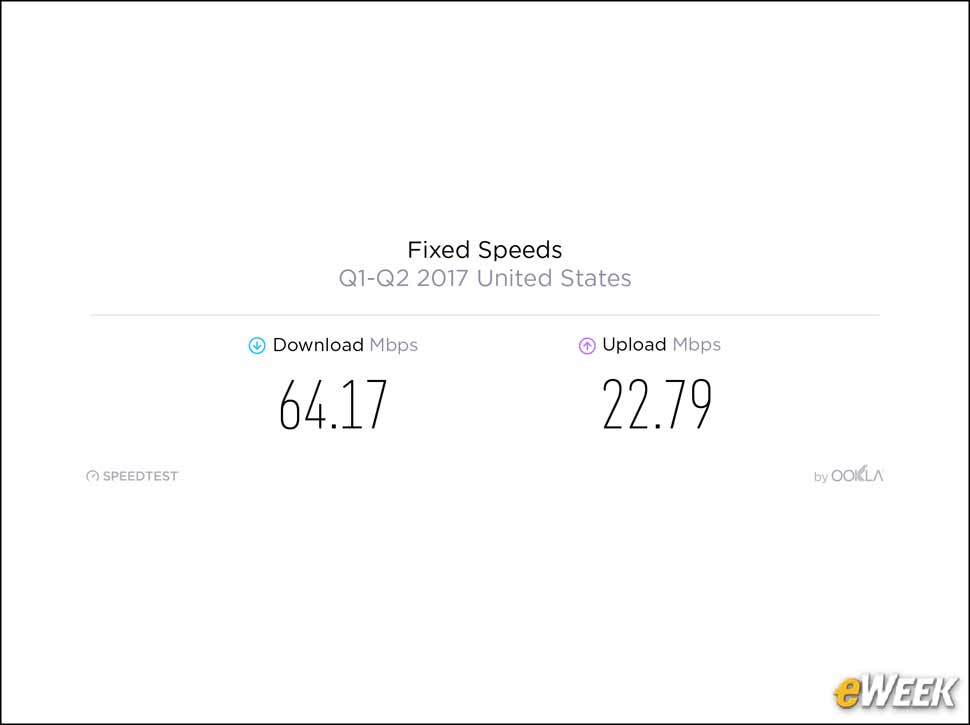
After analyzing more than 111 million data points between the first and second quarter of 2017, Ookla’s Speedtest discovered average American broadband download speeds hit 64.17Mbps, ranking the country 15th in the world. Upload speeds average 22.79Mbps, ranking the U.S. 24th in the world.
Speeds Are on the Rise

Although the U.S. is behind other countries, speeds are on the rise. In the second quarter of 2016, for instance, download speeds were just a touch under 50Mbps and upload speeds hovered at around 15Mbps. Speeds have risen sharply in just the past year.
Xfinity Reigns Supreme

Comcast Cable’s Xfinity Internet service is the fastest option on the market, offering average download speeds nationally of 69.58Mbps, according to the Ookla Speedtest data. It scored high marks, thanks to new “advanced modems” it’s been installing in customer homes that allow for more throughput, according to Ookla.
Verizon FiOS Is a Close Second
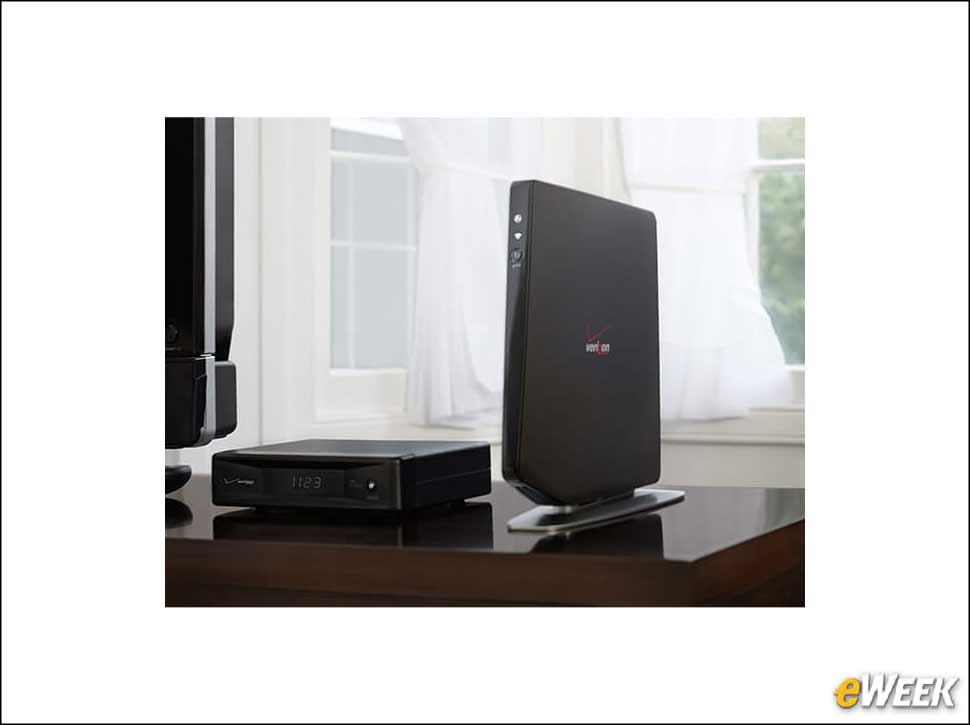
Verizon’s FiOS service came in a close second behind Xfinity with an average 66.74Mbps download speed across the U.S. According to Ookla, Verizon’s speeds increased after the company simplified its packages and pushed customers to higher-speed offers.
Cox Rounds Out the Top Three

Cox Communications was able to nab the third spot in the Ookla Speedtest with an average national download speed of 64.85Mbps. At that speed, Cox was just behind FiOS, but far ahead of the fourth-place finisher Spectrum, which could only muster 51.45Mbps speeds.
Frontier and CenturyLink Are Slow
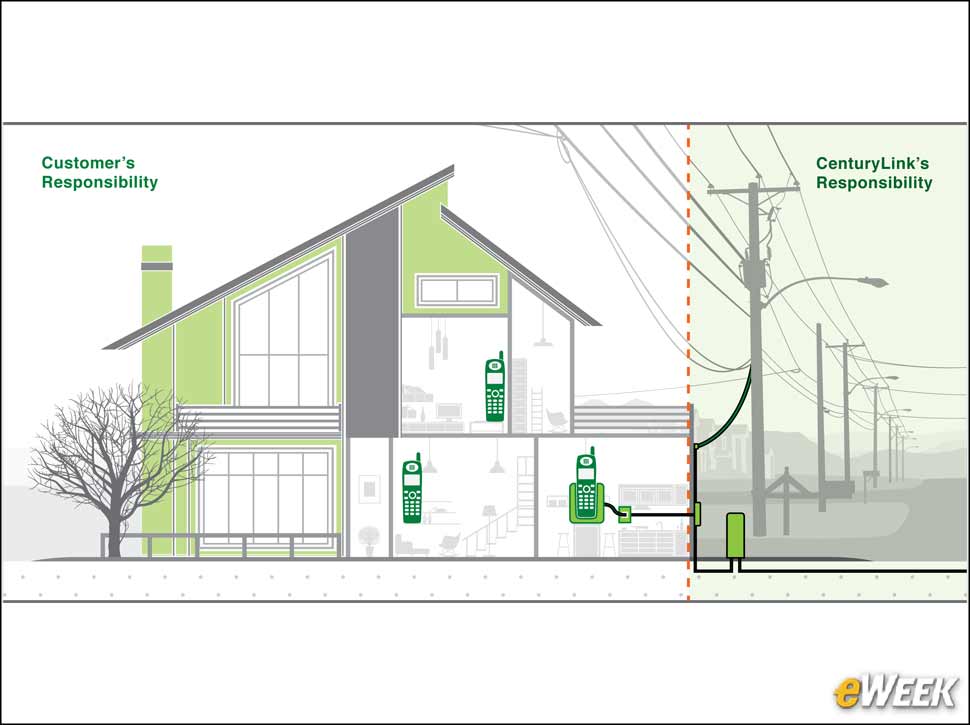
Frontier and CenturyLink proved to be the laggards in the Ookla Speedtest study. Frontier landed in the second-to-last spot in the study with average national speeds of 31.70Mbps. But it was CenturyLink that disappointed more than any other, with average national speeds of just 14.91Mbps, according to Ookla. The company didn’t say why CenturyLink was so far behind.
Do We Get ‘Acceptable’ Speeds?
In its test, Ookla used an “acceptability” threshold to identify the lowest speed at to enable users across the U.S. to “adequately” access the Internet. It assigned 10Mbps download speeds as that threshold. Ookla then examined how often top ISPs hit that acceptable speed. The study found that Xfinity was tops and exceeded the threshold in 91.6 percent of cases. Spectrum, a service brand owned by Charter Communications, was next with a 90.2 percent success rate, followed by Cox at 89.4 percent. Frontier and CenturyLink were again at the bottom with success rates of 63.6 percent and 51.8 percent, respectively.
Speeds Vary Significantly by Region
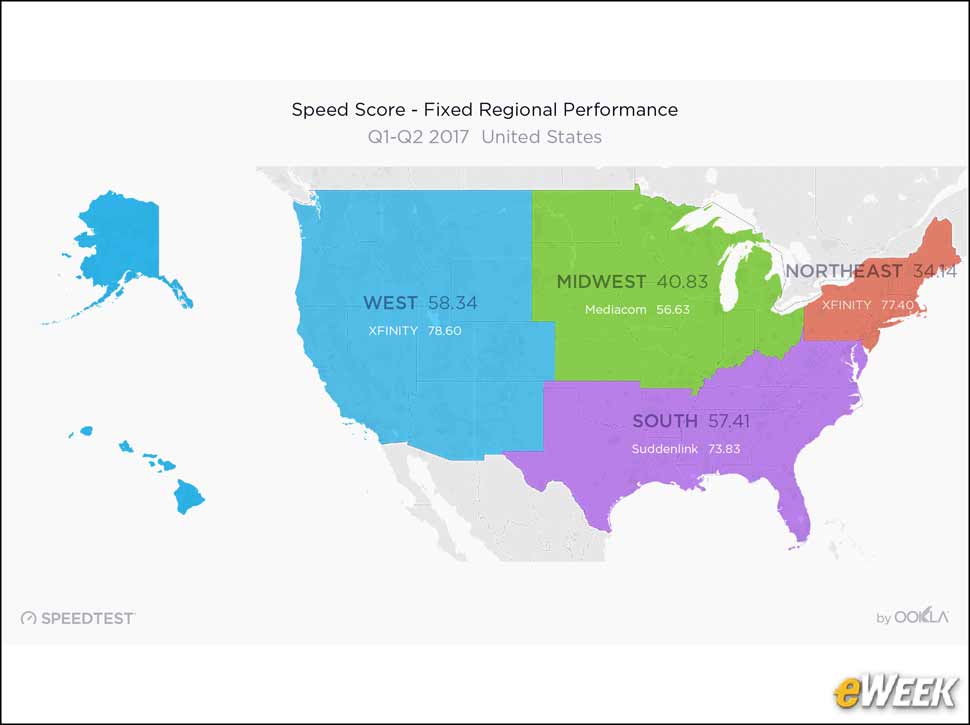
Next, Ookla examined speeds by region, and found that the average person living in the Northeast gets download speeds of 34.14Mbps, well below the Western region’s 58.34Mbps rate. Southerners get average download speeds of 57.41Mbps, and those in the Midwest benefit from 40.83Mbps. Xfinity was the fastest provider in the Northeast and West. Suddenlink was tops in the South and Medicaom took the prize in the Midwest.
These Cities Have the Fastest Speeds

Ookla went even deeper in its study to find out which major cities across the U.S. have the fastest Internet speeds. Kansas City, O took the top spot with average download speeds of 131.39Mbps and upload speeds of 117.44Mbps, thanks to Google Fiber. Austin, TX was just behind with average downloads of 115.54Mbps and uploads of 62.36Mbps. San Francisco, CA rounded out the top three with average download speeds of 104.53Mbps and upload speeds of 41.80Mbps.
Spectrum Is a Surprise Winner
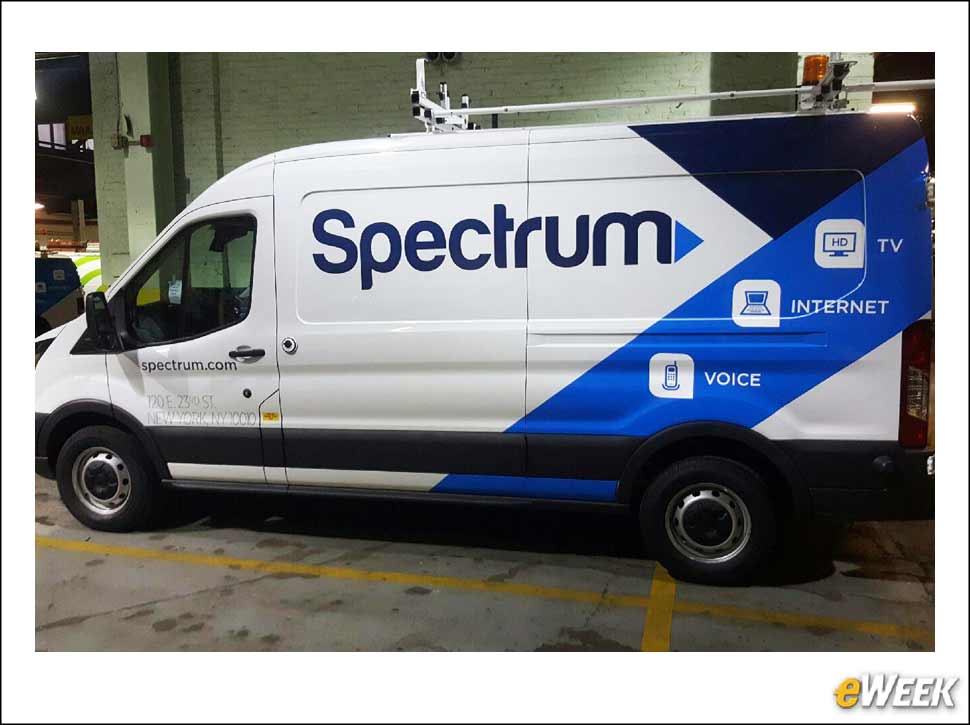
Spectrum might have middling performance in national polls, but the company won an important competition in the Ookla study: city dominance. The company had the fastest speeds in 24 of the top 100 cities across the U.S., easily topping the second-place Cox, which had 19 first-place finishes. Xfinity was in third place with fastest speeds in 18 markets.