







- 1950s: Fighting Polio with Punch Cards
- 1953: A Heart on Wheels
- 1960s: Taking on Leukemia with Blood Cell Separator
- 1976: IBM, World Health Organization Map Smallpox Outbreaks
- 1992: Surgical Robot Revolutionizes Hip Replacement
- 1990s: IBM, University of Washington Build Medical Imaging System
- 2008: IBM, University of Edinburgh Fight Spread of HIV
- 2009: An Ultrafine Microscope
- 2010: IBM, Roche Collaborate on DNA Sequencing
- 2011: Using Semiconductor Nanotechnology to Fight Bacteria
- 2011: IBM Prepares to Send Watson Supercomputer into Health Care
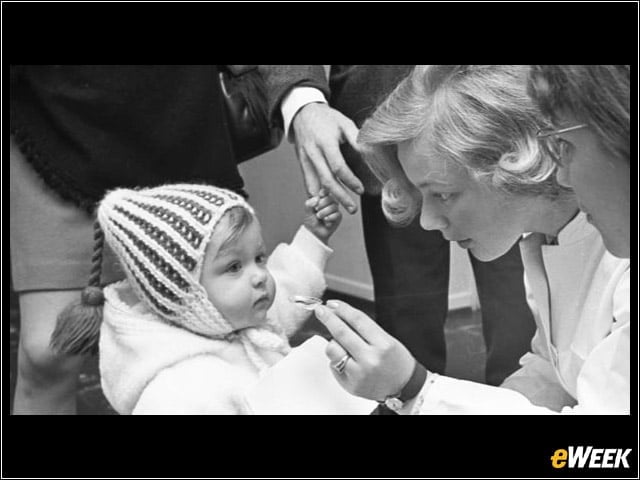
1950s: Fighting Polio with Punch Cards
In the 1920s, IBM developed a punch card, called the IBM Computer Card, as the result of a challenge by its president at the time, Thomas Watson Sr., to two inventors, Clair D. Lake and J. Royden Peirce. In the 1950s, the punch card would then be used to further Dr. Jonas Salk’s research on a polio vaccine. As researchers tested Salk’s new polio vaccine on 1.8 million children in the United States, they captured 1.44 million data points on the IBM punch cards.
1953: A Heart on Wheels
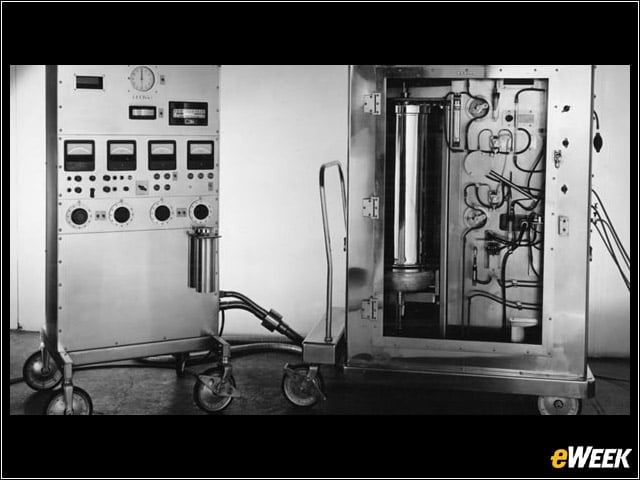
After Dr. John Gibbon invented a heart-lung machine in 1946, he collaborated with IBM President Thomas Watson and five IBM engineers to build an updated machine that prevented rupturing of red blood cells as well as air bubbles from forming during circulation. Patients could be kept alive mechanically while surgeons operated on their hearts.
1960s: Taking on Leukemia with Blood Cell Separator
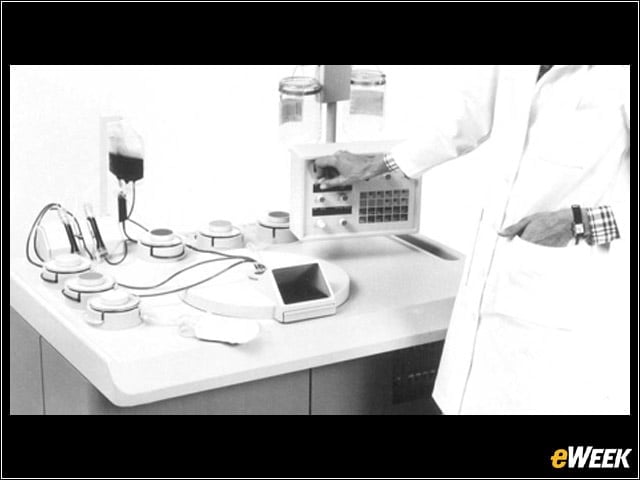
After one of his children developed leukemia, IBM development engineer George Judson worked with the National Cancer Institute to develop a device that could harvest white blood cells and platelets to help leukemia patients. The result was the IBM 2997 continuous blood cell separator, which separated red and white blood cells as well as plasma from healthy individuals so they can be transfused into leukemia patients.
1976: IBM, World Health Organization Map Smallpox Outbreaks
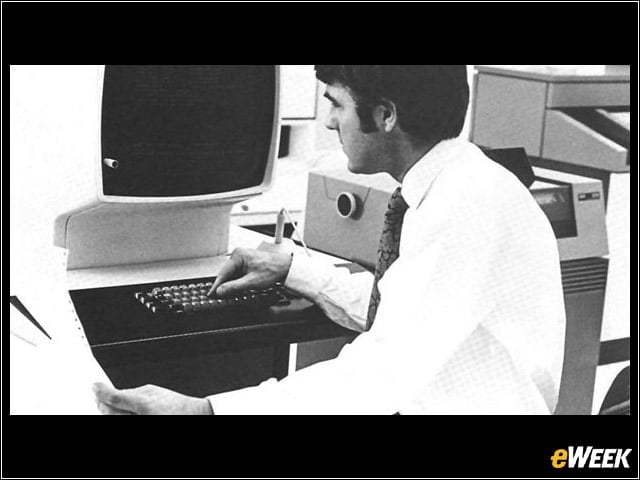
Big Blue contributed to the eradication of smallpox by working with the World Health Organization to map trends in smallpox outbreaks. IBM’s System/370 mainframe computer was used by the WHO in its efforts to map the final outbreaks of the disease. The global eradication of smallpox was certified by scientists in December 1979.
1992: Surgical Robot Revolutionizes Hip Replacement
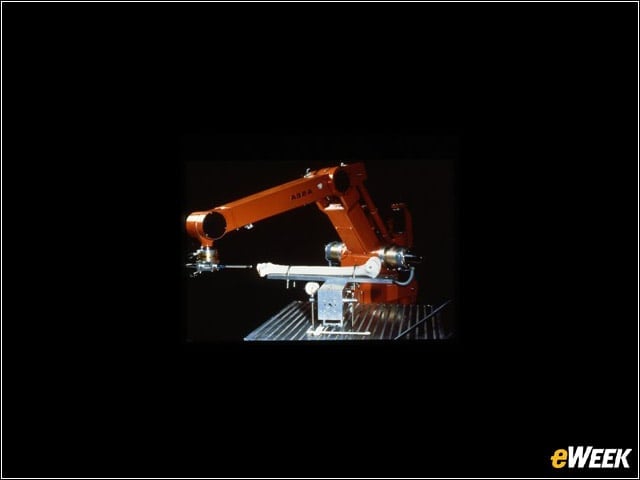
IBM and researchers at the University of California teamed up in the early 1990s to design and test a surgical robot, which would become the Robodoc System and lead to computer-guided robotic surgery. The Robodoc Hip Replacement System is a robotic drill that helps to improve the accuracy of hip-replacement surgery.
1990s: IBM, University of Washington Build Medical Imaging System
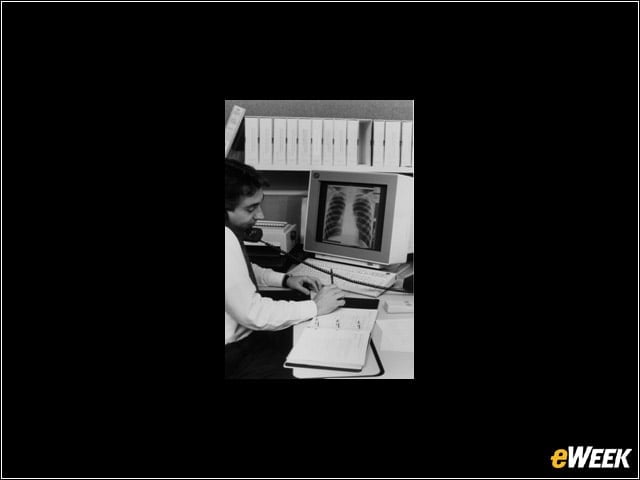
In the early 1990s, IBM worked with the University of Washington to design a prototype of what Big Blue calls the first medical imaging system, a low-cost workstation that allowed medical images to be displayed in 3D. Researchers and clinicians would be able to apply algorithms for pattern recognition to read and analyze medical images in new ways.
2008: IBM, University of Edinburgh Fight Spread of HIV
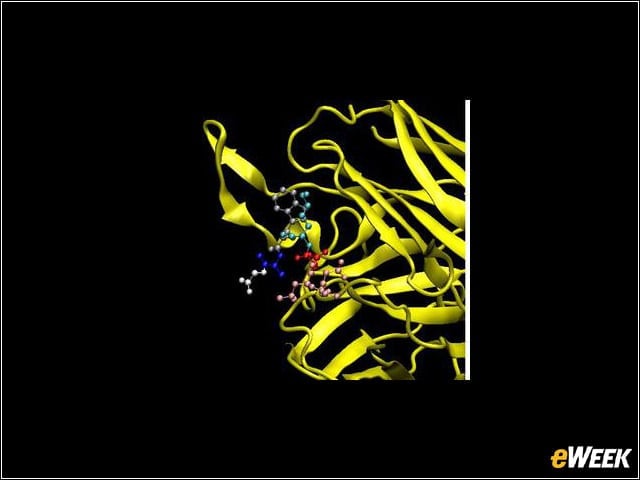
IBM and the University of Edinburgh began a five-year research project in 2008 to take supercomputing simulations and apply them to preventing HIV infections. IBM’s Blue Gene supercomputer, which was introduced in 1999, is a petaflop computer designed to solve the protein folding challenge.
2009: An Ultrafine Microscope
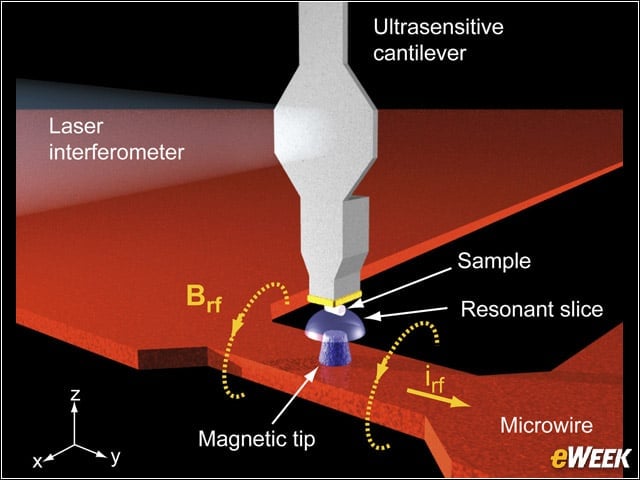
In 2009, IBM’s Research division along with Stanford University, demonstrated a microscope that could make the resolutions of MRIs 100 times finer. With ultrafine resolution, scientists hope to advance personalized health care by better understanding the makeup of proteins.
2010: IBM, Roche Collaborate on DNA Sequencing
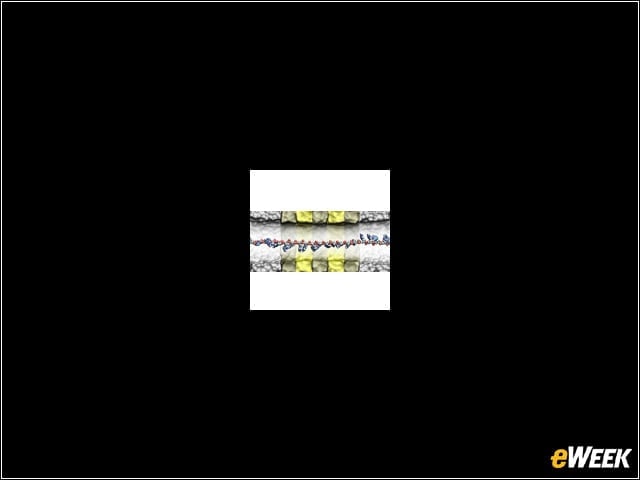
DNA sequencing has been described as the “holy grail” of science, and in 2010, IBM along with pharmaceutical and diagnostics firm Roche announced they had developed a DNA transistor to control the speed that DNA moves through a nanopore (a tiny hole in a membrane) to make it readable.
2011: Using Semiconductor Nanotechnology to Fight Bacteria

In April 2011, IBM and Singapore’s Institute of Bioengineering and Nanotechnology announced that the chemicals that build chips and servers could also build polymers to find and kill antibiotic-resistant bacteria and infectious diseases, such as staph infections.
2011: IBM Prepares to Send Watson Supercomputer into Health Care
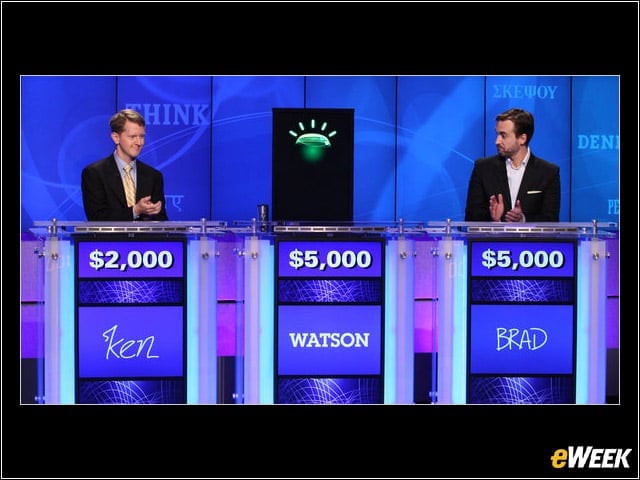
Fresh off a stint on the “Jeopardy!” game show, IBM’s supercomputer Watson would be combined with speech-recognition applications from Nuance to help doctors make diagnoses and analyze data in EHRs and medical journals.