







20 Years of Stellar Shots from Hubble Space Telescope
by Nathan Eddy
Butterfly Nebula
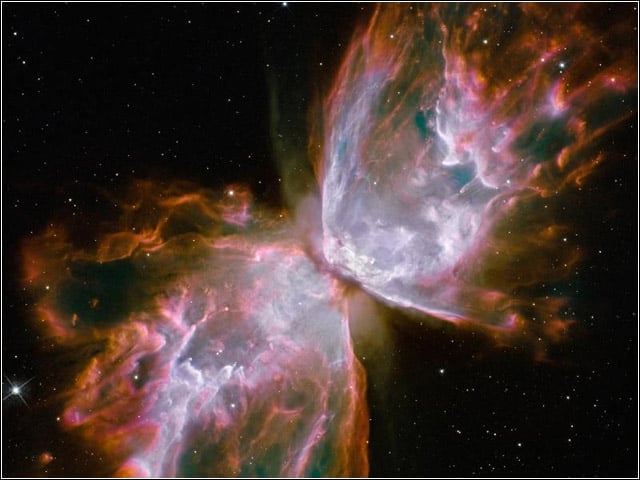
Taken after the telescope’s refurbishment in 2009, this photo depicts rolling cauldrons of gas heated to more than 36,000 degrees Fahrenheit, traveling across space at more than 600,000 miles an hour. A dying star that was once about five times the mass of the Sun is at the center of this fury. This planetary nebula, NGC 6302, lies within our Milky Way galaxy, roughly 3,800 light-years away in the constellation Scorpius.
Stars in Scorpius
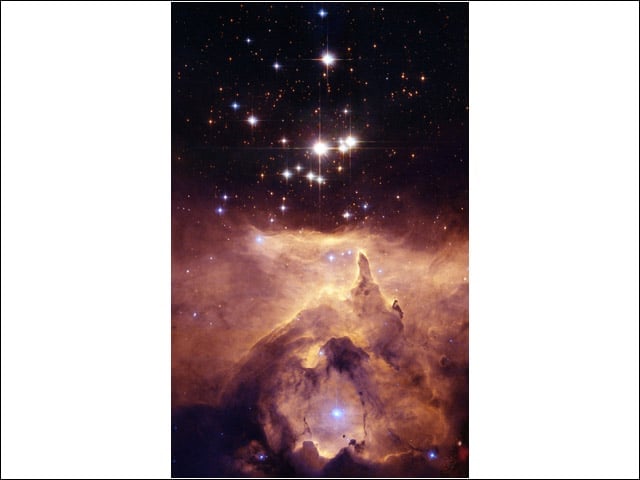
Like a scene out of Star Wars, this small open star cluster Pismis 24 lies in the core of a large emission nebula in Scorpius, about 8,000 light-years away from Earth. The brightest object in the picture is designated Pismis 24-1 and was once thought to be the most massive known star in the galaxy, however, high-resolution Hubble Space Telescope images of the star showed it is really two stars orbiting one another.
Core of the Milky Way
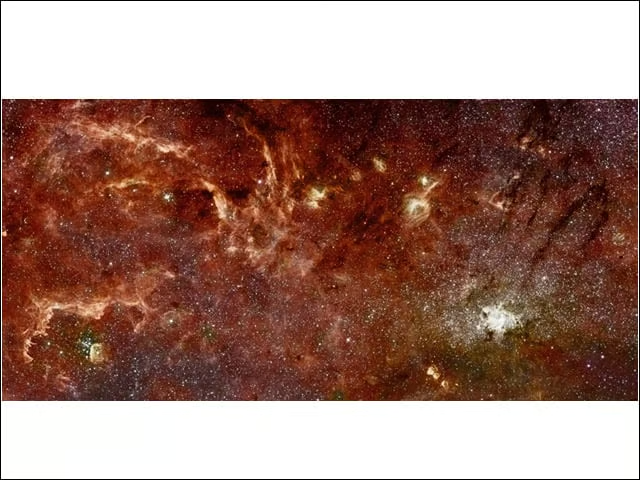
At 300 light-years in width, this is the sharpest infrared picture yet made of the core of our Milky Way galaxy. Infrared technology allows the Hubble to see past the dust that clouds the galaxy’s core. The mosaic required 144 Hubble orbits to make 2,304 exposures.
Saturn
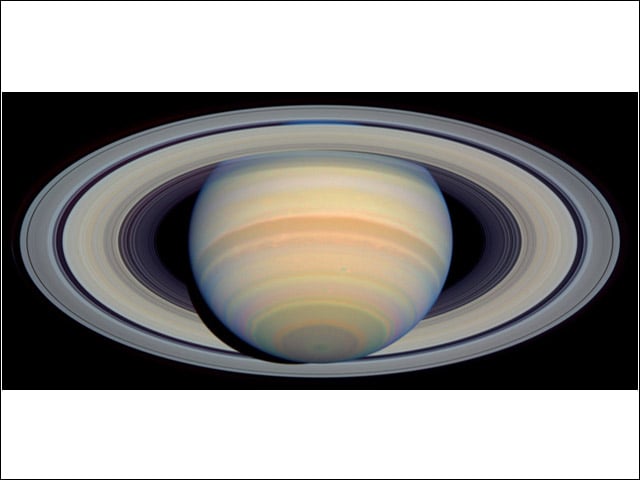
Widely considered to be the most stunning planets in the solar system, Saturn and its majestic rings, which are thinner than a razor blade, are show here as they appear in natural light. Our solar system’s second-largest planet and a gas giant– a thick layer of metallic hydrogen and a gaseous outer layer make up the planet’s atmosphere. The ring system consists mostly of ice particles with a smaller amount of rocky debris and dust.
Pillar and Jets
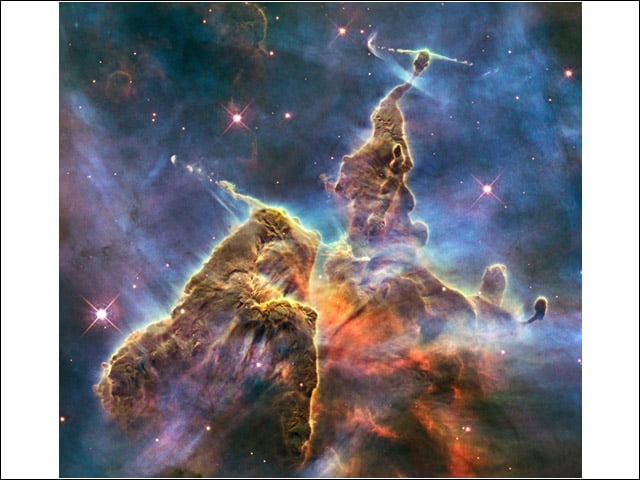
One of the largest seen star-birth regions in the galaxy, the Carina Nebula, spouts towers of cool hydrogen laced with dust. This image captures the top of a three-light-year-tall pillar of gas and dust that is being eaten away by the light from nearby bright stars. The pillar is also being pushed apart from within, as infant stars buried inside it fire off jets of gas.
Eagle Nebula
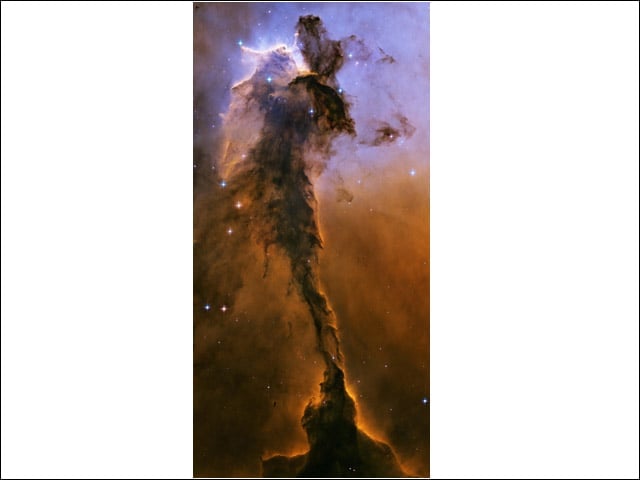
This object is a billowing tower of cold gas and dust rising in the Eagle Nebula. The massive pillar is 9.5 light-years, or about 57 trillion miles, high, about twice the distance from our Sun to the nearest star. According to a NASA description of the image, a torrent of ultraviolet light from a band of massive, hot, young stars (off the top of the image) is eroding the pillar.
Supernova
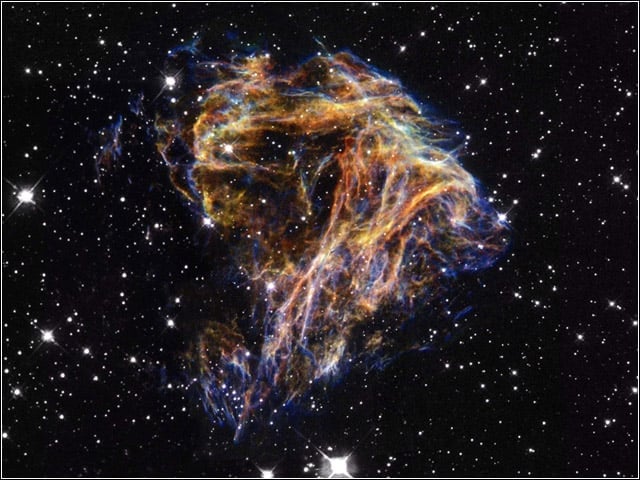
The delicate-looking filaments that resemble wisps of smoke are in reality a supernova remnant within the Large Magellanic Cloud, a nearby small companion galaxy to the Milky Way. This filamentary material will eventually be recycled into building new generations of stars.
Starburst
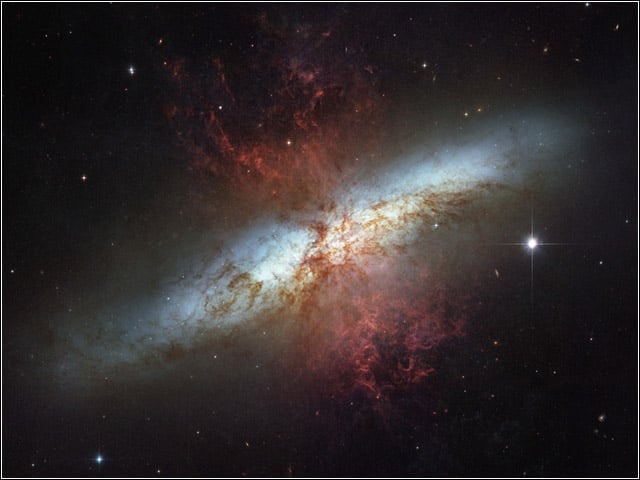
Galaxy M82, noticeable for its bright blue disk, plumes of hydrogen and dense central cluster of young stars, is captured in the sharpest wide-angle view ever obtained of the galaxy. The young stars are crammed into tiny but massive star clusters, and these, in turn, congregate by the dozens to make the bright patches, or “starburst clumps,” in the central parts of M82.
Jupiter and Ganymede
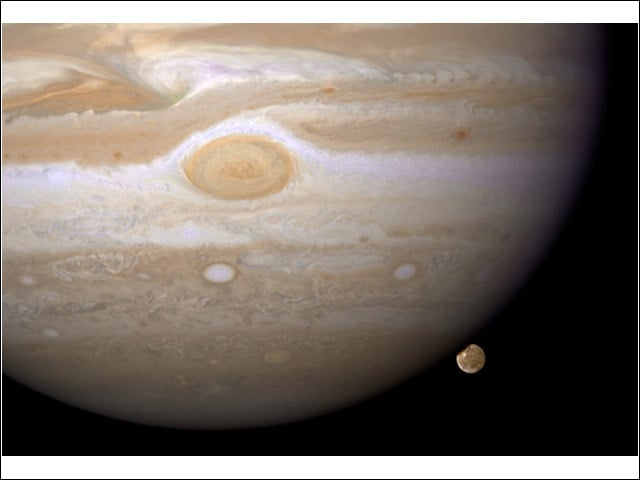
Hubble catches Jupiter’s moon Ganymede before it slides out of view behind the massive gas giant, the largest planet in our solar system. Fittingly, Ganymede is the largest moon in our solar system, larger than the planet Mercury. The image also shows Jupiter’s Great Red Spot, a storm the size of two Earths that has been raging for more than 300 years.
Crab Nebula
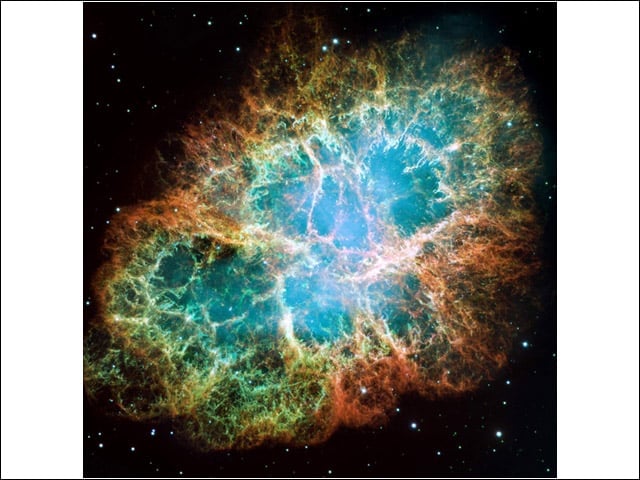
A six-light-year-wide expanding remnant of a star’s supernova explosion is at the center of this shot of the Crab Nebula. According to information provided by NASA, the orange filaments are the tattered remains of the star and consist mostly of hydrogen, and the rapidly spinning neutron star embedded in the center of the nebula is the dynamo powering the nebula’s eerie interior bluish glow. The image was assembled from 24 individual Wide Field and Planetary Camera 2 exposures taken in October 1999, January 2000, and December 2000.