






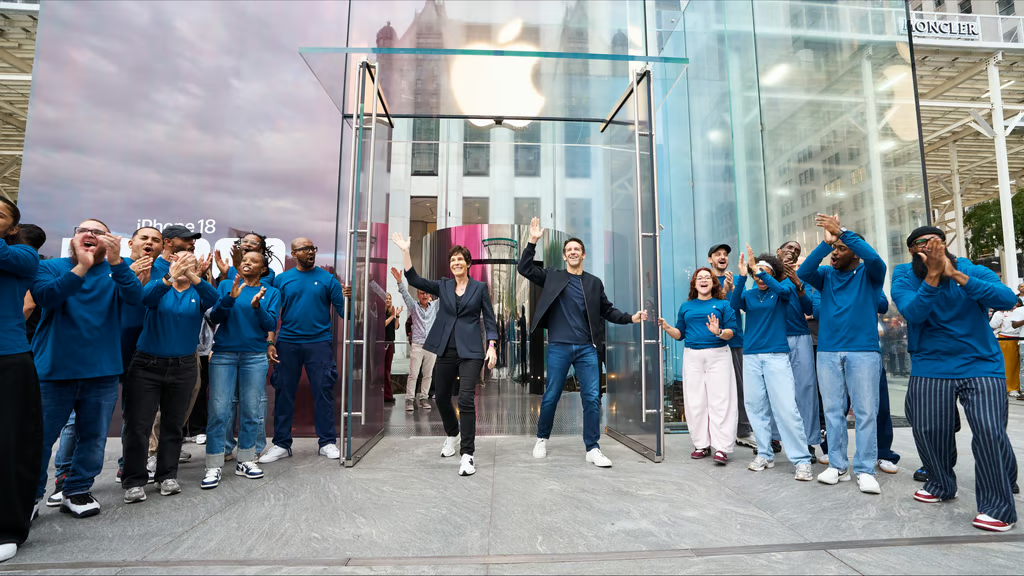


Apple briefly climbed above a $5 trillion market capitalization again on Sept. 22 as investors weighed early iPhone 18 demand against higher device prices and the company’s expanding AI strategy. Shares reached $345.34 intraday before closing at $339.75, putting Apple back below the threshold.
The move came four days after the iPhone 18 Pro and Pro Max reached stores. Delivery estimates strengthened sharply in their second week, but other indicators remain mixed, leaving analysts without clear evidence that the new cycle is outperforming its predecessor.
iPhone 18 demand signals remain mixed
JPMorgan’s second-week availability tracking put average iPhone 18 Pro lead times at 23 days, up from seven days in week one. Pro Max waits increased from 19 to 30 days.
Those jumps exceeded the comparable increases for the iPhone 17 Pro and Pro Max. Absolute waits in the US, UK, and Germany are now broadly in line with last year, however, while China remains below the previous cycle.
UBS offered a more cautious reading. Its availability data across more than 30 markets found average Pro and Pro Max waits about two days shorter year over year.
An Evercore ISI survey of nearly 4,000 US consumers leaned more bullish, with 53% of prospective buyers favoring the Pro or Pro Max. Surveys and delivery estimates remain proxies: Apple has not disclosed iPhone 18 unit sales.
Apple first crossed $5 trillion intraday on July 28. MarketWatch reported that it moved above the threshold again Sept. 22 but failed to hold it through the close.
Premium hardware anchors Apple’s AI strategy
The iPhone 18 Pro starts at $1,199 and the Pro Max at $1,299. Both use the A20 Pro chip and run Apple Intelligence and Siri AI, extending Apple’s push to place more AI processing on its own hardware.
That strategy reaches beyond phones. The new M5 Ultra Mac Studio targets local AI workloads with up to 512GB of unified memory, while Apple’s latest Watches use a Secure Exclave for audio processing designed to isolate raw microphone data from the operating system and applications.
Regional availability remains another constraint. Apple Intelligence reportedly cleared a major regulatory hurdle in China in July through work involving Alibaba and Baidu, but rollout timing and available features have differed from other markets.
What eWeek Found: Faster lead-time growth has yet to prove stronger sales
iPhone 18 Pro waits grew 16 days between weeks one and two, versus nine days for the iPhone 17 Pro at the same stage. Pro Max waits increased 11 days, compared with seven days last year.
The change is stronger than the previous cycle, but absolute waits are only broadly comparable outside China. JPMorgan also cautioned that supply allocations can influence delivery estimates and identified later production-plan changes as a more definitive demand signal.
Apple therefore has evidence of tightening availability, not confirmed outperformance. Increasingly hardware-dependent AI features could put device age, silicon capability, regional availability, and privacy architecture under greater scrutiny during enterprise refresh planning. No published procurement data yet shows Siri AI accelerating corporate replacement cycles.
Want to learn more AI tips, tricks, and prompting techniques? eWeek readers get free 7-day access to The Neuron Academy, our practical learning platform designed to help professionals use AI more confidently at work. Browse all lessons →
Let us teach you How to Talk to AI for free! Try our six-minute course at The Neuron Academy and learn a few simple ways to write better prompts and get more useful results from AI, or browse our other AI course for free for seven days.