






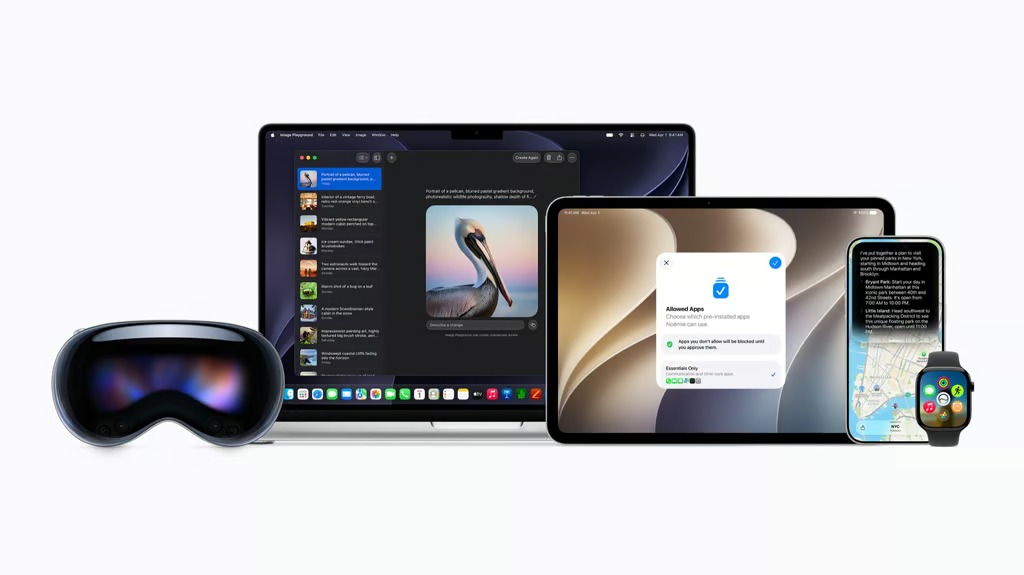


Apple Intelligence is not available on every Apple device that can run a recent version of iOS, iPadOS, or macOS. Instead, Apple’s AI features draw a hardware-based line through the iPhone, iPad, and Mac lineup.
For consumers, developers, and enterprise IT teams, OS eligibility no longer guarantees access to Apple’s AI features.
Devices that support Apple Intelligence
Apple says Apple Intelligence is available on iPhone 15 Pro models, iPhone 16 models or later, the iPad mini with A17 Pro, iPad models with M1 or later, and Macs with M1 or later. The company lists those requirements in its current Apple Intelligence device requirements.
For iPhone users, the cutoff starts with the iPhone 15 Pro and iPhone 15 Pro Max. The standard iPhone 15, iPhone 15 Plus, iPhone 14 lineup, and earlier models are excluded.
For iPad users, Apple’s threshold is the iPad mini with A17 Pro or any iPad model with M1 or later.
For Mac users, the requirement is M1 or later, excluding Intel-based Macs still active in some business fleets.
Hardware is only part of the requirement. Apple Intelligence also needs iOS 18.1 or later, iPadOS 18.1 or later, or macOS Sequoia 15.1 or later. Apple also requires 7 GB of storage on device, excluding Apple Watch, and the device language and Siri language must be set to the same supported language.
Apple Vision Pro is also compatible. Supported Apple Watch models can use certain Apple Intelligence features only when paired with an Apple Intelligence-enabled iPhone nearby. Apple Intelligence now spans Writing Tools, notification summaries, Siri, ChatGPT integration, and image-generation tools.
Availability also depends on region and language. Apple says feature availability can vary by platform, language, and region, even on compatible hardware.
Apple Intelligence also does not currently work in China mainland under the conditions Apple lists for supported devices and Apple Account region settings.
The fleet planning problem for IT teams
For enterprise IT teams, Apple Intelligence adds a fleet-planning variable. AI feature availability may vary across managed Apple devices running current operating systems, so IT teams need to audit chip class, OS version, storage, language settings, and region before promising Apple Intelligence access.
Refresh planning becomes more complicated when an organization supports a mix of iPhone 15 Pro models, standard iPhone 15 devices, M-series Macs, and Intel Macs. Apple’s recent Mac mini and Mac Studio changes also show how AI demand can affect hardware availability, memory configurations, and upgrade timing.
Apple has framed Apple Intelligence around on-device processing and Private Cloud Compute for more complex requests. Apple’s Apple Intelligence and Siri page previews Siri AI and Visual Intelligence updates expected in future software releases.
Compatibility does not guarantee identical access to every feature. Some capabilities depend on device hardware, software version, language, or region. Camera Control, for example, is hardware-specific to iPhone models that include it, while Apple’s newer Siri and camera AI work points to a broader push around camera, photo, and assistant workflows.
Unsupported hardware requires a device upgrade. Supported hardware may only need a software update, storage cleanup, or language-setting change. For organizations managing Apple devices, Apple Intelligence now belongs in hardware inventory, endpoint planning, and upgrade decisions.
Read more: Enterprise AI adoption is also reshaping developer workflows, including how companies evaluate secure coding agents and AI-assisted software development.