






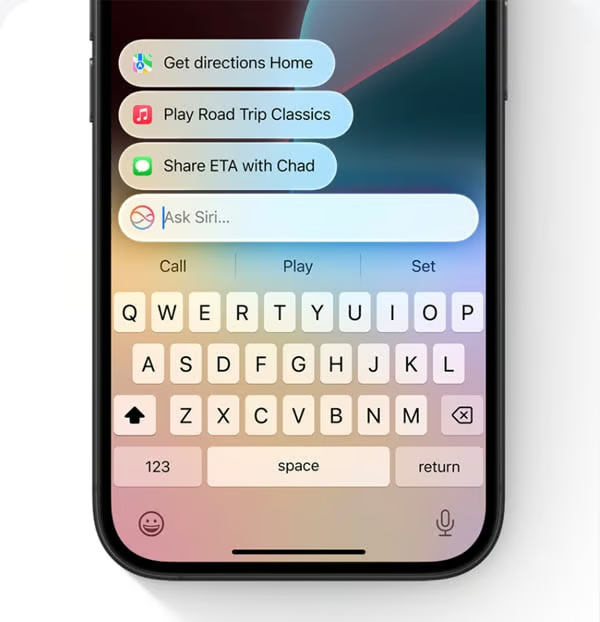


Apple is preparing a major Siri upgrade that could make the iPhone far more voice-driven. The new system is designed to let users jump between apps and complete tasks with just spoken commands.
Bloomberg reports that the overhaul will enable Siri to handle more complex instructions and switch between tasks with ease. The outlet says the upgrade could be “a hit that many users didn’t see coming.”
How the upgrade could change everyday iPhone interactions
First previewed at Apple’s 2024 Worldwide Developers Conference (WWDC), the upgraded Siri was shown pulling details from apps like Messages, Mail, and Maps to assemble a travel plan. In that demo, a single spoken request could bring up a document, play music sent by a friend, or retrieve an ID number stored in Photos.
According to Bloomberg, the new version will run on an enhanced App Intents framework, giving Siri the ability to navigate and carry out actions directly inside app interfaces, much like a user tapping through the screen themselves.
That could mean locating and editing a photo before sending it, browsing a shopping app to add items to a cart, or logging in to an account, all by voice.
This voice-control system is also expected to play a central role in Apple’s upcoming hardware lineup, including a smart display slated for release next year and a tabletop robot planned for a future date.
The upgrade is set for launch in spring 2026, following a major rebuild of Siri’s underlying architecture. According to Bloomberg, Apple is currently testing the feature with major third-party services, including YouTube, Facebook, Uber, and Amazon, as well as its own apps.
The next Siri won’t take over every app
The upgraded Siri will make its debut with a controlled launch, limited to certain apps rather than being switched on across the entire iPhone. Apple is prioritizing areas where voice commands can be handled with consistent accuracy and minimal risk, Bloomberg says.
Functions tied to sensitive information, such as financial transactions or health data, are expected to remain outside Siri’s reach at first. The concern is that even minor misinterpretations could have serious consequences in apps dealing with banking transactions or private medical information.
Apple is also exploring partnerships with external AI providers to further enhance Siri’s capabilities. By starting with a smaller rollout, it can fine-tune how well Siri understands and executes commands, ensuring dependable performance before opening it up to more categories.
If Apple delivers on its plans, Siri could turn from a background helper into a go-to way of moving through apps and services.