




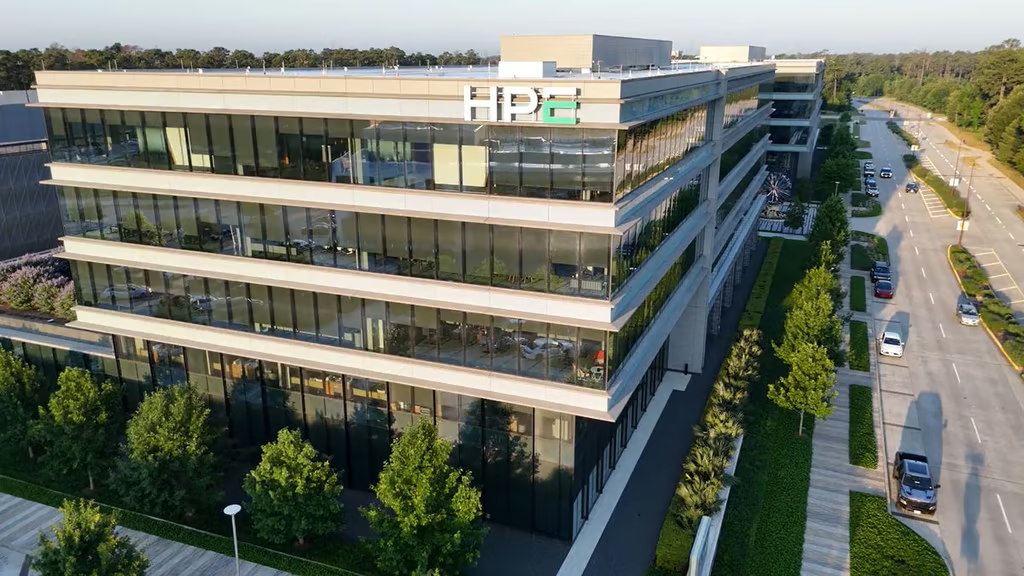
HPE is giving enterprises more flexibility over their AI hardware, but some of its expanded agent-management tools remain on the roadmap. The staggered rollout could affect when organizations deploy new AI workloads and the controls governing them.
Hewlett Packard Enterprise announced Oct. 21 that Private Cloud AI now supports NVIDIA H200 and RTX PRO 6000 Blackwell Server Edition GPUs in the same cluster, alongside generally available KAI Scheduler capabilities. Expanded developer access is scheduled for late 2026, with additional self-service tools following in 2027.
For IT teams planning production deployments, the rollout creates separate timelines for infrastructure and agent management. GPU capabilities can be evaluated immediately, while the availability of specific security controls and developer tools requires confirmation.
Mixed-GPU support and scheduling are available now
According to HPE's October 21 announcement, Private Cloud AI can accommodate H200 and RTX PRO 6000 Blackwell Server Edition GPUs within a single cluster. The configuration gives infrastructure teams another option for managing different GPU types, although deployment requirements vary by workload.
NVIDIA's open-source KAI Scheduler adds quota- and priority-based scheduling, giving administrators greater control over GPU allocation across projects. HPE positions KAI Scheduler as a way to improve GPU utilization and workload placement, but its October announcement does not quantify the improvement.
Scheduling is one part of managing shared AI infrastructure. NVIDIA's Minerva GPU monitoring technology addresses another operational concern: detecting faults and troubleshooting GPU clusters rather than allocating workloads.
Agent APIs and security controls follow separate timelines
HPE is expanding AI Essentials with governed application programming interfaces (APIs) and Model Context Protocol (MCP) services. These are designed to connect applications and AI agents to models, inference, and enterprise knowledge resources.
Administrator-enabled access for developers and independent software vendors is scheduled for late 2026. Self-service agent registration, API and MCP discovery, and credential management are planned for 2027.
NVIDIA OpenShell follows a separate schedule. The open-source runtime, designed to restrict agent activity through isolated environments and enforced policies, is already generally available as standalone software.
HPE's September 28 technical update scheduled OpenShell integration with Private Cloud AI for the fourth quarter of 2026. HPE also plans to support NVIDIA's broader security architecture, which combines OpenShell with Sentry running on BlueField-4 hardware. The company has not announced a single general-availability date for that complete configuration.
NVIDIA's broader agent-security architecture addresses runtime restrictions and independent infrastructure-level enforcement. Agent identity is another consideration: Microsoft's Project Perception security controls illustrate a separate approach involving permissions and risk assessment.
What eWeek Found: New agent tools build on existing governance
HPE's October release expands capabilities described in June rather than introducing agent governance for the first time.
In its June 16 announcement, HPE said Private Cloud AI supported secure local agent registration and centralized approval of models and tools. Its October roadmap adds a separate self-service developer experience scheduled for 2027.
The comparison exposes an important limitation for enterprise deployment planning: hardware availability does not guarantee that every planned agent-management integration is ready. The October announcement also does not quantify utilization improvements from mixed-GPU clusters or specify licensing costs for the expanded software features.
Infrastructure and security teams should verify GPU configurations, software prerequisites, permissions, and integration dates before finalizing procurement plans. HPE's planned late-2026 releases will provide the next opportunity to assess which additional controls are available for production use.
Want to learn more AI tips, tricks, and prompting techniques? Let us teach you How to Talk to AI for free! Try our six-minute course at The Neuron Academy, our practical learning platform designed to help professionals use AI more confidently at work.
Learn a few simple ways to write better prompts and get more useful results from AI, or browse our other AI course for free for seven days. eWeek readers get free 7-day access. Check out all the lessons here →