







A White House health report from the Make America Healthy Again Commission is drawing scrutiny over signs it may have been generated using AI, according to a report from NOTUS.
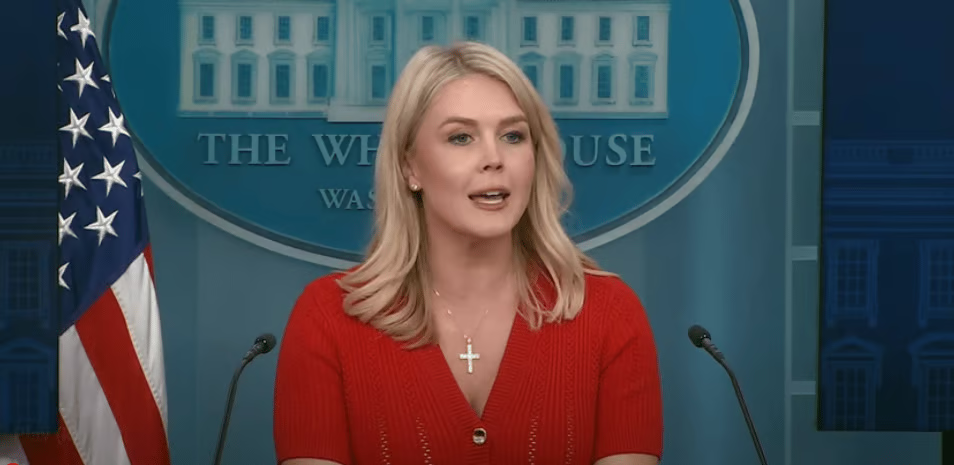
The administration has since attributed the errors to “formatting issues,” White House Press Secretary Karoline Leavitt told NOTUS on Thursday. She added that the report contains “good science that has never been recognized by the federal government.”
The document outlines recommendations on childhood health, including limiting medication for pediatric illnesses, reducing exposure to synthetic chemicals, improving diets, and increasing physical activity.
Broken links, inaccurate citations, and URL tag markers point to AI use
The Washington Post, citing NOTUS’ findings, described the report’s scientific references as “garbled.”
According to the Post, metadata embedded in some of the report’s URLs included the term “oaicite,” an internal citation marker used by OpenAI models, suggesting that generative AI may have been used in drafting the document.
The report at the center of controversy, also officially titled The Make America Healthy Again Report, cited studies that did not exist, included incorrect issue numbers, and featured nonfunctional or fabricated hyperlinks to scientific sources, NOTUS found.
The New York Times separately reported that some of the references were “fictitious,” specifically those related to medications for children with asthma and mental illness, as well as research into pharmaceutical advertising.
Several researchers contacted by NOTUS said they were not involved with papers to which the report had attached their names. Others said their legitimate research had been taken out of context or mischaracterized to support the report’s conclusions. In one example, a study cited as research on children was actually a behavioral study conducted on college students, according to the researcher NOTUS contacted.
White House removed ‘formatting errors’ from report
As of Thursday, the report had been edited to remove references to nonexistent reports and to fix “Minor citation and formatting errors,” Health and Human Services spokesperson Emily Hilliard told NOTUS.
This marks the second time a federal document has been linked to flawed generative AI outputs. In April, economist James Surowiecki claimed the Trump administration used AI to model tariffs based on U.S. trade deficits, an approach that was later called into question for its accuracy.