







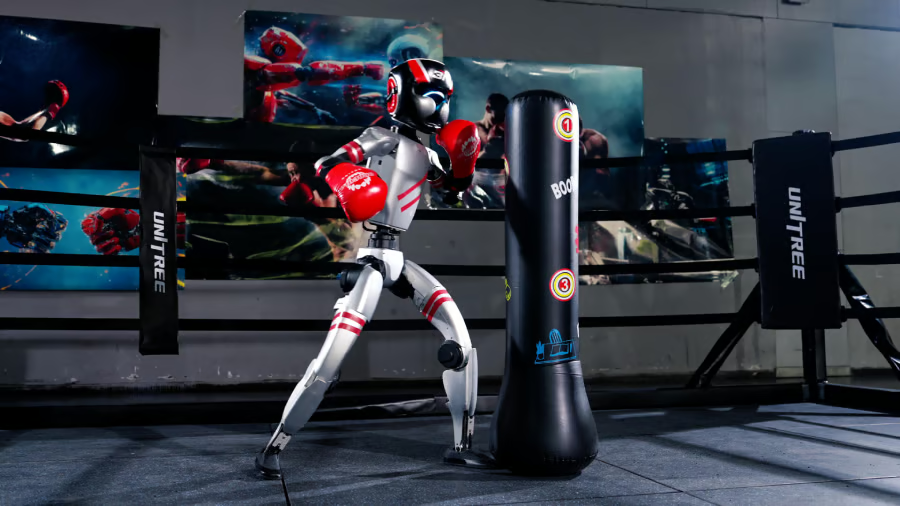
Metal fists fly and humanoid bodies hit the mat in Unitree’s first look at a new 2026 robot combat event.
Unitree has teased the CMG 2026 Humanoid Robot Combat Competition, a follow-up to China’s first televised humanoid fighting tournament. Its trailer shows robots fighting one another and trading blows with people, though Unitree has yet to announce a date or venue, and the rules remain unknown.
Last year’s competitors were controlled by humans. New footage suggests another role for the machines. Could robots designed for the ring eventually train human fighters?
Robot testing through combat
Unitree posted the 70-second teaser on its official YouTube channel. Several sequences focus on knockdowns and recoveries, while others appear to place people opposite humanoids inside the ring.
The Chinese robotics company says the competition will put “technology to the test through combat.” Human-versus-robot footage differs from last year’s robot-only tournament, but it has not been confirmed whether those clips preview planned matches or serve only as promotion.
No event date, venue, rules, or robot lineup has been announced.
Last year’s humanoids fought under human control
CMG’s first humanoid fighting tournament took place in Hangzhou in May 2025, with operators guiding Unitree G1 robots through remote devices and voice commands. People chose the attacks, and the humanoids carried them out.
Each match ran for three two-minute rounds. Kicks earned more points than punches, while falls drew penalties. Failure to stand within eight seconds cost the round.
G1 robots still had to attack without toppling and regain their footing after taking hits.
Unitree now promotes the G1 specifically for boxing, listing straight punches and front kicks alongside impact recovery. Its dedicated page also mentions future robot-combat events with livestream and in-person viewing, although the company has not confirmed whether the G1 will return in 2026.
Could fighting robots become sparring partners?
CMG’s event is mainly entertainment for now, though it also gives Unitree a public way to show how its robots handle a fight. Humanoid robots exchanging blows with people also show how similar machines could one day be used in training.
Humanoids that can stay upright after a hit and repeat controlled movements could interest coaches looking for a mechanical sparring partner. Boxers and martial artists might use one to practice against a moving opponent without having to ask another athlete to repeat the same drill over and over.
That said, human partners bring judgment into every exchange. They notice when someone is hurt or loses their balance and pull back before a coach has to intervene. A robot would need to recognize when an athlete is hurt or off balance, then stop even after a punch has started.
Winning cheers in a televised fight can show how much punishment a humanoid can take. Sharing the ring with an athlete would require the judgment and care a human sparring partner uses to keep the session safe.
Also read: 1X’s new robotic hands put the focus on dexterity as humanoid robots move closer to everyday tasks.