





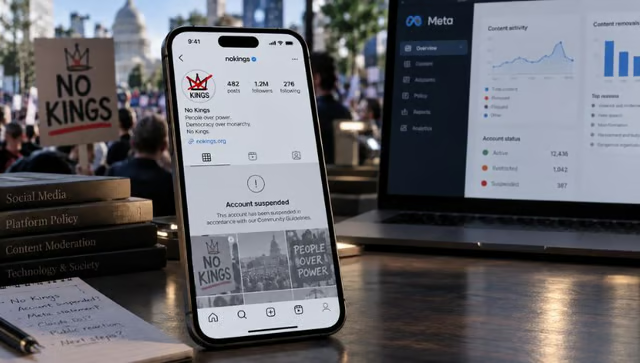
The No Kings Coalition's Instagram account disappeared during nationwide political events, prompting accusations that Meta was censoring the group.
Meta acknowledged mistakenly suspending the account on Oct. 17 and later linked the security alert to automated browsing activity involving Anthropic's Claude. The company apologized as organizers and lawmakers questioned the timing.
The incident raises a broader problem for social platforms: how to distinguish legitimate AI-powered browsing from suspicious automated activity without restricting the accounts people rely on to communicate.
Engineers identified a different trigger
An initial explanation attributed the suspension to unusually frequent posting, sharing, or commenting. Communications executive Andy Stone explained that such behavior could trigger automated enforcement.
By Sunday, engineers had traced the unusual traffic to a Claude tool accessing profiles, posts, and hashtags in rapid bursts at approximately four times its normal volume. In an Oct. 18 post on X, Stone explained that the speed and frequency of these requests resembled bot activity.
Unlike someone publishing updates, AI agents browsing websites can repeatedly retrieve information without creating new posts. A separate automated review determined approximately an hour later that the coalition's account should not have been suspended.
Organizers faced a longer lockout during nationwide events
No Kings reported nearly 3,000 events across all 50 states and Washington, D.C., as organizers encouraged early voting ahead of the Nov. 3 midterm elections. Instagram was among the channels used to reach supporters.
Public access returned after approximately 90 minutes, but administrators remained locked out longer. Full control was restored at 5:33 p.m. ET, roughly four hours after the suspension.
In a statement following the suspension, the coalition criticized the timing and demanded an explanation. "Restricting communications about voting in the middle of an election is unacceptable," organizers wrote. They also called on Meta to prevent similar incidents as the company continues expanding AI-assisted account support intended to improve appeals and recovery.
What eWeek found: Meta's automated enforcement errors have a documented history
The No Kings suspension is not the first time Meta's enforcement systems have restricted legitimate content or accounts. eWeek's review of earlier Facebook enforcement cases found that mistaken removals have persisted even after Meta's systems detected signs of an error.
- 2022 Colombian police cartoon. An independent Oversight Board investigation found that a cartoon criticizing police violence had been mistakenly added to an automated image-removal database. Of 215 appealed removals, 210 were overturned. An internal alert reached engineers, yet the image remained in the database for approximately a month until the Board intervened.
- 2025 Facebook Groups suspensions. Users reported restrictions affecting thousands of communities, including groups devoted to bird photography and gaming. Meta acknowledged a technical error affecting some Facebook Groups and began working on a fix. Administrators suspected faulty AI moderation, although the company did not confirm AI involvement.
The cases point to different weaknesses in automated enforcement. In the Colombian cartoon case, an incorrect entry in a removal database continued affecting content despite overturned appeals. The Facebook Groups incident demonstrated how a technical error could disrupt access across unrelated communities.
The No Kings suspension introduces another complication: the explanation given to account owners may not reflect what actually triggered an enforcement action.
Meta initially pointed to excessive posting or other account activity before engineers linked the alert to Claude-related browsing. Had organizers responded by reducing updates or removing legitimate content, those changes would not have addressed the activity Meta later identified.
That distinction matters because organizations often depend on platform notices to understand what went wrong and how to avoid another suspension. When those notices are inaccurate, users may be left troubleshooting behavior that was never responsible for the restriction.
Before changing how they publish, organizations facing restrictions should preserve violation notices and compare the alleged activity against their own account records. Teams deploying browser-based AI tools should also maintain separate logs of automated requests to establish whether their own agents contributed to suspicious traffic.
Platform operators should correct inaccurate violation notices as part of the appeals process and restore full administrative access, preventing account owners from acting on allegations that have since been withdrawn.
More AI news: Anthropic’s proposed 5% equity pledge could turn its rising valuation into substantial funding for charitable and social initiatives.