







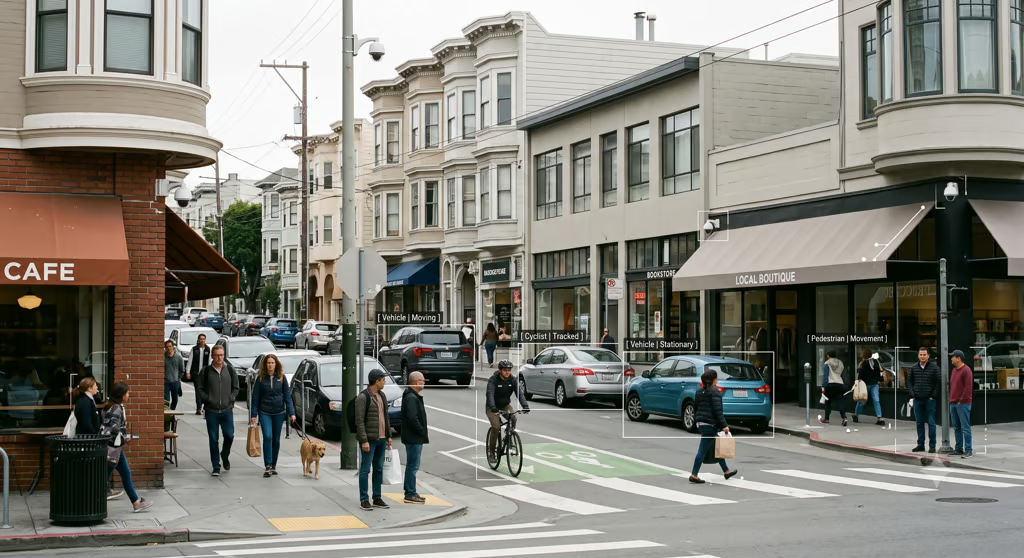
Orchestra wants to make city streets searchable.
The 10-month-old startup has installed more than 100 AI-enabled cameras across San Francisco and plans to add 900 more across commercial corridors over the next six months. The rollout raises a governance question for cities and public-sector technology buyers: how should public-facing video analytics systems be reviewed when a private company builds the network before a city agency becomes a customer?
Private cameras are becoming public-facing AI infrastructure
A Business Insider report said Orchestra has deployed cameras in neighborhoods including SoMa, the Tenderloin, North Beach, and the Marina. The company installs cameras at no cost to business owners, streams high-definition footage, and uses AI to turn video into structured data about objects, vehicles, and incidents.
Orchestra says it sells structured data rather than raw footage, giving customers searchable outputs instead of direct video feeds. The model still depends on continuous collection from street-facing cameras in commercial areas, part of a broader push to turn real-world activity into AI training and analytics data.
The company’s early public-safety product, Robocop, monitors San Francisco dispatch information through the city’s open-data portal. When a high-priority incident appears near one of Orchestra’s cameras, the system can pull relevant footage and package it into an evidence file called Veritas.
Orchestra does not currently work with SFPD, but the company has said it is moving through the steps needed to eventually sell to the department. Its stated ambitions go beyond public safety: the startup says it is building “AGI for cities” and wants to expand beyond San Francisco.
San Francisco’s oversight rules face a private-network test
Orchestra says it does not use facial recognition, does not place cameras in residential neighborhoods, blurs faces in video feeds, and restricts access to raw footage. The company also says the system can identify anonymized people by visible details such as clothing and shoes, a reminder that computer vision devices can make faces, movement, location, and visible attributes useful as searchable data.
A system that can search across locations, timestamps, vehicles, objects, or visible personal attributes needs clear rules for retention, audit logs, customer access, security controls, and law enforcement requests. San Francisco already has a surveillance technology framework, but Orchestra’s private rollout tests where that framework begins.
The city’s Chapter 19B rules apply to departments that acquire, borrow, fund, use, or enter agreements involving surveillance technology, including some agreements in which a non-city entity regularly provides data gathered through surveillance tools. That does not make Orchestra’s private camera network a settled legal violation, but any future SFPD contract, regular data-sharing arrangement, or city use would raise Chapter 19B questions.
SFPD’s surveillance technology inventory already includes non-city entity surveillance cameras as a category. That does not mean Orchestra’s network has been approved for police use, but it shows privately operated camera sources are already part of the city’s oversight framework.
The same access-control problem is appearing across AI infrastructure, from video networks to AI crawler controls that determine who can collect, reuse, and monetize data at scale. For public-sector and enterprise buyers, the unresolved question is whether vendors can document retention rules, audit trails, and access controls before privately built AI systems become part of everyday operations.
Read more: AI systems are also changing the threat landscape, as the first known agentic ransomware attack shows how automation can turn familiar security gaps into faster-moving risks.