







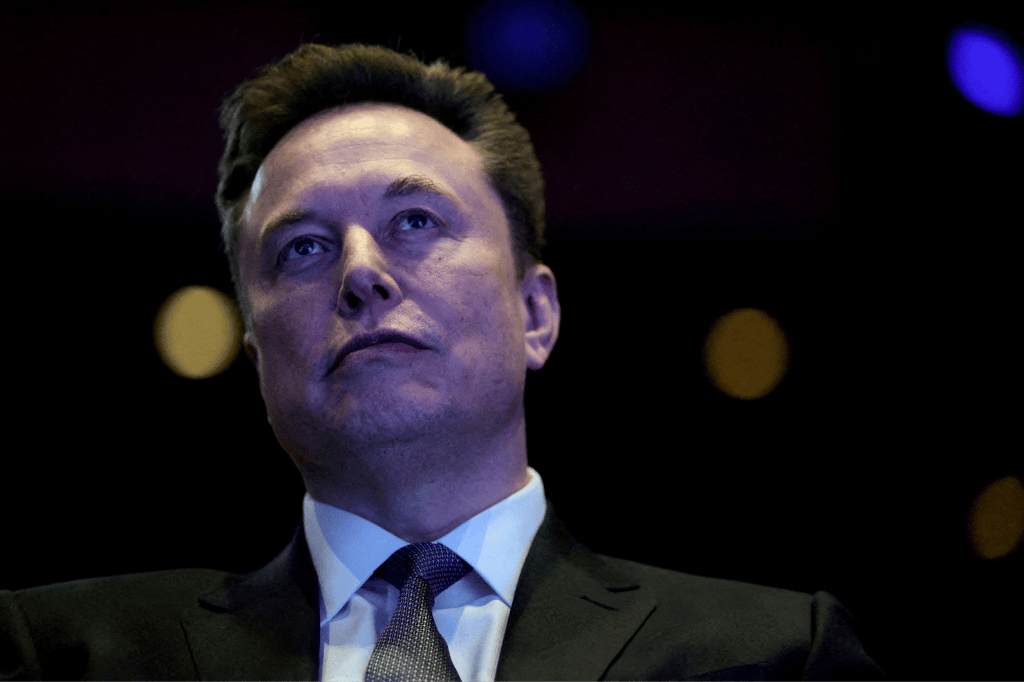
In what is officially the largest merger in history, SpaceX has acquired artificial intelligence startup xAI.
The deal, confirmed Monday in a statement by SpaceX, creates a $1.25 trillion “innovation engine” that effectively fuses the world’s most successful rocket company with its fastest-burning AI lab.
According to people familiar with the matter cited by Bloomberg, the breakdown values SpaceX at $1 trillion and xAI at $250 billion. The transaction was structured as an all-stock deal, with CNBC reporting that xAI shareholders will see their stock converted into SpaceX shares at a rate of 0.1433 per share.
The logic behind the move is as big as the price tag: CEO Elon Musk argues that Earth is simply running out of the resources needed to keep modern AI running.
“Current advances in AI are dependent on large terrestrial data centers, which require immense amounts of power and cooling. Global electricity demand for AI simply cannot be met with terrestrial solutions, even in the near term, without imposing hardship on communities and the environment,” Musk wrote in the announcement.
The solution? Orbital data centers. By launching a constellation of up to a million satellites, the company plans to harness “near-constant solar power” in a place where space is, quite literally, infinite. As Musk quipped in the announcement: “I mean, space is called ‘space’ for a reason.”
A super company with growing pains
While the vision is cosmic, the ground-level reality is complex.
The New York Times notes that the deal creates a “vertically integrated” giant but also muddies the waters for SpaceX’s highly anticipated IPO, expected later this year. Investors now have to weigh SpaceX’s profitable rocket business against xAI’s “cash-incinerating” habit, reportedly burning $1 billion a month.
There are also technical and regulatory hurdles:
- Heat and radiation: Space may be cold, but without air to carry heat away, satellites act like a thermos. The New York Times reports radiators might need to be “bigger than tennis courts” to keep the AI from frying.
- The wall between teams: Because SpaceX handles sensitive defense technology, it must comply with strict international regulations. A person familiar with the matter told Bloomberg that xAI will remain a separate subsidiary, and SpaceX employees have been warned to be “cautious” when talking to xAI staff who lack security clearances.
Separately, hours after announcing the acquisition, SpaceX disclosed that one of its Falcon 9 rockets experienced an undisclosed issue after launching Starlink satellites into orbit.
While the rocket’s upper stage safely deployed all satellites, a mishap occurred just before the vehicle was set to deorbit itself, Bloomberg reported. The incident marks a relatively rare problem for Falcon 9, which last suffered an in-flight issue in 2024.
SpaceX said in a statement on X that teams are “reviewing data to determine root cause and corrective actions before returning to flight.”
The big picture: A new tech era
This merger signals a massive shift in the tech industry. We are moving away from software running “the cloud” to software running in the stars.
For decades, the tech industry has been shaped by whoever owns the foundational infrastructure, from energy and semiconductors to the internet and cloud computing. Now, AI is triggering the next great platform shift, where leadership will depend on controlling the power, compute, and physical systems required to sustain it.
If Musk pulls this off, he won’t just own the most popular “free speech” platform (X) or the rockets that go to the Moon… he will own the very infrastructure of intelligence itself. By bypassing the terrestrial power grid, he could potentially offer computing power at a scale and a cost that ground-bound rivals like OpenAI or Google simply can’t match.
That’s what makes this deal so disruptive: it represents a new kind of vertical integration in tech, where one company controls everything from launch capability to orbital power generation to AI model deployment. It’s an infrastructure land grab rather than just an AI play.
It also raises uncomfortable questions for the rest of the industry. If the future of AI depends on access to massive energy supplies and specialized hardware, the race may shift away from software innovation toward industrial-scale competition for resources. In that world, AI leadership starts to look less like Silicon Valley and more like aerospace, defense, and geopolitics.
As Musk put it, this isn’t just a new chapter, but “the next book” in the mission to “extend the light of consciousness to the stars!”
Also check out how xAI’s new Grok Imagine 1.0 AI video generator is pushing the boundaries of multimodal creativity — even as regulators and rivals take aim at its rapid rise.