






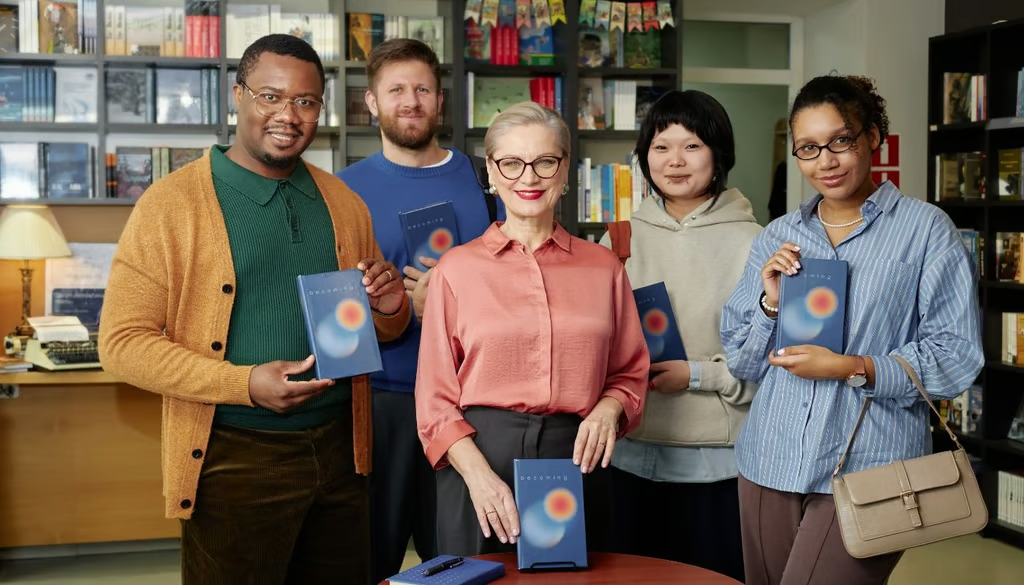


The UK’s literary world is sounding the alarm. A new Cambridge report warns that the nation’s £126bn creative engine — powered by novelists, editors, and publishers — is at risk of an existential threat as generative AI floods the market with machine-generated fiction.
At the heart of the report is a stark reality: the line between human creativity and algorithmic output is rapidly eroding. Authors now face competition from tools that can generate endless passable prose in seconds. Publishers, too, are being forced to rethink what originality and authorship mean in an industry transforming at breakneck speed.
The result is an industry undergoing a cultural recalibration, reconsidering the value of human-made work in an era when AI can replicate it with ease.
Writers report loss of income and fears of replacement
The research by Dr. Clementine Collett, which included a survey of 332 authors, found widespread anxiety about AI’s accelerating capabilities. According to the responses, roughly half of the participants believe AI could “entirely replace” their profession, while an overwhelming 97% viewed the prospect of AI-written novels with extreme negativity.
Many also reported that their secondary income, often used to subsidize writers’ creative work, has already declined due to the surge in AI-generated content replacing real writers. As an American writer with awareness of the novel industry, I understand the reasoning behind these survey responses.
Another concern for many writers and creatives alike is the extraction of creative work without permission for AI training purposes. About 60% of authors surveyed said they believe their writing has been used to train large language models without their consent or any payment. Several even discovered books falsely attributed to them, which has raised alarms about identity misuse and market distortion through quickly produced AI-generated content.
A call for fairness or anti-innovation?
All of these worries aside, four in five respondents agreed that AI does offer tangible benefits to society. Rather than taking an anti-innovative stance against the machine, these individuals are pro-protection. Authors are urging the UK government to enact policies that ensure ethical data use, enforce copyright rights, and thereby preserve long-form literary creative culture as we know it.
Gina Neff, executive director of the MCTD, emphasises that Britain’s creative industries “are not expendable collateral damage in the race to develop AI.”
We’ll have to see how the UK’s laws and regulations develop alongside generative AI, but at the end of the day, supporting the novel is not only crucial for cultural preservation but also a strategic national investment.
Recent reporting on Cognizant’s plan to tap Anthropic’s Claude for enterprise AI highlights how large service providers are weaving advanced models into day-to-day client work.