Eyes up, Tech Insiders. Smart specs want to pull your gaze away from the phone, while shady extensions and surveillance hacks try to peek right back.
Strap in for a seesaw of vision tech, privacy landmines, and the companies betting your eyeballs are the next platform. |
|
|
Here's what you need to know today: |
|
|
Samsung Gives Update on Smart Glasses Plan |
Because staring at phones is so 2025.
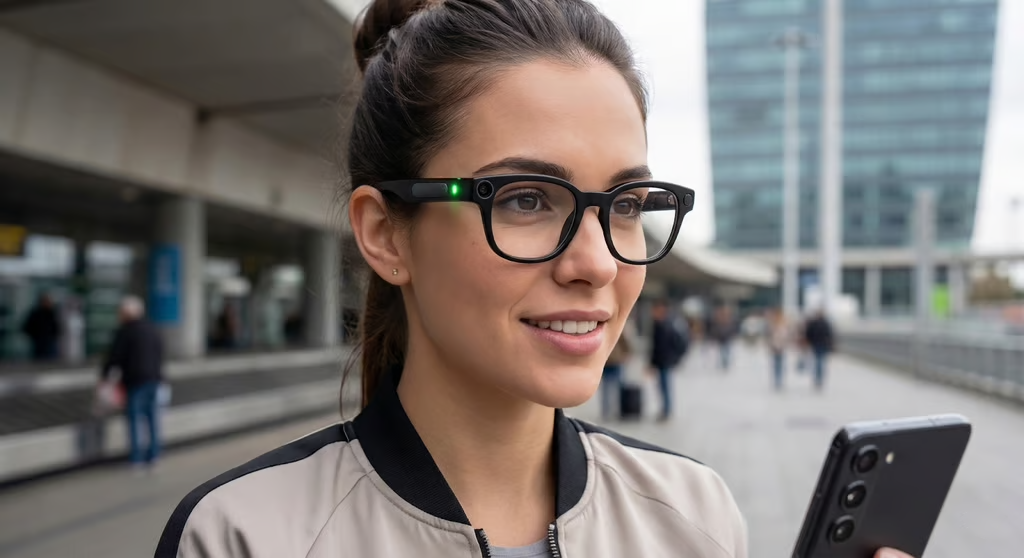
Samsung used MWC Barcelona to tease its first AI smart specs, tentatively dubbed "Galaxy Glasses," slated for release later this year. The single-camera-equipped frames tether to a Galaxy smartphone, letting Qualcomm chips and Google's Android XR handle the heavy thinking off-device.
By offloading processing, Samsung keeps the glasses light and battery-friendly, two pain points that doomed early AR attempts. Touchpad controls, a quick-fire camera button, and LED privacy lights are among the options in Google's new XR guidelines, while a second-gen pair with a micro-display could land in 2027. |
Image created with Nano Banana Pro |
The company is chasing Meta's Ray-Ban dominance (roughly 82% of the smart glasses market) and fending off challengers from Google, Apple (reportedly prepping a dual-camera rival for 2027), Alibaba, and even YC-backed Pickle's highly suspect "soul computer."
While official pricing remains under wraps, Qualcomm CEO Cristiano Amon frames the move as a leap toward "agentic" tasks; think exiting luggage claim and letting your specs book the rideshare.
Still, regulators already smell privacy drama—Meta's annotators reportedly review intimate clips—so Samsung's Knox security story may be as critical as its fashion partnerships.
Why it matters: If Samsung nails comfort, battery life, and trust, 2026 could be the year smart glasses escape sci-fi, loosen Meta's strong grip, and start replacing that downward phone stare, changing how we navigate, shop, and overshare hands-free. |
|
|
Would you wear Samsung's screen-free AI smart glasses? |
|
|
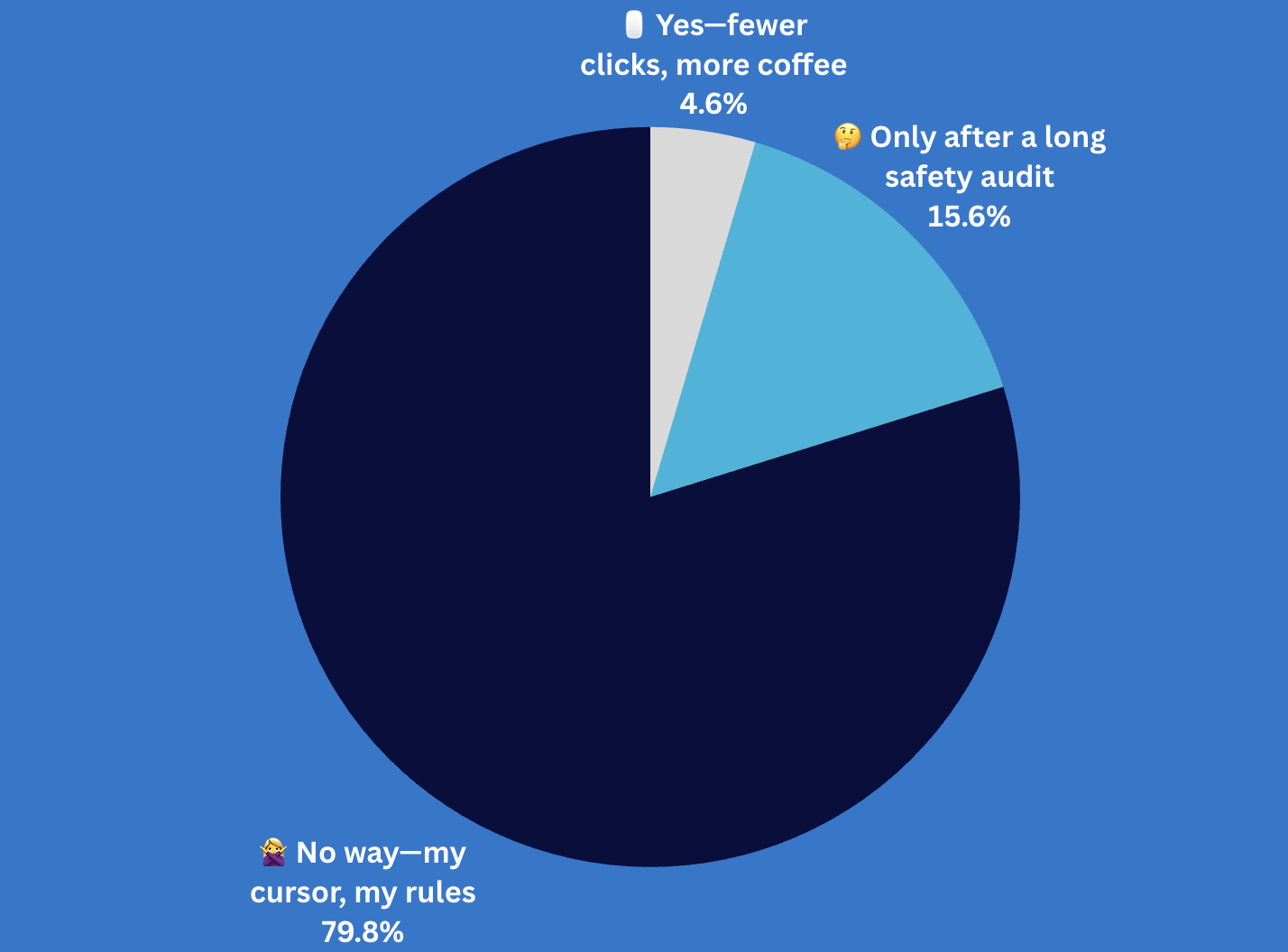
Results from Friday's Pulse Check |
Would you let an AI click around your desktop unattended? |
|
|
Anthropic Maps AI Job Risk With New Tracker |
Spoiler: your barista is safe... for now. But your highly paid analyst? Maybe not.
Anthropic's new "observed exposure" index tracks how much work is actually handled by AI tools like Claude. It marries theoretical capability with millions of real chats for a live early-warning gauge. The current gap is huge: AI could theoretically assist or automate 94% of computer/math tasks, but actual adoption sits at just 33%. Computer programmers are in the hottest seat (75% of tasks AI-ready). Customer service (70%) and data entry (67%) follow, while hands-on roles such as cooks and mechanics show no exposure. |
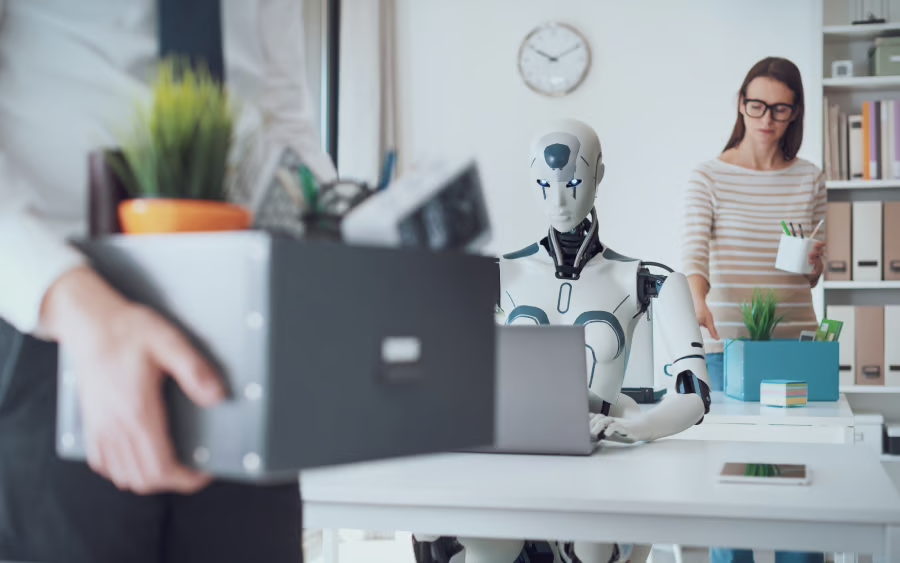
The bots haven't sparked a layoff tsunami yet; unemployment hasn't spiked for exposed workers, even though AI-related layoffs from Amazon, Block, eBay, Meta, Oracle, Pinterest, and more have stoked the job-pocalypse panic.
Still, hiring for 22- to 25-year-olds in these jobs dipped 14% from pre-ChatGPT 2022 levels, hinting that AI's first bite is at entry-level. Ironically, the overall demographic most in the crosshairs right now is older, highly educated, and high-earning.
Anthropic will refresh the tracker regularly. If actual usage ever matches its vast potential, the firm warns of a "Great Recession for white-collar workers." Look on the bright side... somebody has to program the robots' coffee breaks. At least until they automate that, too. |
|
|
🧑💼 Streamline HR Workflows, Skip the Busywork
Set your new hires up for success with easy and effective orientation and onboarding. Try out BambooHR.
🐘 Back Up 5 TB Across 10 Devices
Secure cloud files with ElephantDrive 5 TB Plan: 2-Yr Subscription at $138.99 (88% off), syncing encrypted backups from NAS, mobile, and desktops for two solid years.
📧 Compare Top Email Marketing Platforms Now Dive into the Best Email Marketing Software and find the tool that lifts open rates without lifting your budget. 💻 This section contains sponsored tech insights. Advertise with us! |
|
|
See How Any Brand Shows Up in AI Search |
Ahrefs Brand Radar shows where your brand appears across modern search and discovery. Track mentions in Google results, YouTube videos (titles, descriptions, transcripts), TikTok content, and Reddit discussions. Measure share of voice, monitor brand demand, and compare your visibility against competitors—all in one tool. Go beyond rankings and traffic to understand where real brand discovery happens and where you're missing attention.
|
|
|
Fake AI Extensions Spy on 900,000 Chrome and Edge Users |
Microsoft uncovered fake Chrome and Edge AI extensions silently siphoning ChatGPT and DeepSeek chats, plus URLs. These clones amassed 900,000 installs across 20,000 enterprises, and some "agentic" browsers even downloaded them automatically. |
Image created with Nano Banana Pro |
Once granted broad permissions, these add-ons exfiltrate data to attacker-controlled look-alike domains. Worse, if users opted out of data collection, stealthy updates quietly turned it back on.
Next steps: Audit extensions, restrict installs, monitor suspicious outbound traffic, enable SmartScreen, and keep confidential data out of unvetted sidebars. If a "helper" asks for keys to every tab, it's planning more than a coffee run. |
FBI Wiretap System Breach Spurs Zero-Trust Push |
Meta Spins Up Flat Applied AI Engineering Squad |
Meta is standing up a new "applied AI engineering" org to feed its ambitious Superintelligence Labs. Helmed by Maher Saba—stepping out of his Reality Labs VP role to park this new crew directly under Meta's CTO—the group will build the "data engine" that pipes real-world feedback, evaluation tooling, and cleaned datasets into Meta's next-gen models, such as the codenamed Avocado and Mango.
|
Image created with ChatGPT |
The org is split into two. One team crafts interfaces and internal tooling while the other executes tasks, curates data, and loops evaluation results back to modelers, creating a flywheel that Saba says can turn capable models into clear leaders.
Separately, to ensure that flywheel has plenty of premium fuel, Meta also inked a cool $50 million-a-year licensing pact with News Corp to slurp up WSJ content for training data.
Echoing Zuckerberg's push for leaner teams, the structure is radically flat, targeting a dizzying upper cap of 50 engineers per manager.
Meta is also hoovering up external talent. The ex-Snapchat crew behind Gizmo's "vibe-coding" mini-app engine just joined Superintelligence Labs, adding fresh generative UX chops to the mix. As recruiters' eyes widen, Meta's rivals will feel even more pressure to bulk up their own AI plumbing or risk getting left in the dust. |
|
|
|
Writer at TechnologyAdvice |
Justin Meyers is an investigative writer and editor who draws on over a decade of meticulous hands-on research to deliver the full, trustworthy story behind consumer and enterprise tech, including cybersecurity. |
|
|
Curious about where AI is really headed? |
The Neuron cuts through the noise to bring you smart, hype-free takes on the latest AI trends, tools, and breakthroughs. Join 500,000+ professionals from top companies like Microsoft, Apple, Salesforce and more.
|
|
|
Advertise in Daily Tech Insider! Daily Tech Insider is a TechnologyAdvice business.
© 2026 TechnologyAdvice, LLC. All rights reserved. TechnologyAdvice, 3343 Perimeter Hill Dr., Suite 215, Nashville, TN 37211, USA. |
|
|
|