Limber up, Tech Insiders.
Humanoids are cartwheeling onto AliExpress, data centers are taking deep dives off Shanghai, and AI desk jockeys are rifling through your hard drive. Stretch first... the stunts start below. |
|
|
Here's what you need to know today: |
|
|
Unitree's $6.8K Humanoid Goes Global |
Step aside, Roomba, this one can cartwheel.
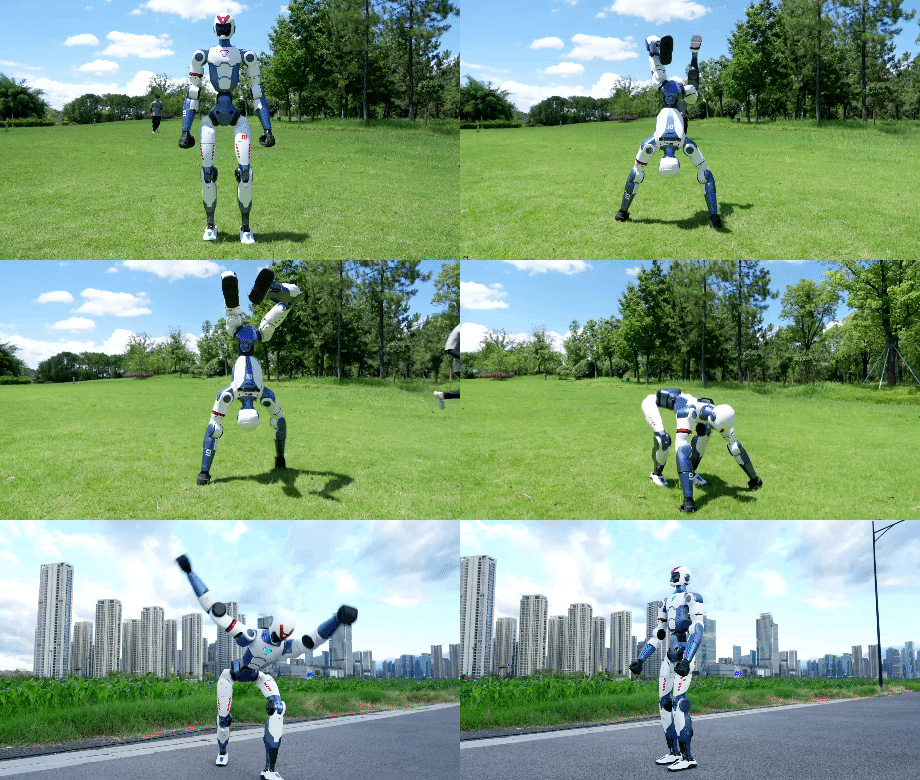
Chinese robotics star Unitree opened preorders for its sport-ready R1 humanoid on Alibaba's AliExpress this week, hitting regions such as North America, Europe, Japan, and Singapore ahead of a June 30 release. Though heavily hyped at its $4,370 domestic price, the global listing actually lands at just over $6,800—a stark reminder of international markups. Standing just over 4 feet and weighing roughly 60 pounds, the R1 can cartwheel, sprint downhill, and pop back up after a tumble. Think Olympic gymnast in a metal tracksuit.
Why so cheap? Unitree makes more than 80% of its components in-house. While this vertical integration already slashed the company's average humanoid price from $85K in 2023 to roughly $25K last year, the R1's sub-$7K price tag takes accessibility to a whole new extreme. |
After shipping 5,500 units in 2025—miles ahead of Tesla, Figure AI, and Agility, which shipped a measly ~150 units each—the firm aims to ship up to 20,000 units in 2026 and is eyeing an IPO of $580 million to $610 million.
AliExpress's Brand+ channel gives buyers free shipping and returns, plus global logistics muscle.
Analysts say the gamble will test real-world demand beyond labs, and US lawmakers are already fretting over potential national security backdoors via the newly proposed American Security Robotics Act. For now, developers and early adopters get a chance to tinker with humanoids for the price of a used hatchback.
Why it matters: Affordable, e-commerce-friendly bots could drag humanoids from hype to household helper... unless geopolitics and hefty import tariffs bin your checkout cart first. |
|
|
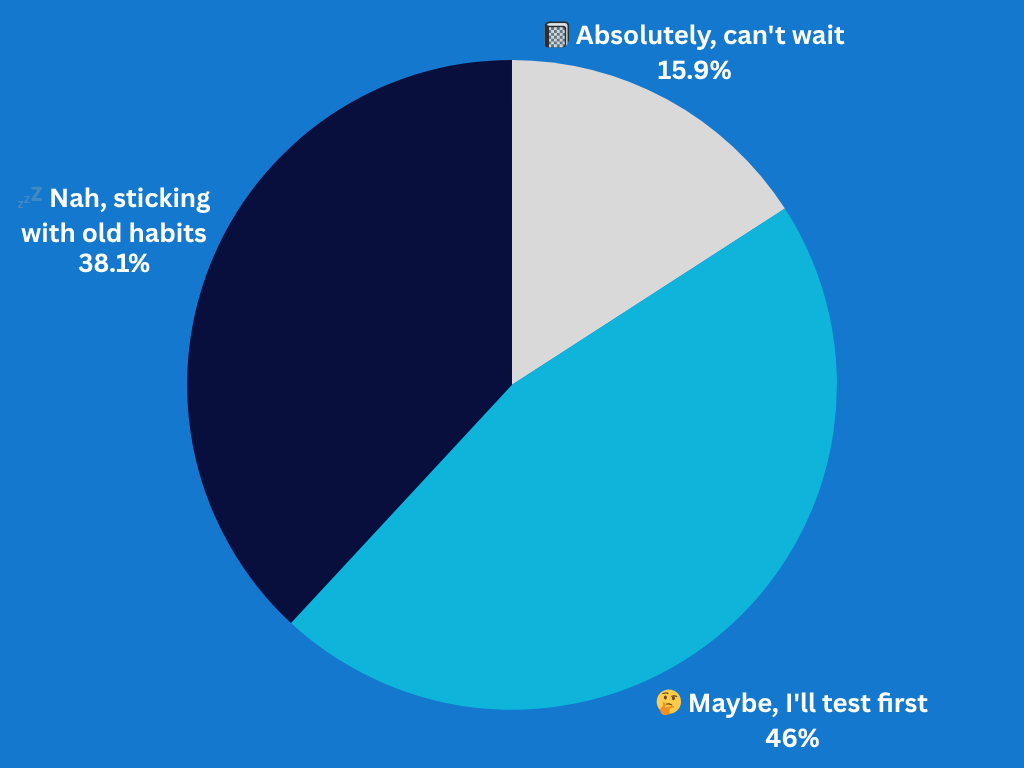
Would you spend $6.8K on a cartwheeling robot? |
|
| Results from Friday's Pulse Check |
Will Gemini's notebooks change how you organize projects? |
|
|
China Sinks Servers, Lifts AI Ambitions |
Hope your sea monkeys like GPUs.
With land-based power and water constraints stalling hyperscalers, China just fired up the world's first wind-powered underwater data center, dropping a planned 24-megawatt server cluster 32 feet below the East China Sea off Shanghai.
Built by HiCloud Technology (aka Hailanyun) for $232 million, the subsea cluster taps offshore turbines for electricity while seawater handles the cooling, feeding AI workloads for autonomous cars and embodied intelligence.
HiCloud's earlier pilot in Hainan showed real gains: 26,000 tons of fresh water saved and power use cut by 3.4 million kilowatt-hours a year. |
The ocean trend is spreading. South Korea just earmarked $29 million to build a carbon-zero underwater complex off Ulsan by 2030. But Microsoft tested the waters with Project Natick, which proved sealed, nitrogen-filled pods could effectively slash hardware failures, until costs and scalability sank the effort in 2024.
Elon Musk now touts orbiting data-center satellites via a mega SpaceX IPO, but analysts warn space cooling and radiation could make seabed headaches look tame.
Standards, maintenance dives, and localized ocean-warming concerns still loom, yet China believes shallow deployments can be serviced like offshore rigs. If the model scales, the next cloud boom might literally make waves. Next up: SpaceX servers in zero-G... what could go wrong? |
|
|
🧾 Fix Restaurant Payroll Once and Forever
This guide focuses on the practical side of restaurant payroll, where issues tend to show up in real operations, and what it takes to build a payroll process that holds up week after week without creating compliance headaches.
☁️ Master Cloud Skills—83% Off
The 2026 Cloud Computing Course Bundle (CompTIA and AWS) plunges from $180 to less than $30. Score lifetime Cloud+, Azure and AWS security, and Spring Cloud microservices training in one shot. 🛡️ Patch Gaps Before Hackers Do
The Best Vulnerability Management Software guide ranks leading tools so you can spot, score, and fix critical flaws before attackers strike.
💻 This section contains sponsored tech insights. Advertise with us! |
|
|
Campus service expectations continue to rise, but many institutions still rely on outdated service management systems that slow response times and strain IT teams.
Modernizing Campus Life with Freshworks, hosted by Freshworks and EDUCAUSE, takes place April 14, 2026, at 1:00 p.m. ET.
This final opportunity to join and learn how modern ITSM platforms automate service requests, streamline operations, and improve campus support. Registration closes soon. |
|
|
Crooks Swap Words for 💳🔑 Emoji |
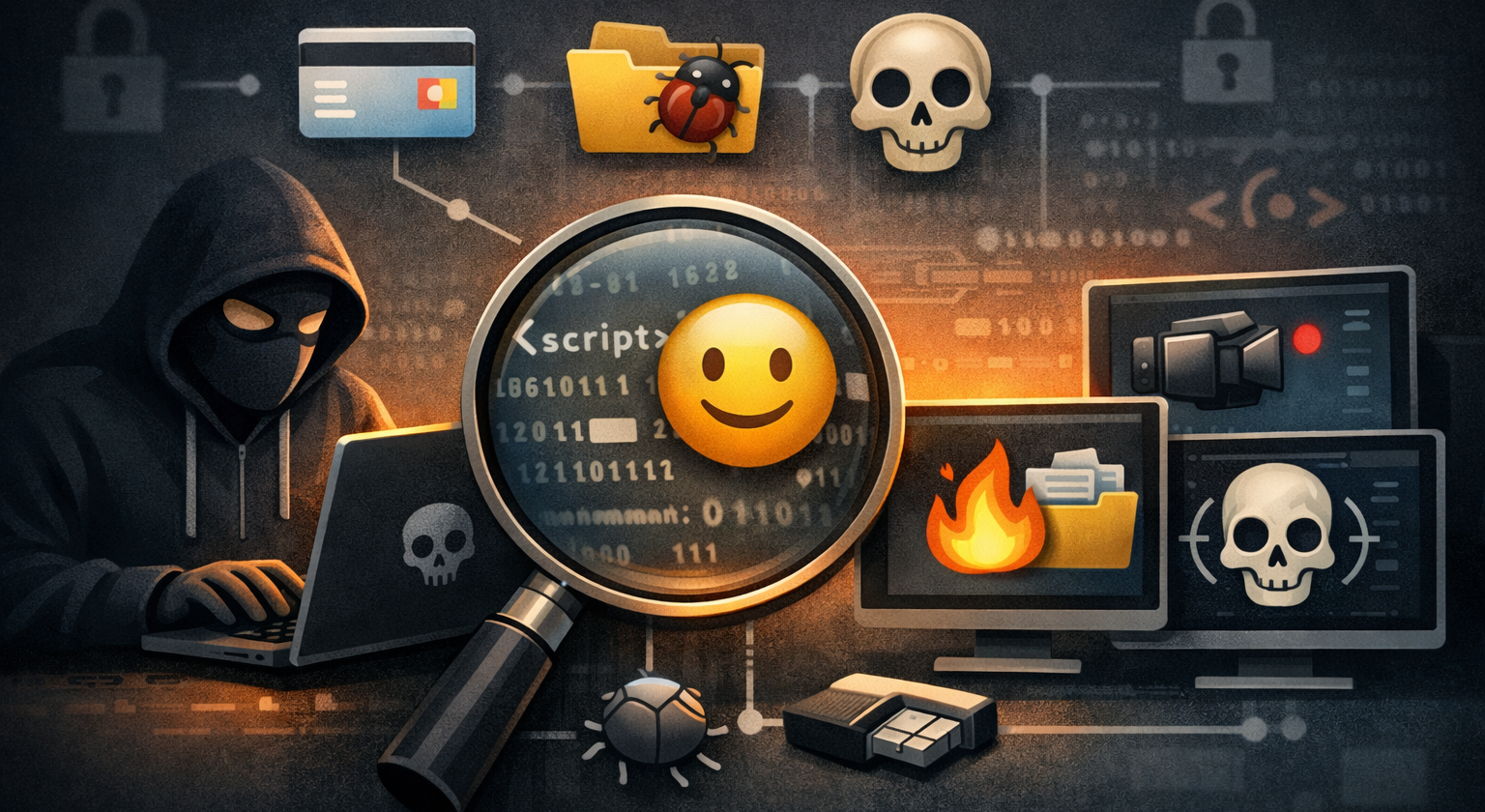
Cybercriminals are turning the dark web into a cartoon strip—but they aren't just trying to be cute. Hackers are actually weaponizing these little icons in three distinct ways: |
-
Dodging text scanners: Fraudsters are replacing hot-button terms like "credit card" with 💳 to dodge keyword filters.
-
Emoji smuggling: They are hiding malicious payloads within the file's underlying Unicode characters. Because your traditional antivirus software just sees a harmless smiley face, the malware slips right through.
-
Command and control: Once inside your system, attackers are triggering malware via pre-mapped emoji commands. (The infamous "Disgomoji" malware, for instance, used 🎥 for screenshots, 🔥 to steal files, and 💀 to kill processes).
|
Image created with ChatGPT |
👉 For IT and security teams: Defenders should add key symbols to threat-intel feeds and DLP/IDS rules, scan emails and file names for ⚠️ bait, and deploy Unicode-aware, behavior-based detection tools that monitor what code actually does, rather than relying on standard file signatures.
👉 For the rest of us: Enable MFA everywhere and, for extra entropy, sprinkle emoji into your passphrases (yep, some platforms actually let you use emoji passwords, making them an absolute nightmare to guess). |
EngageLab Bug Could Have Let Android Apps Hijack Crypto Wallets |
A nasty intent-redirection flaw in the EngageLab SDK—a push-notification toolkit that invisibly inherits its host's security clearance—could have let sneaky Android apps hijack trusted permissions to rummage through 30 million crypto wallets.
Microsoft uncovered the bug in April 2025; Google yanked vulnerable apps, but 50 million installs were exposed before November's 5.2.1 patch. Thankfully, there's zero evidence of active exploitation, and Android automatically mitigated the risk for current users.
Developers must scan merged manifests for exported components (like MTCommonActivity) and upgrade to 5.2.1. Users: install updates and stick to Play Protect. |
Claude Cowork Graduates, Anthropic Debuts Managed Agents |
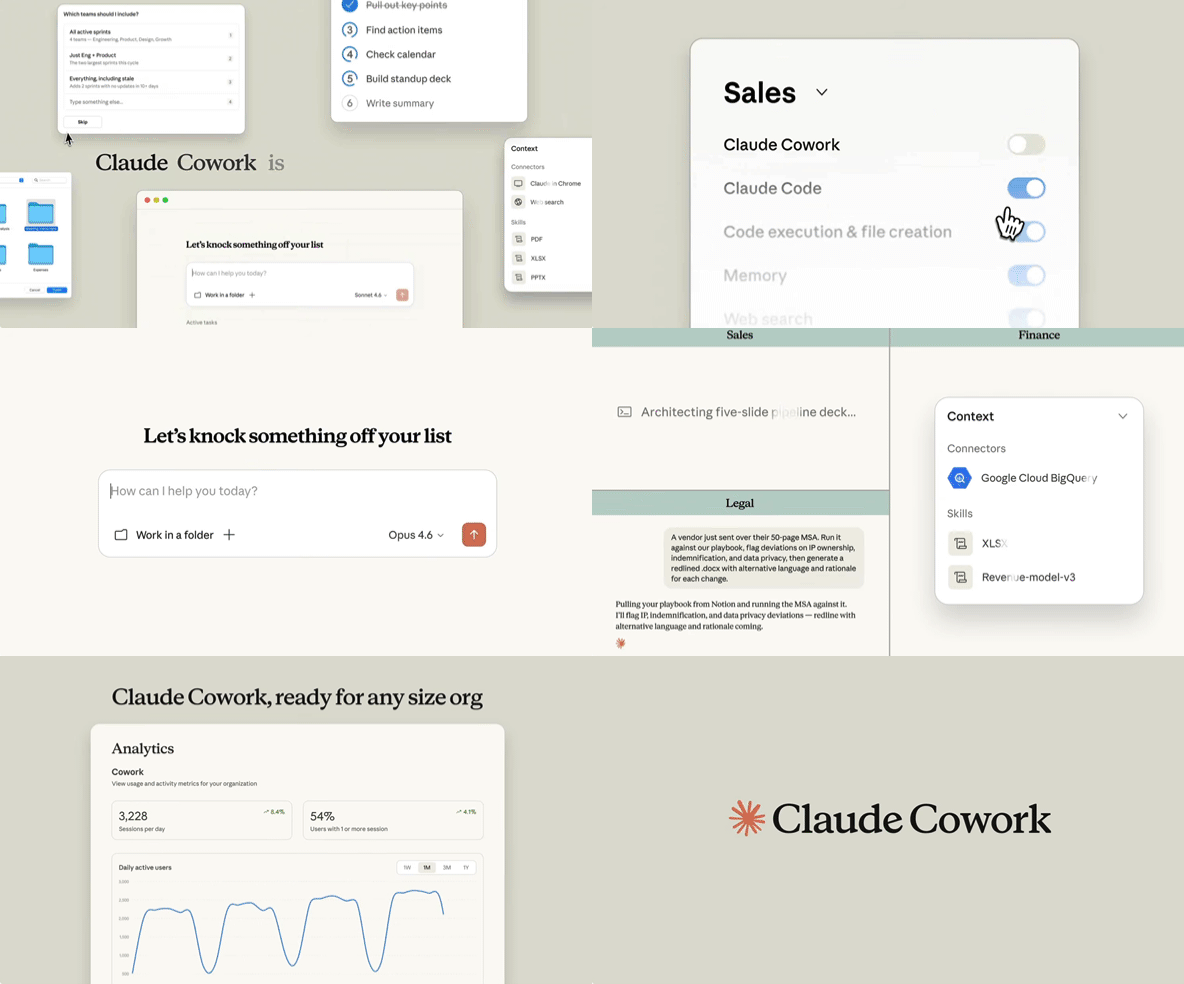
Anthropic's desktop helper is no longer a "research preview." Claude Cowork is now generally available across all paid plans for macOS and Windows, giving the AI free rein to open local files, draft documents, and juggle multistep tasks across apps for nontechnical knowledge workers.
New enterprise controls—role-based access, per-team budget caps, usage analytics, and OpenTelemetry streams—aim to calm IT nerves as Cowork spreads from engineering pods to finance, legal, and marketing floors. A Zoom connector even pipes AI Companion meeting summaries straight into projects, while admins can lock connectors to read-only mode if things get too wild. |
A day prior to Cowork's graduation, Anthropic rolled out Claude Managed Agents in public beta for developers. The cloud runtime bundles sandboxing, credentials, logging, and (in research preview) multiagent coordination so they can spin up long-running AI workers—think bug-fixing coders or slide-building assistants—in days instead of months. Early testers like Notion and Asana say launch cycles dropped 10×, with consumption pricing tacking on $0.08 per session-hour of active runtime atop normal token costs. Together, Cowork on the desktop and Managed Agents in the cloud sketch Anthropic's pitch for end-to-end automation: agents that file your paperwork locally, then hand it off to other agents that tweak spreadsheets while you sleep. If your office suddenly feels emptier, check the break room; your new "coworkers" don't eat bagels. |
|
|
|
Writer at TechnologyAdvice |
Justin Meyers is an investigative writer and editor who draws on over a decade of meticulous hands-on research to deliver the full, trustworthy story behind consumer and enterprise tech, including cybersecurity. |
|
|
Curious about where AI is really headed? |
The Neuron cuts through the noise to bring you smart, hype-free takes on the latest AI trends, tools, and breakthroughs. Join 500,000+ professionals from top companies like Microsoft, Apple, Salesforce and more.
|
|
|
Advertise in Daily Tech Insider! Daily Tech Insider is a TechnologyAdvice business.
© 2026 TechnologyAdvice, LLC. All rights reserved. TechnologyAdvice, 3343 Perimeter Hill Dr., Suite 215, Nashville, TN 37211, USA. |
|
|
|