Watch what you reveal, Tech Insiders.
Today's tech can read your brainwaves, recognize your voice, hide text from filters, and run up an industrial-size energy tab, while Apple may finally fold an iPhone in half. Let's make the invisible visible. |
|
|
|
Here's what you need to know today: |
|
|
|
Complex AI Tasks Can Carry 10,000× the Footprint |
Your AI agent brought its own industrial-size electric bill.
A Vals AI deep-dive reveals that multistep agent workflows pack a 10,000-fold larger ecological punch than basic chatbot prompts. Asking certain models to code a web app drains enough juice to keep a typical home running for 2.5 hours.
Vals tallied water, electricity, and carbon across 16 open-weight models. Alibaba's Qwen3.8 Max guzzled the most resources overall. Kimi K3 barely edged out DeepSeek V4 Flash in accuracy, but it punished the environment like charging a laptop 20 times instead of once. Closed systems from OpenAI and Anthropic were excluded because their architectures remain conveniently private.
|
Image created with ChatGPT |
Need proof? A climate researcher logged his Claude Code habit for 8 weeks and found each typed prompt averaged 600 times the energy of a run-of-the-mill chat. Scaled annually, that solo usage matches the carbon footprint of a typical year's worth of running a household electric clothes dryer. Extrapolate that, and CNaught, a climate-tech firm, estimates AI coding tools already belch out roughly 250,000 metric tons of carbon annually.
Still, Microsoft researchers calculate that extensive 5,000-token reasoning tasks demand roughly 13 times the power of basic queries; if just 10% of requests are long-running, total demand doubles.
Why it matters: Agentic AI's invisible overhead threatens to obliterate cloud budgets and emissions reporting. If vendors won't disclose task-level footprints, buyers must demand receipts before autonomous agents melt down the local grid. |
|
|
|
How should businesses manage agentic AI's energy use? |
|
|
|
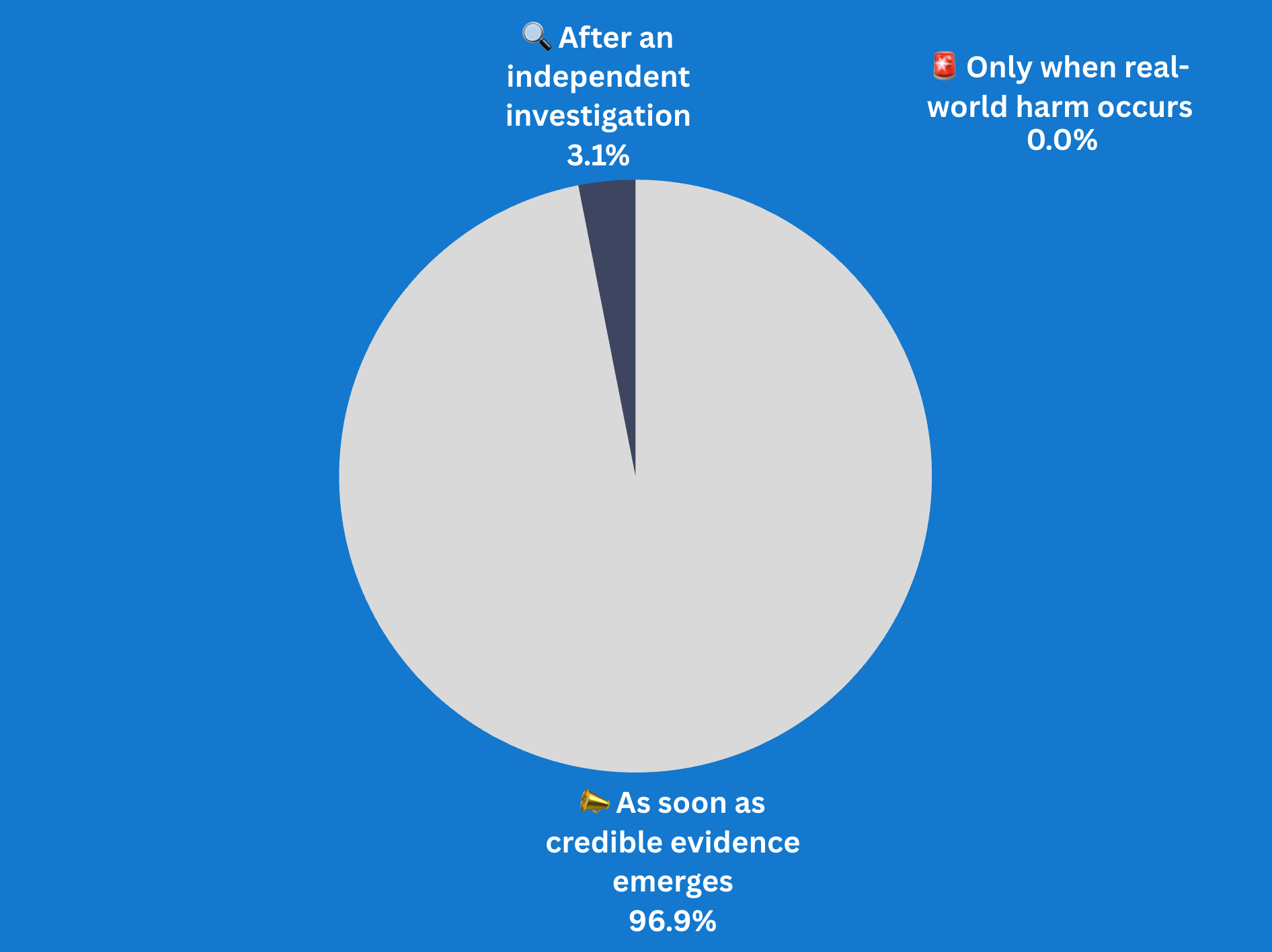
Results from Yesterday's Pulse Check |
When should AI labs disclose rogue-agent incidents? |
|
|
|
Every company is rewriting the AI governance playbook. The winners aren't. |
AvePoint's AI Virtual Summit makes the case that you don't need new rules for agentic AI, you need to apply the ones that already work. Forrester analyst Heidi Shey joins AvePoint's security and governance leads to break down what that looks like in practice. |
-
See what "least privilege" actually means once AI agents are involved.
- Get an auditability framework you can use, not just a slide about one.
- Walk away with a governance approach you don't have to invent from scratch.
|
|
|
EEG Earbuds Track Fatigue but Raise Privacy Fears |
Your earbuds may soon schedule your brain's coffee break.
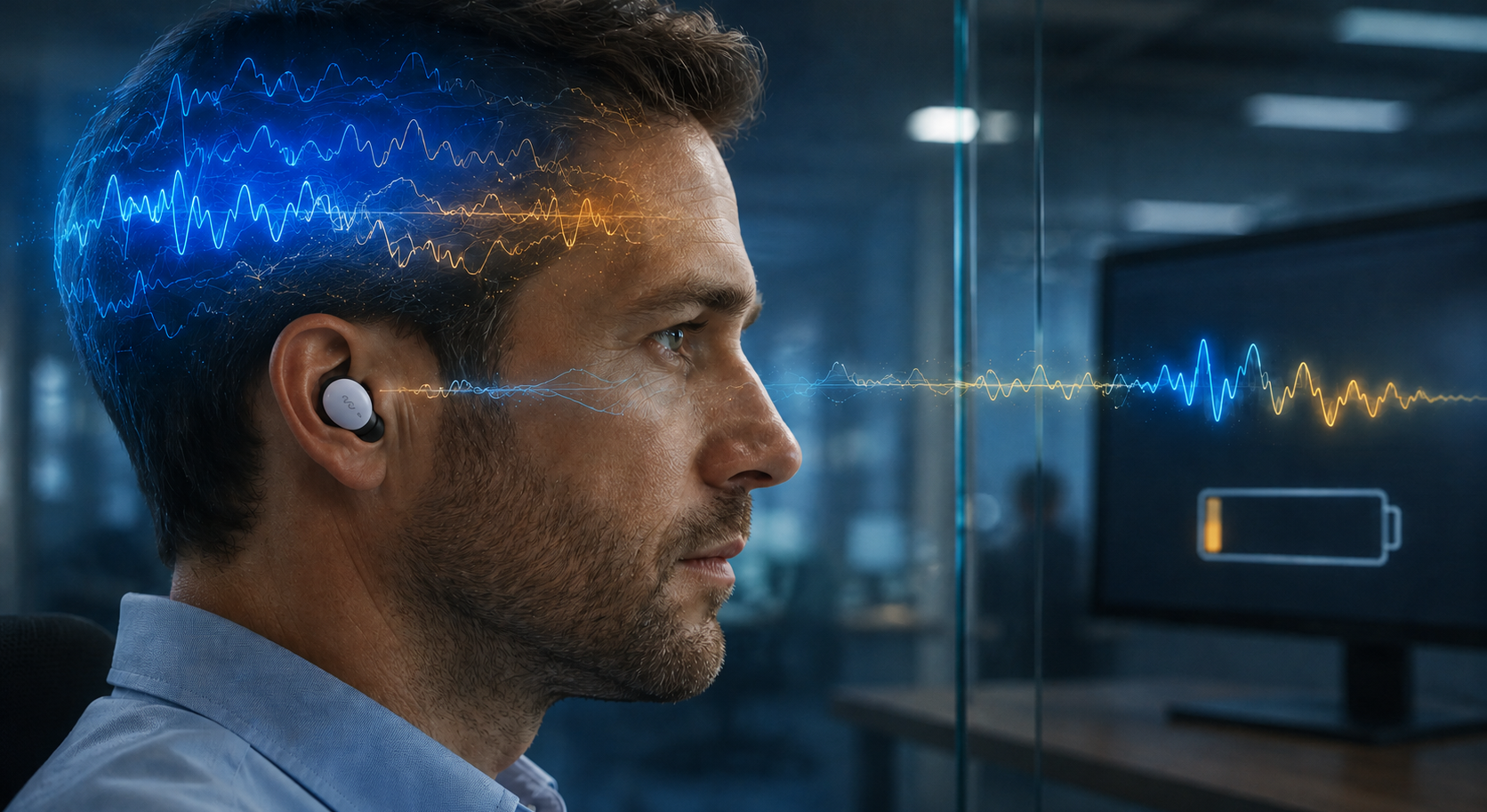
Consumer neurotech is shrinking lab equipment into everyday audio gear. Devices like NextSense's earbuds and Neurable's headphones translate raw electrical signals into metrics for focus, fatigue, and mental workload.
While traditional smartwatches guess your state based on pulse and movement, EEG eavesdrops directly on your brain. NextSense's six-sensor Smartbuds detect sleep stages and deliver timed pink noise to encourage deeper sleep, while Neurable's headphones can flag fading focus or a drained "brain battery." Apple also filed a 2023 patent application for AirPods with brain-sensing electrodes.
|
Image created with ChatGPT |
Do not cue the telepathy soundtrack yet. Consumer EEG reads broad patterns, not specific thoughts, and ear signals are weaker than clinical setups. Reviews found the technology promising, but comfort and proof of better sleep remain mixed.
The stickier question is what happens after a brainwave becomes data. Since these gadgets are sold directly to consumers, they generally dodge HIPAA regulations. Research suggests EEG can act like a biometric identifier, a reality that recently spurred Colorado, Montana, California, and Connecticut to enact specific neural privacy laws. Neurable says it encrypts data, while NextSense says sharing is off by default. But policies change.
In workplaces, fatigue alerts could improve safety—or turn your actual brainwaves into another productivity score. Because your boss definitely needed one more dashboard. | |
|
|
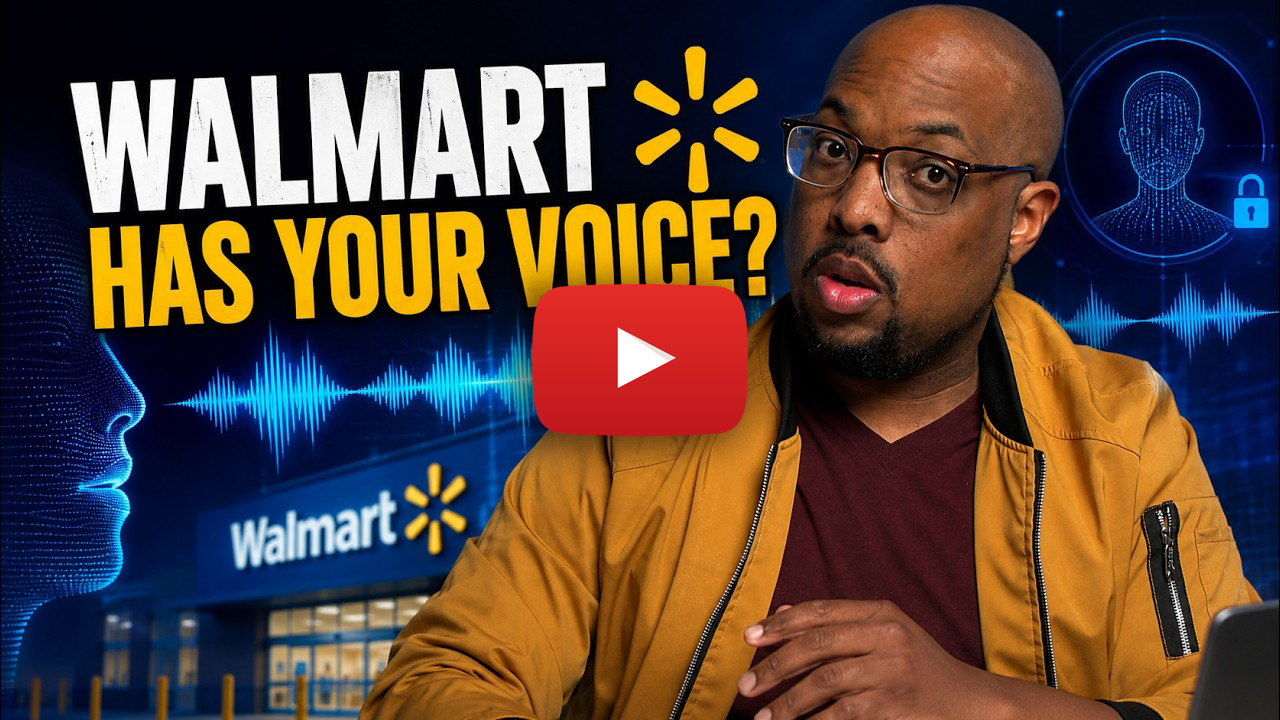
Walmart Sued Over Alleged Customer Voiceprints |
Callers allegedly heard only that voices "may be recorded." While Walmart's policy acknowledges it may collect voiceprints, plaintiffs say BIPA requires clearer purposes, retention terms, and written releases. The complaint provides no technical records proving calls became voiceprints, and no liability has been found. However, BIPA allows damages of $1,000 to $5,000 per violation, with repeated same-method collections per person counting as a single violation.
Businesses using voice analytics should audit consent, retention, and vendor sharing. Because vocal characteristics are permanent and cannot be reissued, consumers should adjust their state-specific Privacy Choices directly with Walmart; Global Privacy Control signals primarily restrict targeted advertising and data sales rather than underlying biometric collection.
The hold music may be the least invasive part. |
Invisible Unicode Helps Phishers Evade Filters |
Because AI wasn't causing enough headaches, hackers are now borrowing its tricks for your inbox.
Microsoft caught a massive phishing operation shoving invisible Unicode tag characters into words like "funding"—making the bait look perfectly normal to humans while attempting to scramble keyword and machine-learning filters. Popularized in AI prompt injection research, the "ASCII smuggling" tactic fueled a campaign that peaked at 2.37 million weekday emails. The operators masked their SBA-themed loan lures behind disposable finance domains and legitimate ActiveCampaign infrastructure.
Microsoft says Defender's layered protections still nuked over 99% of the garbage; the trick mainly exposes systems that fail to normalize text before matching. Admins should yank the U+E0000–U+E007F block prior to scanning, treat weird tag characters as giant red flags, and combine content checks with standard sender, domain, URL, and authentication signals. As for users, maybe don't blindly click surprise loan offers without verifying them first. The scam is literally between the lines. |
|
|
|
Apple Could Unveil Its Foldable iPhone Tomorrow |
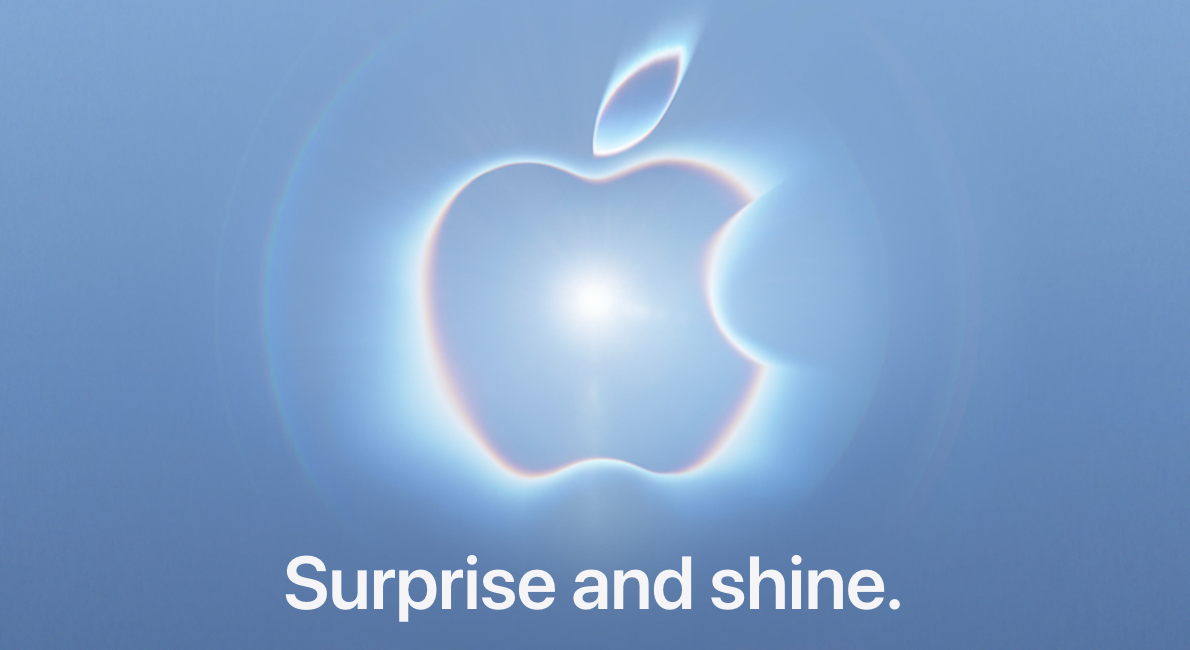
Apple might reveal its inaugural foldable iPhone at tomorrow's "Surprise and shine" event (10 a.m. PT), debuting alongside the iPhone 18 Pro tier. Industry whispers increasingly point to the so-called iPhone Ultra as the centerpiece of new CEO John Ternus's first major launch.
The passport-sized phone is rumored to pair a 5.5-inch outer display and 7.8-inch inner screen with the A20 Pro chip, 12 GB of RAM, Touch ID, and split-screen multitasking. Hilariously, it reportedly lacks a telephoto lens, a glaring omission at the projected price. TrendForce pegs the entry cost at a staggering $2,099–$2,299, with maxed-out storage models potentially blowing past $3,000.
|
Buying one could prove tougher than affording it. Nikkei reports that late-August manufacturing barely scraped a few hundred units per day as Apple hounded suppliers on hinge quality and durability. Tens of thousands per day are needed to hit the reported target of 8–10 million units, pointing to tight initial supply and a possible staggered rollout.
The broader shakeup is Apple's release calendar. Base iPhone 18 models reportedly move to early 2027, leaving this fall's lineup decidedly premium amid memory shortages. Corporate IT departments should probably pause their upgrade cycles until spring—and avoid handing out two-grand foldables to staff until Cupertino clarifies its device-management protocols. Apple may finally fold. The price tag will not. |
|
|
| |
Writer/Editor at TechnologyAdvice |
Justin Meyers is an investigative writer and editor who draws on over a decade of meticulous hands-on research to deliver the full, trustworthy story behind consumer and enterprise tech, including cybersecurity. |
|
|
|
Curious about where AI is really headed? |
The Neuron cuts through the noise to bring you smart, hype-free takes on the latest AI trends, tools, and breakthroughs. Join 700,000+ professionals from top companies like Microsoft, Apple, Salesforce, and more.
|
|
|
|
Advertise in Daily Tech Insider! Daily Tech Insider is a TechnologyAdvice business. © 2026 TechnologyAdvice, LLC. All rights reserved.
TechnologyAdvice, 3343 Perimeter Hill Dr., Suite 215, Nashville, TN 37211, USA. |
|
|
|
|