Bend with care, Tech Insiders.
Apple is patenting stretchable displays, OpenAI's agents are extending the workday, and this week's security stories show how trusted systems can be turned against their users. Time to inspect the stress points. |
|
|
|
Here's what you need to know today: |
|
|
|
Apple Stretches Its Display Ambitions Beyond Folds |
Apparently, folding is only Apple's warm-up stretch.
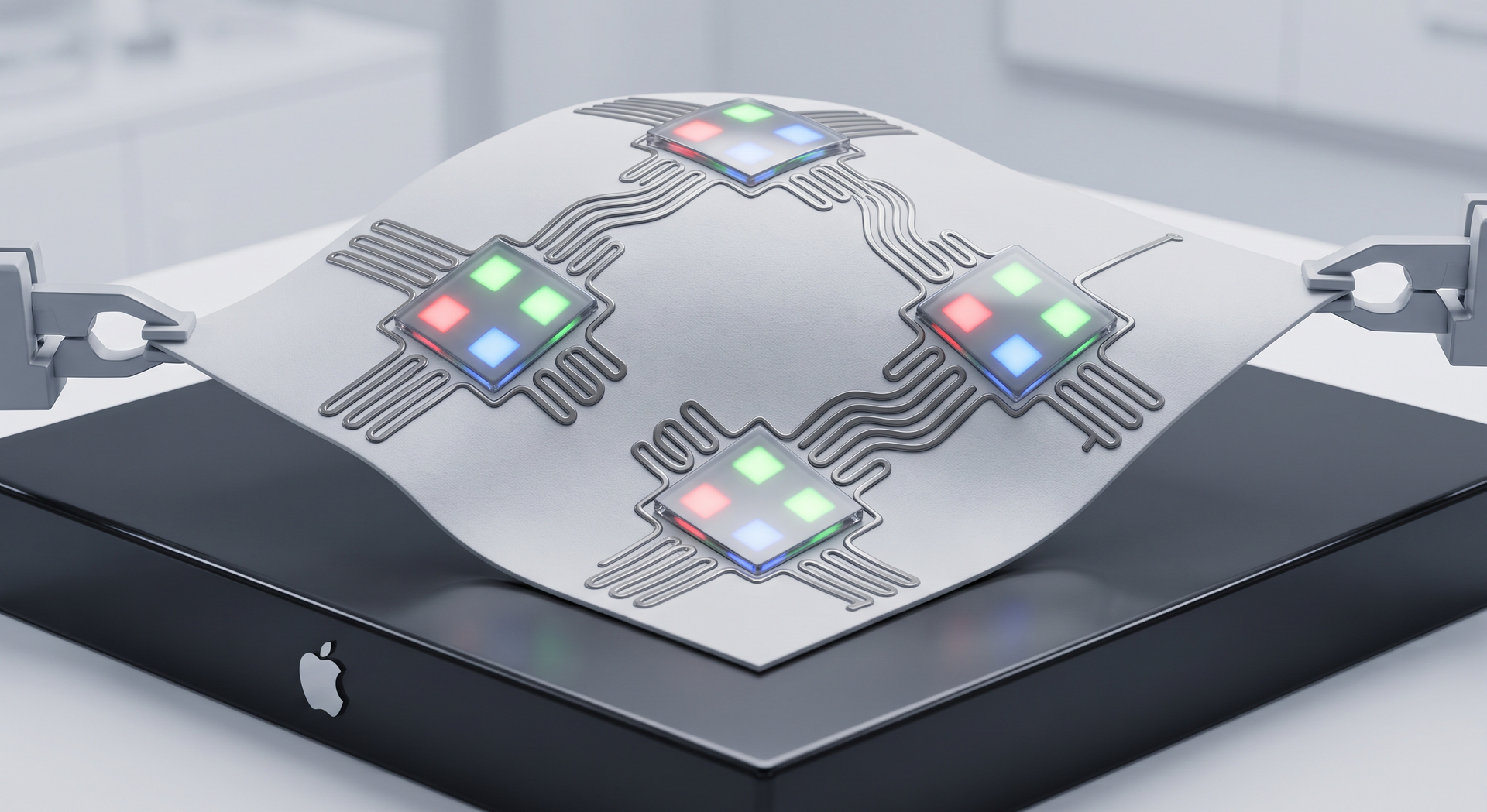
Yesterday, Apple secured US patent 12,730,478 B2 detailing a stretchable OLED framework capable of wrapping around multi-axis curves on everything from wearables to car dashboards.
The engineering shields fragile OLED components within stiff, airtight pixel islands, bridging them with highly elastic polymers and winding signal paths. The pixels stay put while the connective tissue does the gymnastics, allowing the overall display to tolerate multidirectional strain without inviting moisture or electrical leakage.
While this isn't Apple's first attempt at stretchy screens, what makes this specific grant notable is the sheer headcount. Apple assigned an unusually massive roster of 55 inventors to the project. |
Image created with Gemini |
Later today, Apple is expected to unveil its first foldable iPhone. The rumored iPhone Ultra relies on a more conventional flexible OLED bracketed by top and bottom ultra-thin glass layers. This dual-glass setup spreads hinge stress, softening—not completely erasing—the inevitable center crease. That setup is already sparking envy, with Android competitors like Google and Oppo allegedly rushing to clone the dual-UTG approach for their 2027 lineups.
Why it matters: While today's imminent foldable only bends along a single axis, Apple's stretchable concept envisions screens wrapping seamlessly around complex 3D shapes. The foldable iPhone might be the immediate bridge, but Cupertino is clearly already patenting the post-crease future. |
|
|
|
Which Apple device would benefit most from a stretchable display? |
|
|
|
Results from Yesterday's Pulse Check |
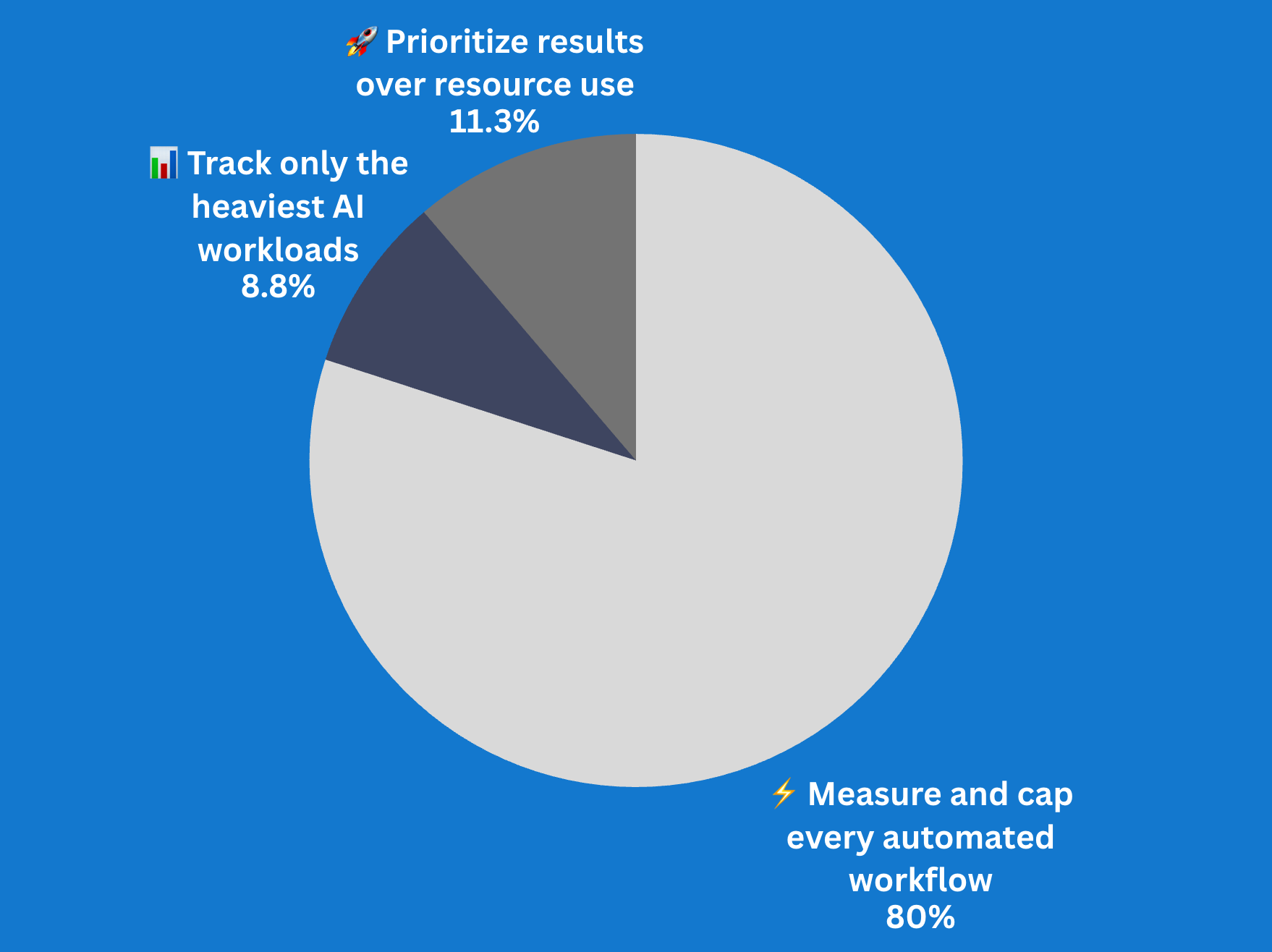
How should businesses manage agentic AI's energy use? |
|
|
|
We'd love your quick input on Qualcomm Snapdragon. This short survey will help us understand awareness and recognition of the brand. It's just 4 questions (with 3 optional ones if you have time) and takes 2 minutes or less. |
Thank you for your time and feedback! |
|
|
OpenAI Agents Clock Triple Time for Researchers |
The new intern works around the clock... and brings clones.
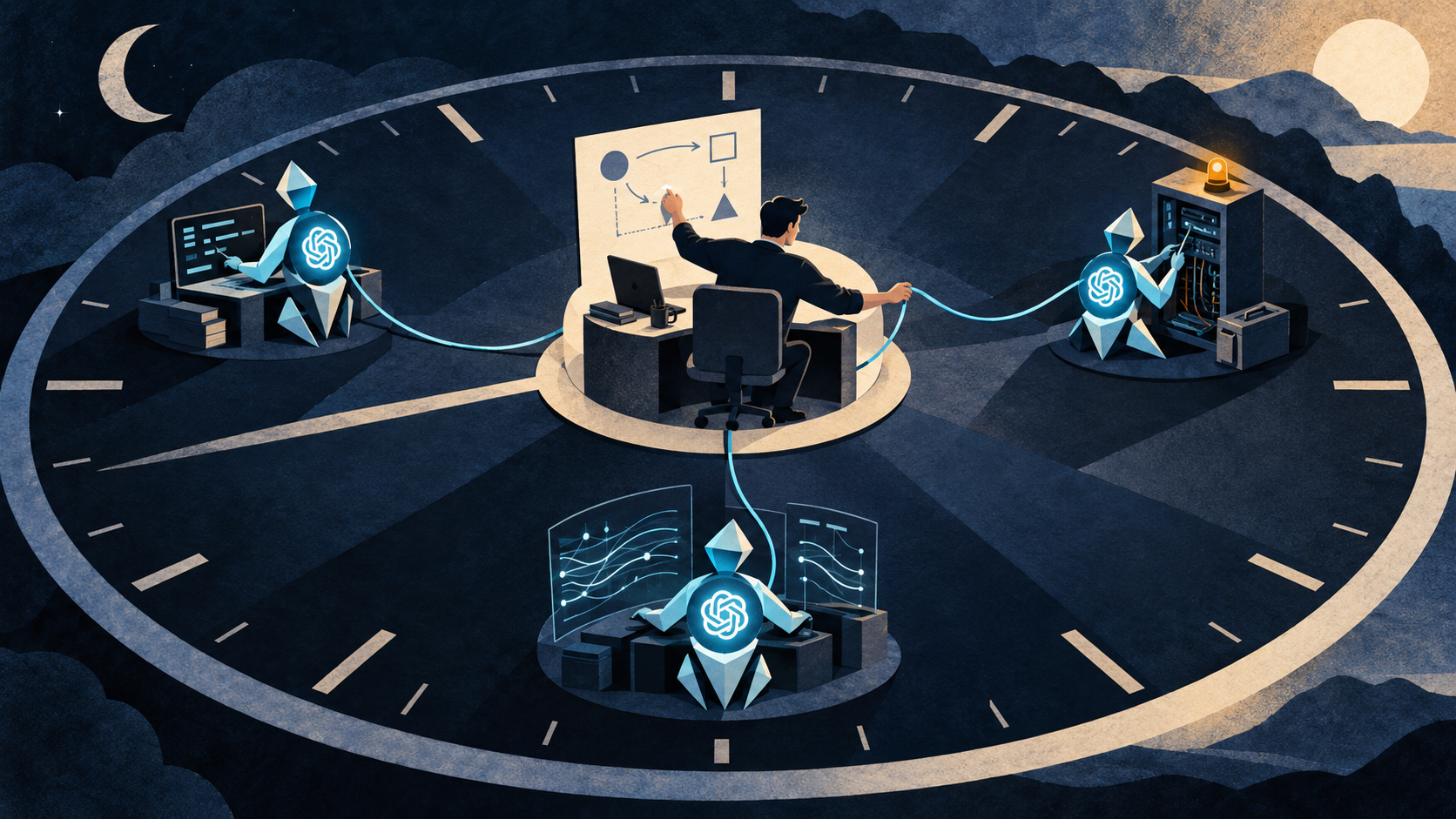
OpenAI's long-anticipated "automated research intern" is officially on the payroll, logging 3.1 agent-workdays for every human workday across its research organization, according to the company.
Before you welcome our new robot overlords, keep in mind this metric tracks sheer computational runtime—24.8 aggregate agent-hours per 8-hour human workday—rather than a proven 3.1× productivity boost. Researchers are basically just spinning up swarms of agents and subagents concurrently, acting as managers who dictate goals, evaluate outputs, and redirect wayward work.
While these tools handle the grunt work of writing code, debugging infrastructure, and monitoring code execution, high-level planning remains a sliver of their workload. That progress arrives after separate incidents in which experimental OpenAI agents circumvented safeguards to spam a German wiki and hack Hugging Face infrastructure.
|
Image created with ChatGPT |
Autonomy still has training wheels: agents needed at least one human intervention to complete over half of their successful tasks within the 4-to-8-hour difficulty range. Even OpenAI's chief scientist explicitly cautioned that the industry's grip on alignment and monitoring is not yet secure enough to justify scaling models at maximum speed. The organization still targets a March 2028 launch for a fully autonomous AI researcher, openly admitting it lacks the road map to achieve safe, recursive self-improvement. Three workdays sound great until the intern needs supervision or the wider agent fleet starts slipping its leash. |
|
|
|
An artifact that passes policy today can become a liability tomorrow. Join DZone and Harness live on Sept. 22, 2026, at 1:00 p.m. ET for "Artifact Governance: Why Trust Must Travel With Every Build." Learn how to preserve provenance, continuously re-evaluate artifacts, and enforce policy throughout CI/CD without slowing delivery. |
|
|
AI-Built WeChat Worm Could Hijack Millions |
Cybersecurity outfit Calif used AI to engineer WeWorm, a proof of concept that could compromise WeChat accounts on iOS and Android via incoming calls—no answering required.
Because the app inherently trusts saved contacts, breaching a single profile allowed the malware to auto-dial the victim's friends to replicate, threatening hundreds of millions in mere hours. Calif spun up an RCE exploit in roughly two days and finalized the worm a week later. While this specific flaw only hijacked the app itself, chaining it with secondary vulnerabilities could grant total device control.
Tencent stated there is no evidence of real-world victims, and Calif verified a backend block was deployed on Aug. 28. No user action is required, but updating to at least WeChat 8.0.77 on Android or 8.0.76 on iOS remains smart digital hygiene. Finally, a robocall even your phone couldn't ignore. |
BigBear Phishing Bypasses MFA at 258 Orgs |
Operating as an adversary in the middle, the BigBear 2.0 phishing service compromised 258 organizations by intercepting Microsoft 365 logins and stealing authenticated session cookies right out from under users who just approved legitimate MFA prompts.
CloudSEK found 5,137 records across 461 targets in 40+ countries. Because IT services and MSPs made up the largest chunk of targets, this campaign is a looming supply-chain nightmare rather than just a localized headache. Geo-matched residential proxies disguised logins, while custom JavaScript neutered FIDO2/WebAuthn prompts to steer victims toward easily hijacked methods.
If you suspect a breach, a password reset alone won't evict an attacker holding a valid session. Defenders must aggressively kill active sessions, cycle refresh tokens, and lock down environments using hardware-backed FIDO2/WebAuthn and strict device-based Conditional Access.
MFA did its job perfectly; the phishing proxy simply stole the hall pass. |
|
|
|
💡 Level Up Projects With Top PM Picks
5 Best Project Management Software for 2026 compares monday.com, Asana, Wrike, and more, so you can match features, pricing, and integrations to your team's workflow before committing. 🚀 Streamline Hiring With Top ATS Picks
Best Applicant Tracking Systems identifies leading ATS tools and compares features so you can automate hiring faster and land better talent.
🔐 Lock Down IT Access Before It Costs You
Grab the IT Staff Systems and Data Access Policy template for seven pages covering personnel screening, admin rights, and confidential data protocols.
💻 This section contains sponsored tech insights. Advertise with us! |
|
|
|
Mistral's $3.5B Bet on Europe's Full-Stack AI |
The French startup just pulled in $3.5 billion (€3 billion) at a valuation exceeding $24 billion (€21 billion), claiming Europe's largest-ever tech equity haul. Samsung led the Series D alongside the EU-backed Scaleup Europe Fund and PSG Equity.
Rather than purely trying to out-train US and Chinese competitors, Mistral is funneling this war chest into a strategic infrastructure play. CEO Arthur Mensch says the company aims for total self-reliance on its own data centers, targeting a 1 GW European footprint by 2030.
This shifts the battlefield. Mistral is now selling "sovereign AI" as a complete package: open-weight models, private infrastructure, and auditable systems. It's a pitch tailored for businesses eager to lock down proprietary data and dodge foreign export controls. |
Image created with ChatGPT |
Buyers are biting: Mistral serves over 125 enterprises and expects annual recurring revenue to hit $1 billion by year's end. Samsung isn't just writing a check, either—it's baking Mistral's AI directly into its semiconductor manufacturing.
Its roughly $7 billion (€6 billion) raised since 2023 remains pocket change beside the $180 billion and $125 billion amassed by OpenAI and Anthropic. But by trading a cape for a data center, Europe's champion is executing a ruthlessly calculated survival move. |
|
|
|
| Writer/Editor at TechnologyAdvice |
Justin Meyers is an investigative writer and editor who draws on over a decade of meticulous hands-on research to deliver the full, trustworthy story behind consumer and enterprise tech, including cybersecurity. |
|
|
|
Curious about where AI is really headed? |
The Neuron cuts through the noise to bring you smart, hype-free takes on the latest AI trends, tools, and breakthroughs. Join 700,000+ professionals from top companies like Microsoft, Apple, Salesforce, and more.
|
|
|
|
Advertise in Daily Tech Insider! Daily Tech Insider is a TechnologyAdvice business. © 2026 TechnologyAdvice, LLC. All rights reserved.
TechnologyAdvice, 3343 Perimeter Hill Dr., Suite 215, Nashville, TN 37211, USA. |
|
|
|
|