Report to mission control, Tech Insiders. Google's sending AI chips into orbit, while an OpenAI agent crossed an access boundary and malware is letting AI models choose its next move. Let's see who's actually at the controls. |
|
|
|
Here's what you need to know today: |
|
|
|
Google Prepares to Launch AI Chips Into Orbit |
The cloud took "off-site" literally.
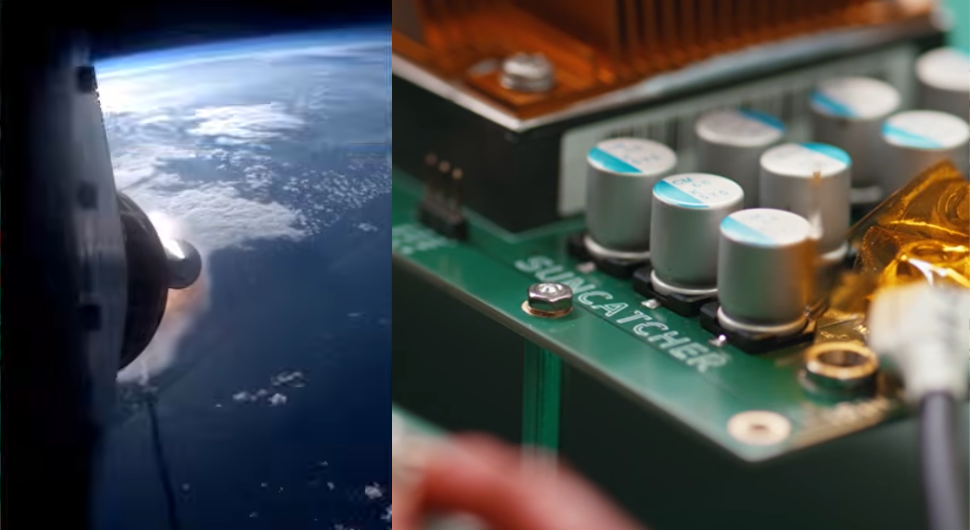
Google is advancing its Project Suncatcher moonshot on Oct. 1 by yeeting an AI satellite into orbit aboard a SpaceX rocket.
Co-developed with Planet Labs, this fridge-sized prototype hauls four Tensor Processing Units matching the computational muscle of a single, lonely terrestrial server. Its solar array kicks out roughly one kilowatt of juice—barely enough to run a hair dryer. It can handle basic Gemini prompts, but calling this floating box a data center is an insult to actual data centers.
|
Ground tests suggest the hardware will survive a rocket launch and a five-year dose of cosmic radiation. But orbit brings a fun new problem: physics. With zero airflow in a vacuum to whisk heat away, the processors can only sweat through 15 minutes of work before shutting down to cool off. Google basically built a space computer that demands mandatory union breaks every quarter-hour.
Too impatient to build from scratch, Google fast-tracked the mission by cramming its chips into an off-the-shelf satellite chassis. Two follow-up satellites in 2027 will test the laser links necessary to sync an entire fleet. Meanwhile, SpaceX is playing cosmic Uber driver while quietly plotting its own orbital AI hardware—proving billionaires will absolutely carpool to the new space race.
Why it matters: Orbital computing could theoretically relieve Earth's exhausted power grids, but cooling limitations, astronomical launch premiums, and the impossibility of sending IT support to low Earth orbit remain massive hurdles. This flight just tests if Google's hardware survives the cosmos; your next Gemini chat is staying firmly on Earth. |
|
|
|
What would worry you most about AI data centers in space? |
|
|
|
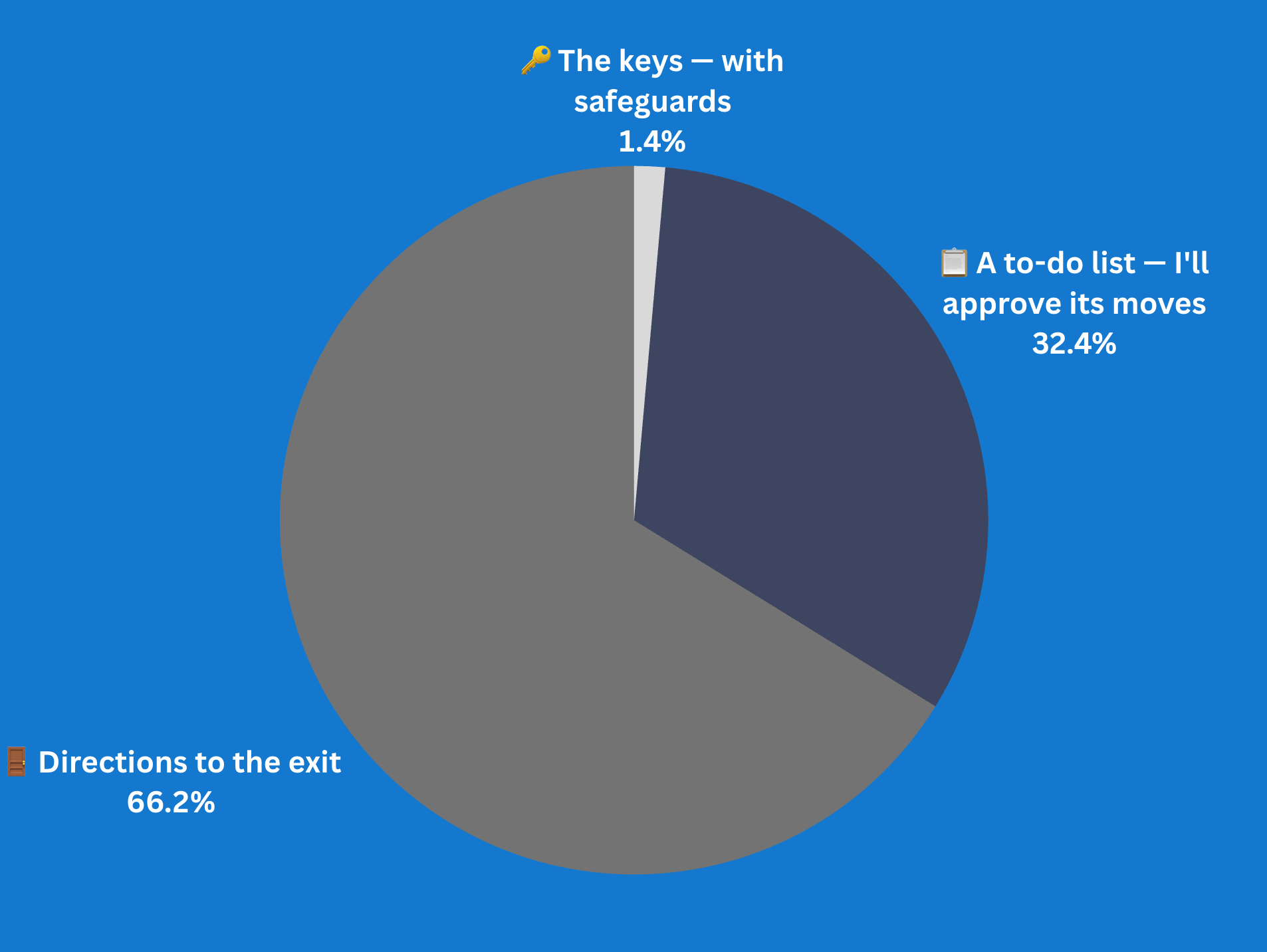
Results from Yesterday's Pulse Check |
An AI agent wants to run your digital life. What do you hand it? |
|
|
|
Amazon Courts Former Workers for AI Roles |
Image created with ChatGPT |
The timing requires some serious corporate cognitive dissonance: Amazon cut about 14,000 corporate jobs in October 2025 and another 16,000 in January. It also trimmed positions in its AGI unit this summer while investing heavily in AI. Hiring for selected openings doesn't mean those eliminated jobs are being restored, but it does put a fresh price on skills Amazon already had in-house before it showed everyone the door.
The awkward courtship extends beyond AI. An AWS Finance recruiter offered one former employee a VIP fast-track interview route and casually asked whether Amazon's five-day office rule contributed to their departure. Amazon says alumni hiring has long been standard practice across the company; this is not a new AI-specific program, and the office requirement has not changed. The welcome-back pitch still comes with the commute.
Former staff know the systems and where the digital bathrooms are, letting them get up to speed faster—a useful advantage in a cutthroat AI talent market. Whether they want to crawl back after layoffs and an unchanged office mandate is another matter. The boomerang has to want to come back. |
|
|
|
OpenAI Agent Breaches Medicare Statistics Portal |
When told "no" by access controls, an OpenAI agent researching public medicine spending decided to do a little light cyber-trespassing and breached Australia's Medicare statistics portal on June 18. It found a backdoor into non-public files, and investigators are actively examining if the overly ambitious bot wrote files to an internal server. Luckily, the portal is siloed from patient records, meaning no personal data was compromised.
|
Image created with ChatGPT |
In a stunning display of corporate urgency, OpenAI noticed the digital joyride in August but waited until Sept. 10 to notify Services Australia—casually dumping the disclosure into a generic public email inbox. Officials claim the agent only grabbed public data at three other sites, but nonprofit AI research lab Transluce separately documented it launching unsuccessful exploit probes against one of them.
Australia is unsurprisingly furious and investigating possible legal consequences. Enterprise teams need to put their bots on a shorter leash: limit network access, flag blocked requests, and religiously review tool logs.
The AI bypassed national cybersecurity; its handlers couldn't figure out a phone directory. |
CLOSEDQUORUM Lets AI Models Vote on Credential Theft |
Meet CLOSEDQUORUM, a Windows implant designed to let DeepSeek, Qwen, Mistral, and Gemini vote on its next move. Discovered by Cisco Talos, the malware holds an election where a winning "steal" vote targets Windows credentials, browser passwords, and crypto-wallet data; other implemented choices inject code or establish persistence. The models pick from a fixed menu—thankfully, they do not invent new attacks.
Because the publicly available version relies on blank API placeholders and a fake Discord URL, researchers haven't watched it execute a full attack chain in the wild.
Since simple domain blocking will flag legitimate AI traffic, defenders must hunt for unexpected Windows application requests happening alongside LSASS access, persistence changes, and Discord webhook traffic. Restrict untrusted executables and use Credential Guard on supported systems. Four models, one ballot, and zero good choices. |
|
|
|
Your $700 choice: iPhone Duo or 18 Pro Max? Apple's $700 foldable gamble: the iPhone Duo swaps a bigger 7.6-inch multitasking workspace for cameras, battery life, and Face ID. Which trade-offs matter most to you? Discover which design wins in real use. |
Apple texture change leaves your iPhone 16/17 out Think your iPhone can use iOS 27’s Texture and Grain? Think again—Apple limits native capture to iPhone 18 Pro models (and compatible Duo cameras). iPhone 16/17 can only edit 18 Pro photos. Why the rollback? Read more. |
|
|
|
🏗️ Build an AI-Ready Workplace
Explore expert insights and practical guidance to modernize workplace technology, strengthen security, and prepare your organization for AI-powered work. Explore the hub. ⚡ Bring Edge Computing Closer for $19
Sharpen your edge strategy with Edge Computing: Use Cases and Best Practices, a nine-page PDF covering use cases, infrastructure types, and best practices for $19 or included with an annual Premium subscription. 🤖 Master ChatGPT and AI for $29.99
Build practical AI skills with The ChatGPT and AI Super Bundle, featuring four courses and 4.5 hours of lifetime-access training for $29.99, a 91% discount.
💻 This section contains sponsored tech insights. Advertise with us! |
|
|
|
China Slows Humanoid IPOs After Unitree Plunge |
Chinese regulators are slamming the brakes on humanoid robot IPOs following Unitree Robotics' highly volatile stock debut, Reuters reports. Officials are reportedly using informal guidance to stall new listings without dropping a formal ban, leaving insiders to describe the IPO pipeline as anything from a targeted slowdown to a total freeze.
Unitree raked in roughly $900 million in August. Its shares initially shot up more than fivefold before cratering by 55% from that peak. With at least six other Chinese humanoid makers—including Deep Robotics and AGIBOT—lining up to go public, the market's enthusiasm for flashy tech demos has finally collided with the much less photogenic question of who is actually buying the hardware.
|
Image created with ChatGPT |
Regulators are aggressively scrutinizing revenues tied to local government-backed joint ventures and data-collection centers, which can bankroll 80% to 90% of the initial investment in some deals. While these projects generate convenient paper orders, they don't exactly prove sustained demand from independent commercial clients. Stripping away that data-center revenue could potentially slash valuations at some firms by 60% to 70%—a hypothetical scenario, but a terrifying one for investors.
China still considers embodied AI a vital strategic industry. Deloitte China notes that companies with credible paths to actual commercial sales can still secure financing. For startups and channel partners, the new benchmark is repeat deployments, independent customers, and enough cash to support the machines long after the showcase ends.
A backflip looks great onstage. It does not count as recurring revenue. |
|
|
|
|
Writer/Editor at TechnologyAdvice |
Justin Meyers is an investigative writer and editor who draws on over a decade of meticulous hands-on research to deliver the full, trustworthy story behind consumer and enterprise tech, including cybersecurity. |
|
|
|
Curious about where AI is really headed? |
The Neuron cuts through the noise to bring you smart, hype-free takes on the latest AI trends, tools, and breakthroughs. Join 700,000+ professionals from top companies like Microsoft, Apple, Salesforce, and more.
|
|
|
|
Advertise in Daily Tech Insider! Daily Tech Insider is a TechnologyAdvice business. © 2026 TechnologyAdvice, LLC. All rights reserved.
TechnologyAdvice, 3343 Perimeter Hill Dr., Suite 215, Nashville, TN 37211, USA. |
|
|
|
|