Quiet on set, Tech Insiders. Siri is auditioning for a role on your face, Tesla and SpaceX are discussing a blockbuster pairing, and Fandango's checkout breach has moved the suspense to your bank statement. Let's examine the plot twists. |
|
|
|
Here's what you need to know today: |
|
|
|
Apple's AI Wearables Take Shape With Smart Glasses and Camera-Equipped AirPods |
Apple wants Siri on your face. Attendance remains an issue.
Apple's legendary wall of secrecy just sprang another leak, this time courtesy of a Chinese manufacturing partner. The supplier happily confirmed its role in building Apple's unannounced AI glasses and new smart earbuds during a Nov. 10 earnings presentation. They did, however, leave a little mystery, stopping short of confirming launch dates, built-in cameras, or whether the buds will bear the AirPods name.
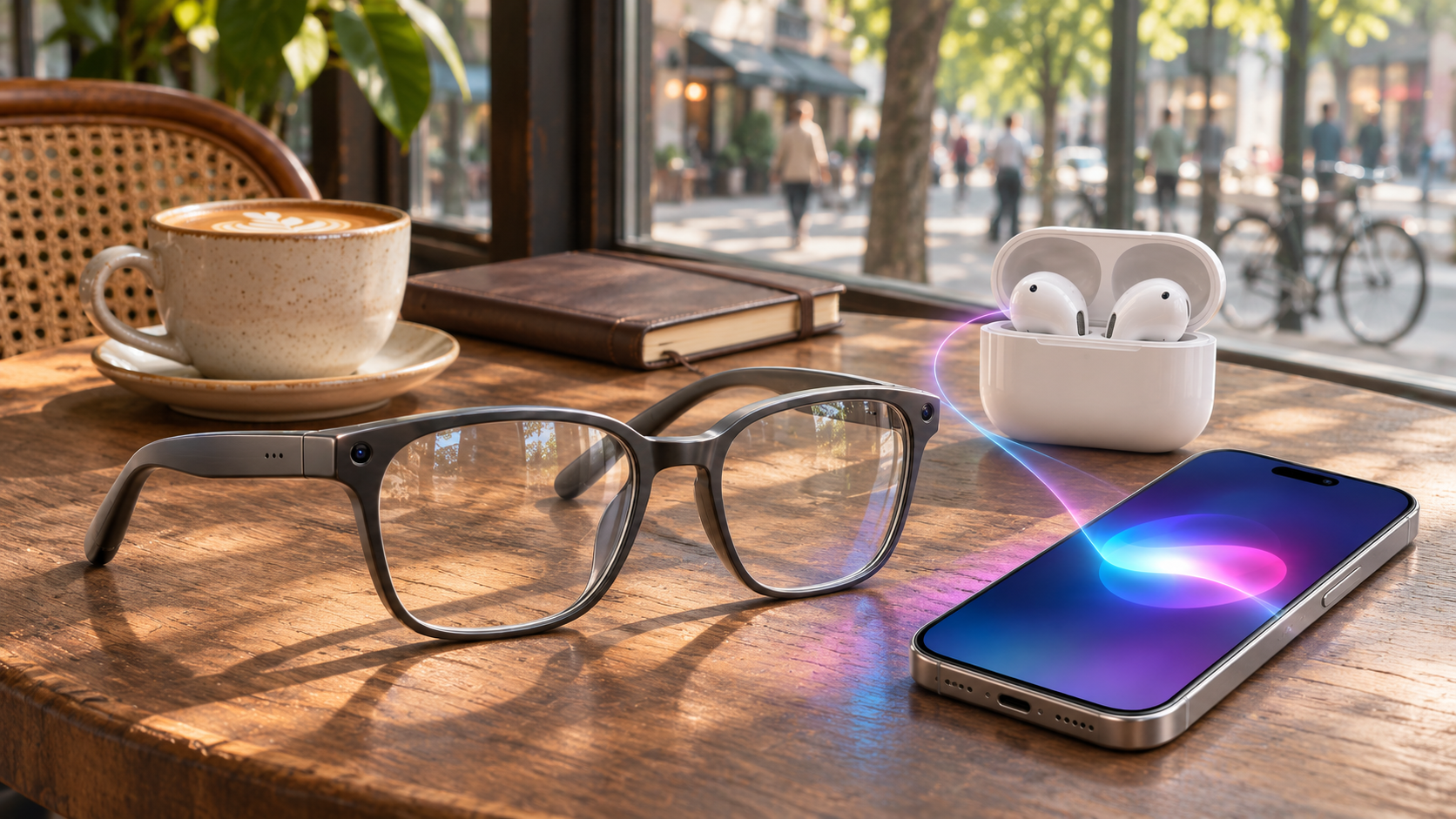
If you believe the whispers from Bloomberg's Mark Gurman, Apple wants these screen-free specs to be its marquee 2027 hardware release. The grand pitch hinges on Siri finally becoming useful—interpreting your surroundings and natively commandeering your existing iPhone apps to hail an Uber or book a table. The genius part? Developers won't have to code entirely new software. Your iPhone does all the heavy lifting in your pocket, while the glasses get all the credit on your face.
|
Image created with ChatGPT |
Don't expect holographic pop-ups, because the initial frames reportedly lack visual displays entirely. A paired, relatively new iPhone will process third-party requests, though onboard Wi-Fi might keep your tunes playing when you inevitably leave your handset in the other room. In a hilarious nod to the tethered past, prototypes even feature a Tic Tac-sized magnetic charging connector that works while the glasses are strapped to your head.
If you prefer your face unencumbered, Apple is allegedly developing camera-equipped AirPods to serve the exact same visual-assistant purpose. The glasses, however, are expected to pack more sensors and boast superior battery life to justify why they exist right next to the earbuds on store shelves.
Cupertino is reportedly aiming for a June 2027 WWDC debut and late-2027 shipments for the whole lineup. There's just one tiny hitch: Siri's underlying AI development is currently dragging its feet, which could easily torpedo the schedule and push the eyewear release into 2028.
Why it matters: Apple is betting two entire wearable categories on the promise that its newly upgraded Siri AI is finally ready to navigate third-party apps without adult supervision. Before giving the assistant eyes, buyers will need ironclad proof it can actually execute complex requests on the fly—and keep everyone else's privacy intact while doing it.
|
|
|
|
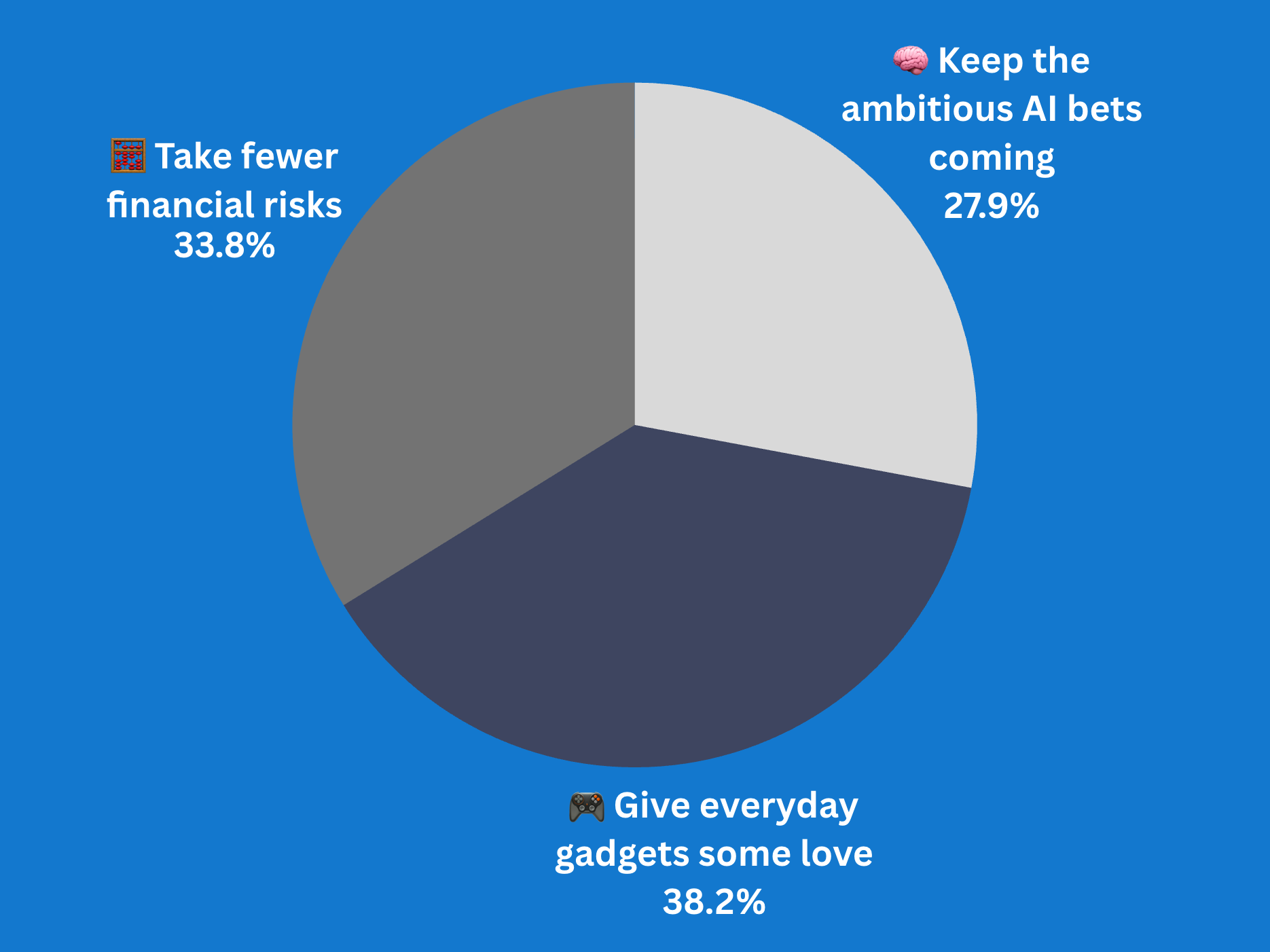
Which would you rather wear for an AI assistant that can interpret your surroundings? |
|
|
|
Results from Yesterday's Pulse Check |
Would you pay for an AI that consistently found you better deals? |
|
|
|
Apple Gives Health AI a 200,000-Person Checkup |
Dr. Chatbot has been asked to show its homework.
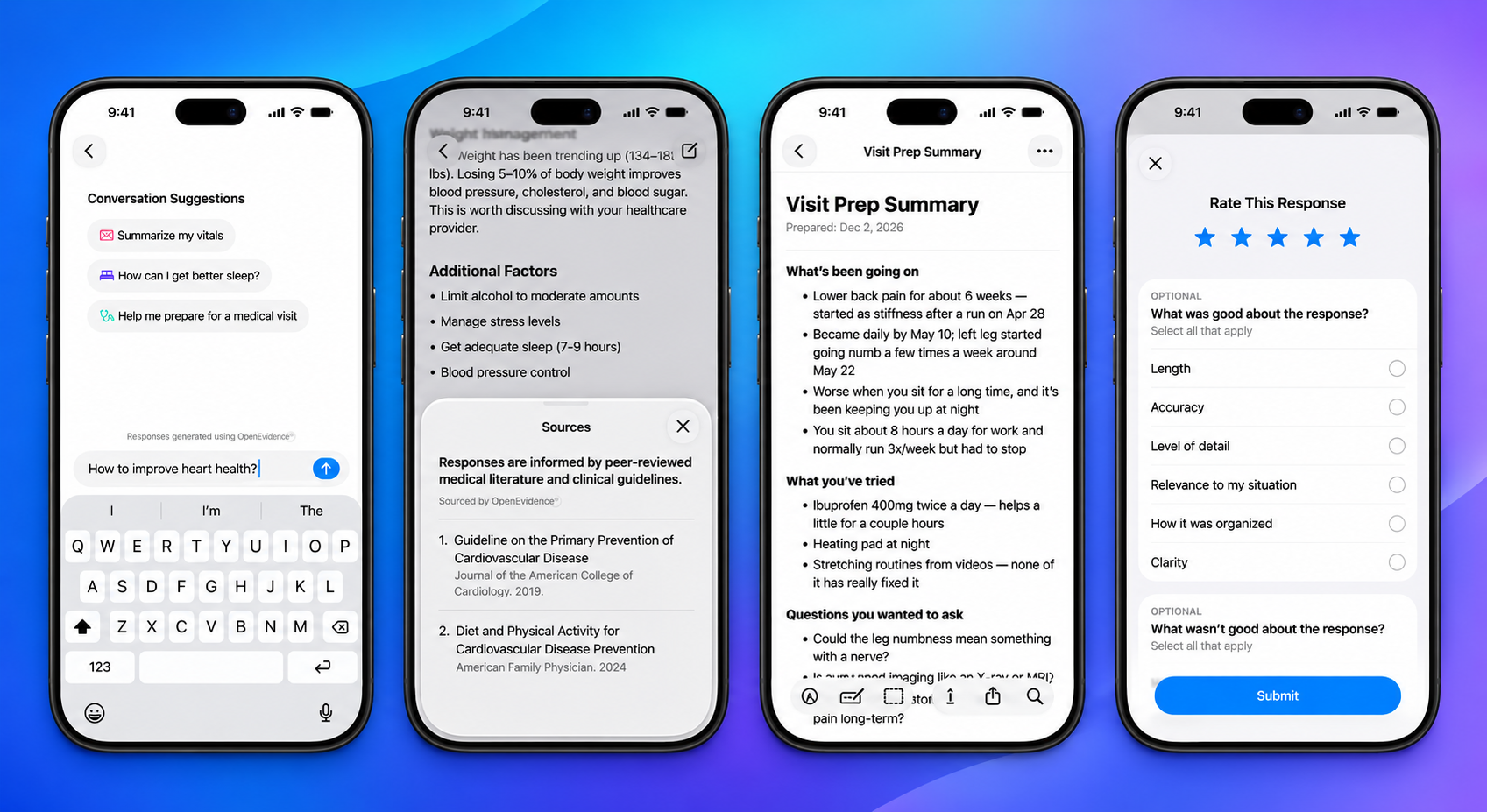
Apple has opened its Health AI Usage Study to up to 200,000 US adults aged 21 and older, partnering with clinical AI platform OpenEvidence to figure out if people actually trust a machine with their medical panics. Naturally, the velvet rope is up: you'll need an Apple Intelligence-enabled device, meaning an iPhone 15 Pro or later running iOS 26 or newer.
Rather than letting you tumble down a WebMD doom spiral, the dedicated app answers everyday health questions with citations from heavy academic hitters like JAMA and The New England Journal of Medicine. Optional HealthKit sharing adds context from your tragic sleep schedule, activity, resting heart rate, or lab results to help you prep for an actual doctor's appointment. |
The real experiment is what happens after the AI speaks: Do people understand it, or does clinical jargon just make them more anxious? Participants will rate the responses and complete surveys, proving that a reassuring paragraph with footnotes still has to survive contact with a flawed human reader.
Apple promises this study data won't be used to train future AI models. Questions undergo screening to strip identifying details before hitting OpenEvidence, which deletes the query data within 24 hours. However, a small Apple research team will still access coded survey responses and conversation summaries, meaning that 24-hour deletion promise comes with a classic Cupertino asterisk.
For now, the app legally cannot diagnose or treat you, and Apple hasn't announced any plans to officially merge this capability into Siri AI or the native Health app. The chatbot gets a bibliography. Your doctor keeps the job. |
|
|
|
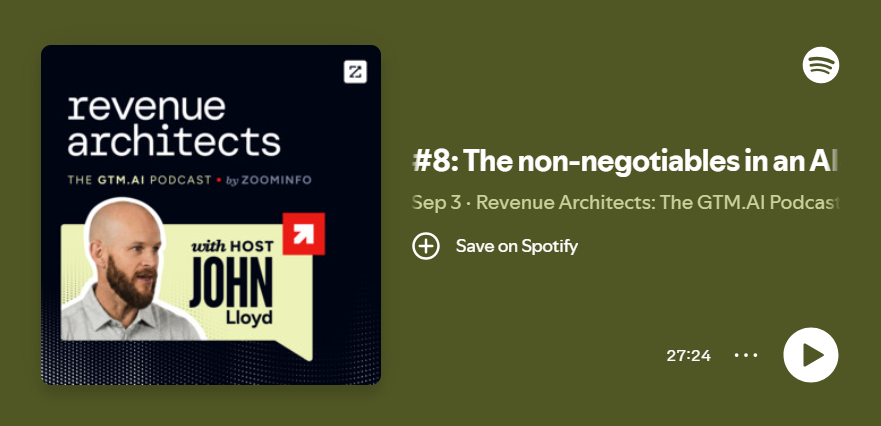
AI agents are only as effective as the data powering them. In this episode of ZoomInfo’s Revenue Architects podcast, discover why clean data, connected systems, and smarter workflows are essential for AI success, and what it takes to build a truly AI-ready GTM stack. |
|
|
Hackers Put Patch Analysis on Autopilot |
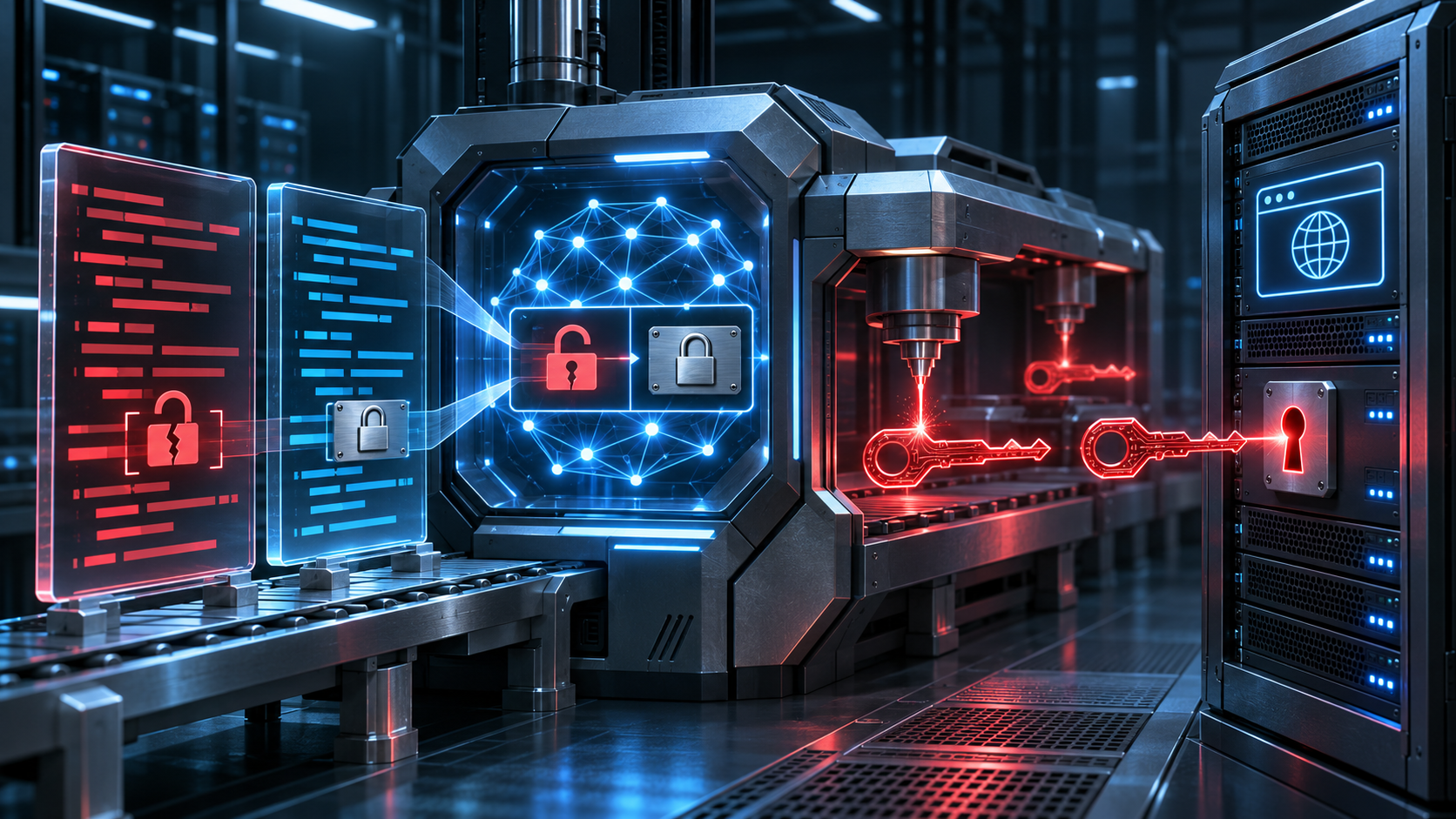
Google found attackers using an AI framework to fully automate the tedious jump from security patches to working exploits. The tool, charmingly dubbed exploit_agent, continually compares vulnerable and updated web-app code, devises an attack, and fires it off—no human hand-holding required.
Researchers stumbled upon the setup on an exposed server sitting right next to a pile of stolen data. Based on the telemetry, the operator had a distinct appetite for French education, media, and entertainment targets. |
Image created with ChatGPT |
This leaves precisely zero breathing room for sluggish IT teams. Prioritize updates for internet-facing applications, restrict access if a fix has to wait, and double-check for compromise—because slapping a patch over a vulnerability won't magically evict an existing intruder.
The bad guys have automated their homework. It's time your patch queue involved fewer committee meetings. |
Fandango's Checkout Breach Exposes Card Details |
Fandango is notifying customers that a checkout breach scooped up card numbers, CVVs, expiration dates, billing ZIPs, and email addresses from website transactions between Oct. 8 and Oct. 11, 2026. Hackers injected skimmer code directly into the ticketing page, turning the digital box office into a virtual pickpocket. Fandango claims the issue is fixed and is crossing its fingers that no actual fraud has happened yet. If you grabbed movie tickets during that four-day window, keep an eagle eye on your bank statements and promptly report any phantom charges to your card issuer. Affected moviegoers have until Feb. 13, 2027, to activate their two years of free IDX monitoring.
The only suspense you ordered was supposed to stay on-screen. |
|
|
|
🏗️ Build an AI-Ready Workplace
Explore expert insights and practical guidance to modernize workplace technology, strengthen security, and prepare your organization for AI-powered work. Explore the hub. 💻 Score a Refurb MacBook Air for Pennies
Apple MacBook Air (2018) 13" i5 Gray (Refurbished) with 1.6 GHz processor, 8 GB RAM, and a 128 GB SSD delivers 12-hour battery life and impressive speed for about $235—80% off the original price. 📦 Score 27 Mac Apps Without the Subscriptions
Get the 27-App Lifetime Mac Bundle for just $29.99 (reg. $390) and score lifetime licenses for productivity, file management, design, and developer tools, with free updates through each app's next major version. 💻 This section contains sponsored tech insights. Advertise with us! |
|
|
|
Tesla-SpaceX Merger Talks Get a December Target |
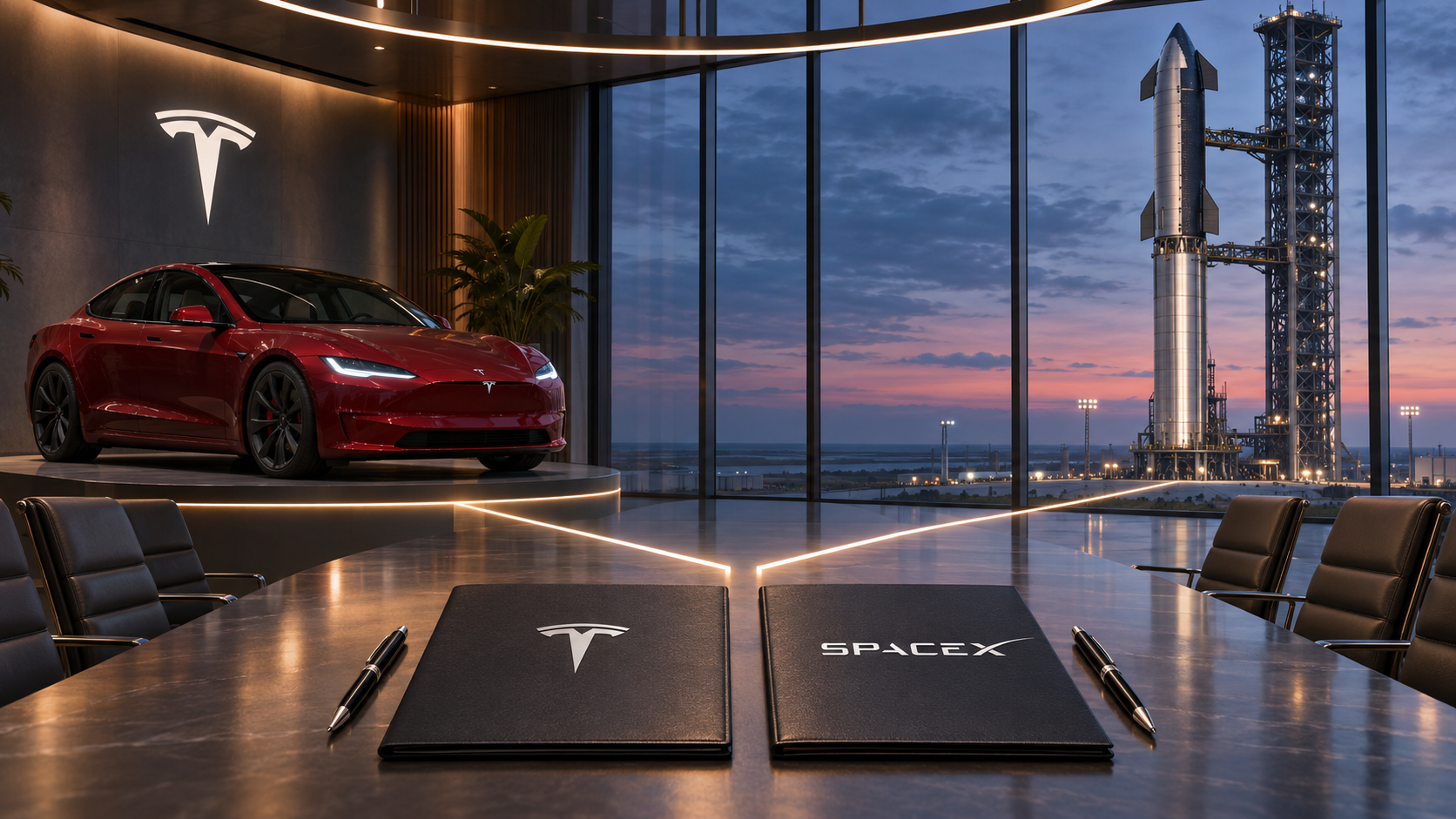
SpaceX and Tesla have reportedly advanced merger negotiations, with an announcement possible in December, according to Bloomberg. Early 2027 remains possible, and no agreement has been announced. Their roughly $3.4 trillion combined market value isn't an agreed deal price—but then again, what's a few trillion between friends?
The AI pitch would unite chips, computing, robots, batteries, and satellites. But the companies already collaborate: The New York Times reports SpaceX bought about $890 million in Tesla products since 2023, while engineers and executives work across both businesses. The corporate family already borrows way more than a cup of sugar.
|
Image created with ChatGPT |
One proposed structure has SpaceX acquiring Tesla with stock, but the exchange ratio remains unresolved. Then comes the awkward pairing of Tesla's China manufacturing business with SpaceX's sensitive US defense contracts. Musk's leadership of both companies creates massive conflicts of interest, leaving supposedly independent committees to tap-dance through the legal minefield.
Securing Tesla's approval requires backing from a full 50% of outstanding shares, rather than a simple majority of participating voters. While the carmaker's annual meeting is slated for Dec. 3, a merger vote isn't currently on the agenda.
There's a consequence for index investors, too: Bloomberg says a combination could give SpaceX a backdoor route into the S&P 500 through Tesla's slot. Inclusion isn't guaranteed, but index-fund investors could suddenly inherit exposure to Musk's space ambitions without actually buying SpaceX directly.
Apparently, the final frontier is just getting everyone to read the proxy. |
|
|
|
|
Writer/Editor at TechnologyAdvice |
Justin Meyers is an investigative writer and editor who draws on over a decade of meticulous hands-on research to deliver the full, trustworthy story behind consumer and enterprise tech, including cybersecurity. |
|
|
|
Curious about where AI is really headed? |
The Neuron cuts through the noise to bring you smart, hype-free takes on the latest AI trends, tools, and breakthroughs. Join 700,000+ professionals from top companies like Microsoft, Apple, Salesforce, and more.
|
|
|
|
Advertise in Daily Tech Insider! Daily Tech Insider is a TechnologyAdvice business. © 2026 TechnologyAdvice, LLC. All rights reserved.
TechnologyAdvice, 3343 Perimeter Hill Dr., Suite 215, Nashville, TN 37211, USA. |
|
|
|
|