








- If the Price Is Too Good to Be True, It Probably Is
- Check the Seller or Websites Reputation
- If You Use an Auction Site, Check the Sellers Other Auctions
- Check the Sellers History
- Check the Location of the Seller
- Pay Attention to Auction Length
- Dont Be Fooled by Official-looking Logos and Graphics
- Look for Special Activation/Registration Instructions
- Do Not Buy Compilations
- Pay Special Attention to How the Software Is Advertised
If the Price Is Too Good to Be True, It Probably Is
The first and most important rule is to use common sense: If someone charges $20 for software priced at $200, you can bet that it is pirated software.
Check the Seller or Websites Reputation
Don’t be fooled by just seeing “power seller” or an equivalent rating. Pay close attention to whether they have any neutral/negative feedback or comments from buyers claiming fraud by the seller. Even just one or two claims of fraud are a serious warning sign.
If You Use an Auction Site, Check the Sellers Other Auctions
Has this seller placed 10, 20 or more auctions for the same piece of software all at an unbelievable price? This is almost always an indicator of pirated software.
Check the Sellers History
Has this seller or Website just appeared and started selling massive amounts of the same software or set of software products?
Check the Location of the Seller
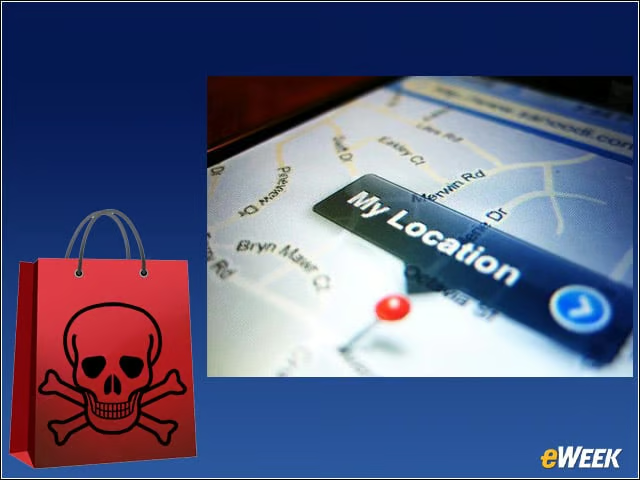
Is the seller or Website offering products from another region of the world? In addition to the potential for piracy, you may be purchasing software that will be incompatible for your computer. If the product is coming from a foreign country, you might end up buying software that will not run on U.S. computers, will run in a foreign language or may be unlicensed in the U.S.
Pay Attention to Auction Length
Most auctions last from five to seven days. Auctions lasting less than that, such as one- and three-day auctions, are often posted by those selling illegal software who are trying to make a quick sale before the copyright owner takes down their auction.
Dont Be Fooled by Official-looking Logos and Graphics
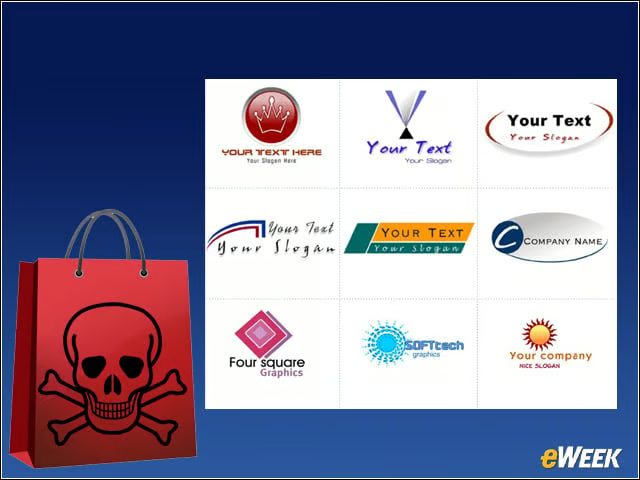
Dishonest people often misappropriate company logos to fool buyers into thinking pirated software is legitimate.
Look for Special Activation/Registration Instructions
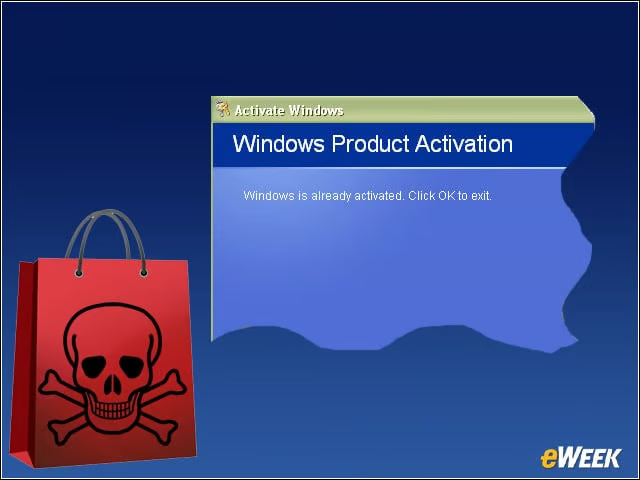
If the seller provides a special number or procedure for activating or registering your software before you can use it, you are likely getting a pirated copy of the software. The same is true if the seller states that the software can’t be registered.
Do Not Buy Compilations
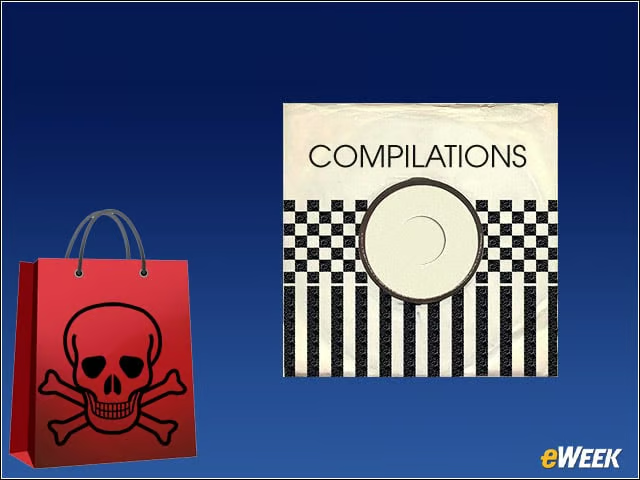
These are multiple products from different publishers on the same CD. Legal software is rarely, if ever, sold that way.
Pay Special Attention to How the Software Is Advertised
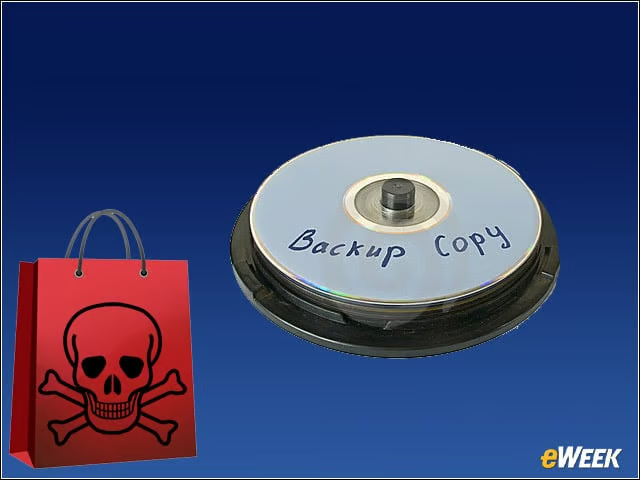
Do not buy software being sold as back-up copy” software thats offered as “brand-new CD in sleeve” (rather than in a box) or software offered as “beta,” “pre-release” or “NFR” (not for resale).