








- Kaspersky Lab Study Examines Top Enterprise Data Breach Risks
- Most Organizations Assume They Will Be Breached
- 20 Percent of all Enterprises Breached Multiple Times
- Data Sharing on Mobile Devices is a Top Risk
- Malware Leads to the Most Costly Data Breaches
- Phishing Attacks Are Common
- Phishing Tactics Vary
- DDoS Attacks Can Lead to Breaches
Kaspersky Lab Study Examines Top Enterprise Data Breach Risks
Kaspersky Lab’s Business Perception of IT Security report estimates that 20 percent of global enterprises suffered four or more data breaches in the past year.
Most Organizations Assume They Will Be Breached
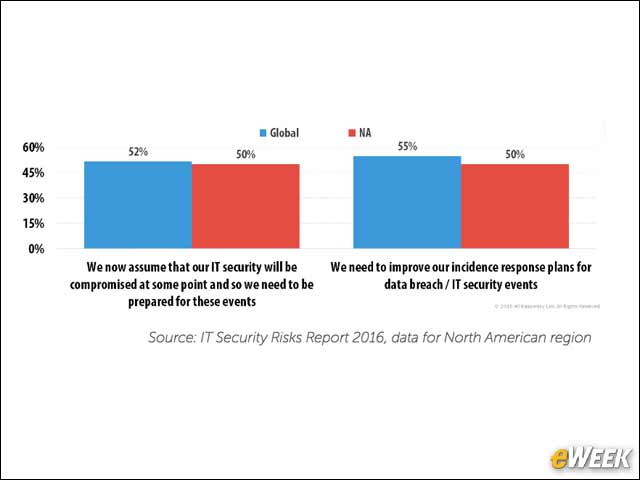
Kaspersky Lab’s study found that globally, 52 percent of organizations now assume they will be breached at some point, with 55 percent realizing that there is a corresponding need to improve incident response efforts. The numbers are slightly lower in North America, with 50 percent of organizations assuming they will be breached and need to improve incident response.
20 Percent of all Enterprises Breached Multiple Times
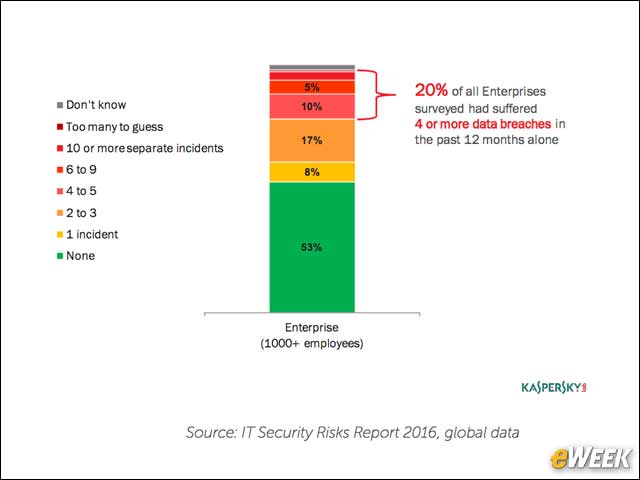
On a positive note, Kaspersky Lab’s global data found that 53 percent of organizations claimed they had not suffered a single breach. On a not-so-positive note, 20 percent of all organizations admitted they have been the victim of four or more data breaches in the last 12 months. In North America, the number is even higher, with 44 percent of organizations admitting they had four or more data breaches.
Data Sharing on Mobile Devices is a Top Risk
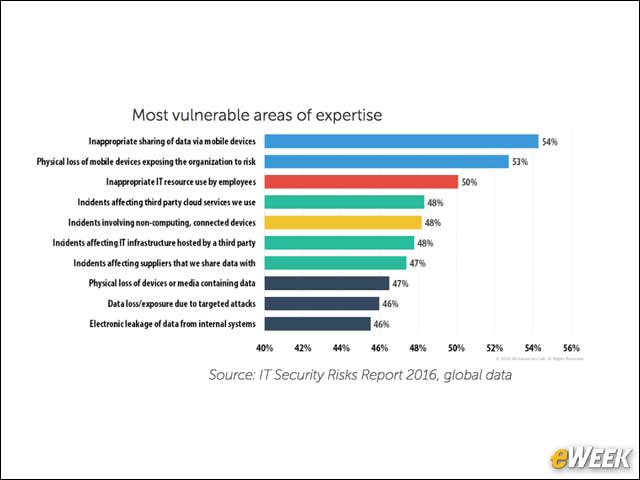
While there are many risks that can potentially lead to a data breach, 54 percent of global respondents identified inappropriate usage or sharing data via mobile devices as a top vulnerability.
Malware Leads to the Most Costly Data Breaches
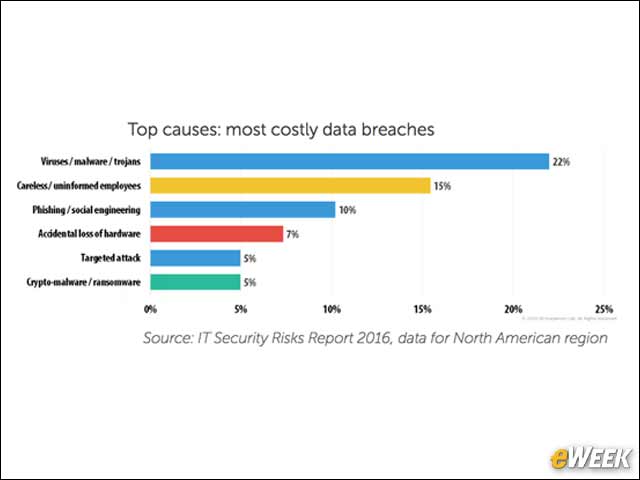
Looking at the top causes of the most costly data breaches, viruses, malware and Trojans top the list in North America at 22 percent.
Phishing Attacks Are Common
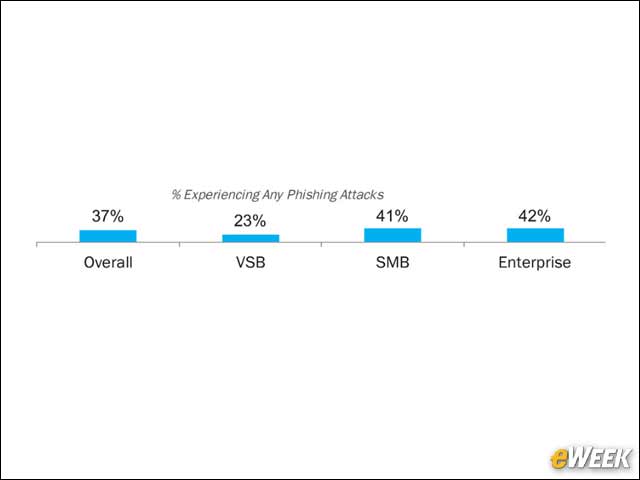
Phishing is a key attack vector that can lead to data breaches. Kaspersky Lab found that overall, 37 percent of surveyed organizations experienced a phishing attack. Enterprises suffered the most, with 42 percent admitting they had experienced a phishing attack, while very small businesses had the lowest number of phishing incidents, at 23 percent.
Phishing Tactics Vary
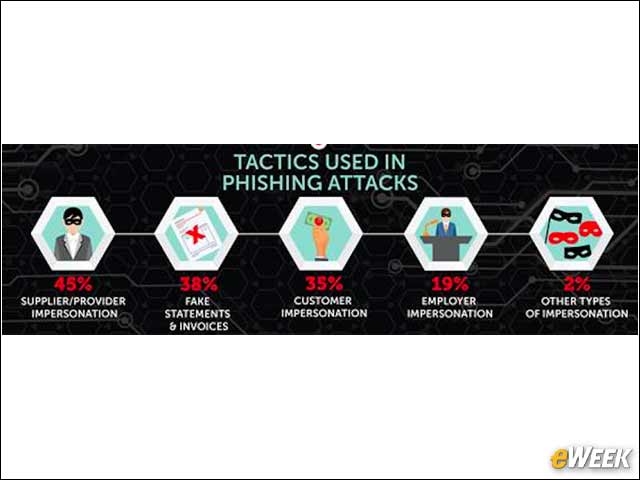
A variety of tactics are used in phishing attacks, with 45 percent of organizations receiving phishing emails that are some form of supplier impersonation.
DDoS Attacks Can Lead to Breaches
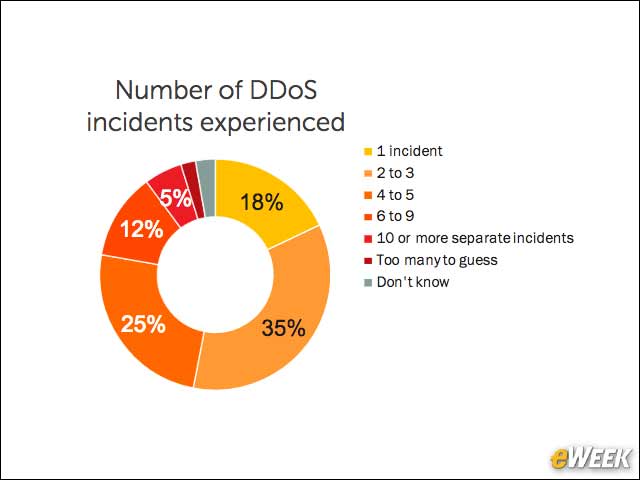
Distributed Denial of Service (DDoS) attacks continue to be a concern, with 18 percent of organizations admitting they had experienced at least one DDoS incident. Additionally, Kaspersky Lab reported that 32 percent of organizations that reported a targeted cyber-attack identified DDoS as a likely contributing factor.