







Today’s topics include the U.S. blaming North Korea for the WannaCry ransomware attack; Huawei planning to sell its smartphones through U.S. carriers in 2018; Google developing a machine learning model to rate aesthetic qualities of photos; and Microsoft’s release of three new Bing Map APIs for commercial vehicle fleet management.
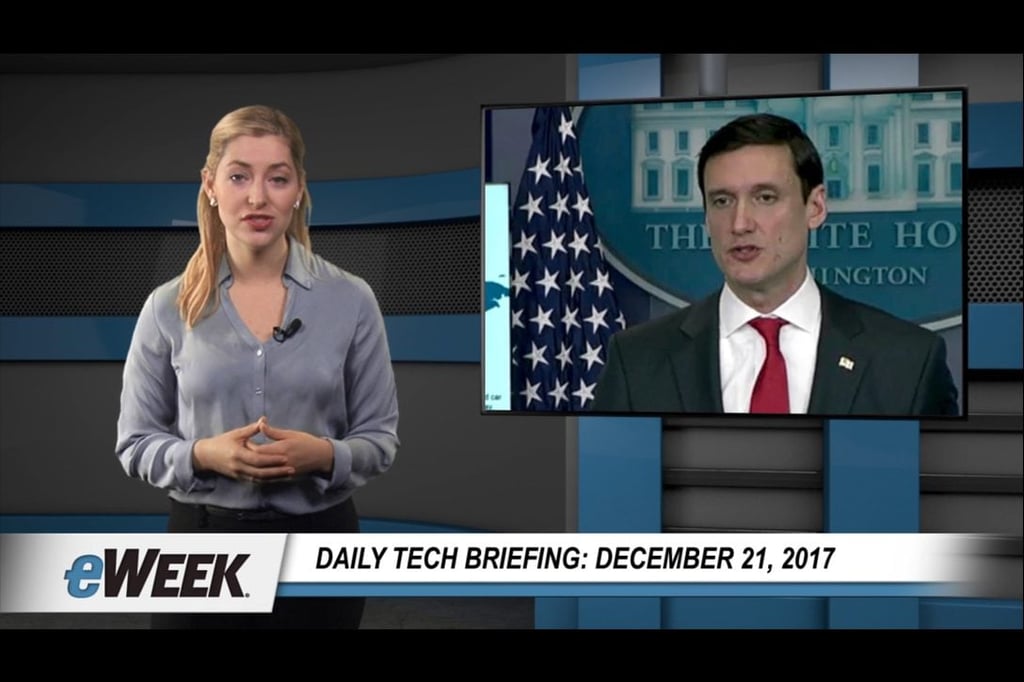
During a White House press conference on Dec. 19, Homeland Security adviser Tom Bossert attributed the WannaCry ransomware attacks, which first appeared in May, to North Korea. Bossert also answered questions about the role and responsibility the U.S. government had in enabling WannaCry, as the root vulnerability known as EternalBlue was originally found by the U.S. National Security Agency.
According to Bossert, the U.S. government looked at operational tradecraft, tools and infrastructure, and put all the information together to provide concrete evidence that North Korea was responsible for WannaCry.
Bossert said, “We have determined who is behind the attack, and … we’re going to hold them accountable, we’re going to say it, and we’re going to shame them for it.”
Chinese smartphone maker Huawei in 2018 will for the first time sell its handsets in the United States through U.S. mobile carriers. Huawei is the world’s third-largest producer of smartphones, behind Samsung and Apple, and the move could help increase its market share in the U.S.
In the recent past, Huawei has only sold its handsets in the U.S. through its own website, Amazon.com and some other online retailers, giving its phones less market exposure and making it impossible for buyers to examine and try out the devices before making a purchase.
Richard Yu, president of Huawei Technologies’ consumer business, said that the first phone to be offered through U.S. carriers will be the flagship Huawei Mate 10, which was introduced by the company in October.
Google has developed the Neural Image Assessment, which is an experimental machine-learning model that intelligently predicts which images humans are likely to rate as attractive or aesthetically pleasing.
Unlike existing aesthetic prediction approaches, which simply categorize images as being of high or low quality, NIMA can rate images with a high degree of correlation to human perception, said Google researchers Hossein Talebi and Peyman Milanfar. They said Google’s “NIMA model produces a distribution of ratings for any given image—on a scale of 1 to 10, NIMA assigns likelihoods to each of the possible scores.” The mean score is then used to rate photos aesthetically.
The model could be helpful for subjective labor-intensive tasks, and potential apps include intelligent photo editing and apps that optimize visual quality or minimize perceived errors.
Microsoft has released three new fleet management APIs for Bing Maps that developers can use to create applications for transportation companies and other vehicle fleet managers that value precise travel guidance and tracking.
The Bing Maps Truck Routing API takes into account road conditions, legal restrictions, speed limits, a vehicle’s dimensions and several other parameters to calculate safe and efficient routes. Microsoft’s Snap-to-Road API turns a truck’s or tracked asset’s GPS points into the latitude and longitude coordinates of the closest road for a more accurate, road-hugging representation of routes.
Finally, the Isochrone API allows businesses to gauge travel distances and commute times through shaded areas of a map that correlate to the amount of time it takes to walk or drive to a location.