








- Users Increasingly Turning to Social Log-in/Federated Identity
- Facebook Takes a Big Leap Forward
- Why Users Are Regaining Trust in Facebook as Authenticator
- Google/Google+ Still Showing Big Influence
- Facebook Leads in E-Commerce
- Google/Google+, Facebook Steady in Consumer Brands
- North America Numbers
- The Battle for Identity in Europe
- Facebook Dominates Asia-Pacific
Users Increasingly Turning to Social Log-in/Federated Identity

by Chris Preimesberger
Facebook Takes a Big Leap Forward
Facebook saw its biggest gain as an identity provider on mobile devices in Q4 2014 with a huge 15 percent boost over Q3. The company’s focus on winning the war for mobility identity seems to be paying off as consumers increasingly use their phones as primary connected devices.
Why Users Are Regaining Trust in Facebook as Authenticator

Facebook was used more than 60 percent of the time in Q4 2104 as a log-in authenticator, signaling that consumers are regaining trust in the social network after the company announced line-by-line data controls for log-in last year and made strides in making privacy/transparency more front and center. SUMMARY: Strides in making privacy/transparency more front and center helped Facebook regain users’ trust in the social network.
Google/Google+ Still Showing Big Influence
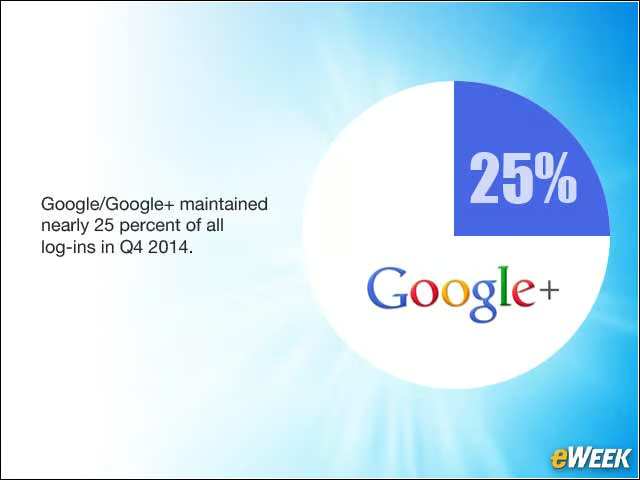
Google/Google+ maintained nearly 25 percent of all log-ins in Q4 2014, according to Gigya. Yahoo, which once was much stronger in this category, “has shown no new signs of life since losing much of its share of log-ins” a few years ago, Gigya said.
Facebook Leads in E-Commerce
Facebook remained flat at 72 percent of all log-ins on e-commerce properties in Q4, while Google/Google+ increased by 2 percent. Amazon continues to gain gradual traction as an identity provider, signaling that customers are starting to use their payment identities online.
Google/Google+, Facebook Steady in Consumer Brands
Both Facebook (67 percent) and Google/Google+ (20 percent) held their own in number of log-ins on consumer brand properties, while Twitter lost 3 percent over the previous quarter.
North America Numbers
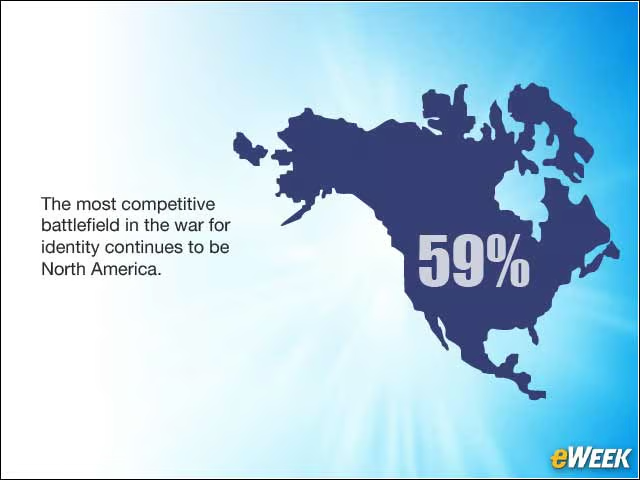
North America continues to be the most competitive battlefield in the war for identity. Facebook (59 percent) managed to increase its market share by 4 percent quarter-over-quarter, while Twitter (7 percent) and Google/Google+ (24 percent) lost 3 percent.
The Battle for Identity in Europe
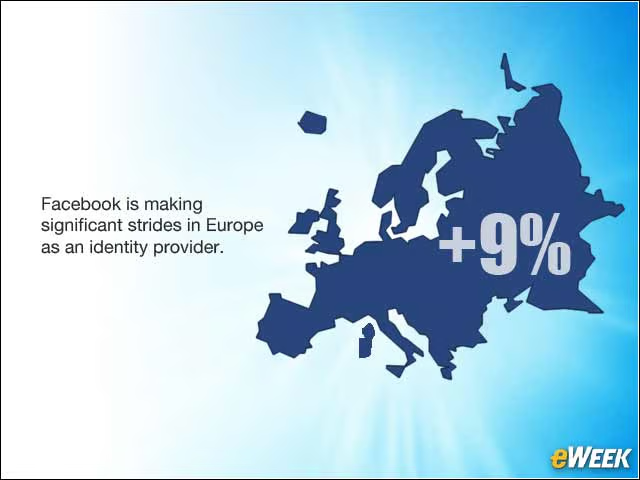
Facebook made significant strides here as an identity provider, with a 9 percent increase over Q3. Google/Google+ owns 14 percent. Yahoo is at 2 percent. Russian social network VK, which held 7 percent in Q3, slid way back to just 1 percent of log-ins.
Facebook Dominates Asia-Pacific
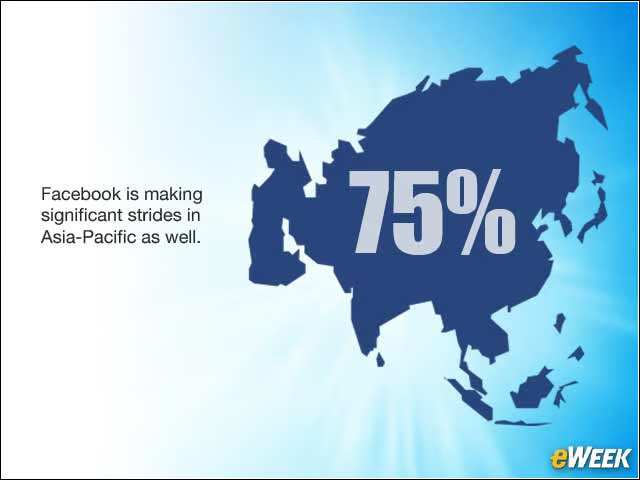
Facebook owned a full three-quarters of all log-ins in the Asia-Pacific region in Q4 2014, gaining an impressive 5 percent. Google/Google+ is at 10 percent, and Twitter is third at 9 percent. Regional social networks Sina and QQ became virtual non-entities in identity.