








A year ago, OpenAI was “pulling well ahead of rivals” in the enterprise race. Per Ramp’s May 2025 AI Index (Ramp is an expense management platform that tracks actual corporate credit card spend), OpenAI had 32% of US business adoption. Anthropic? A distant 8%.
That gap is now gone.
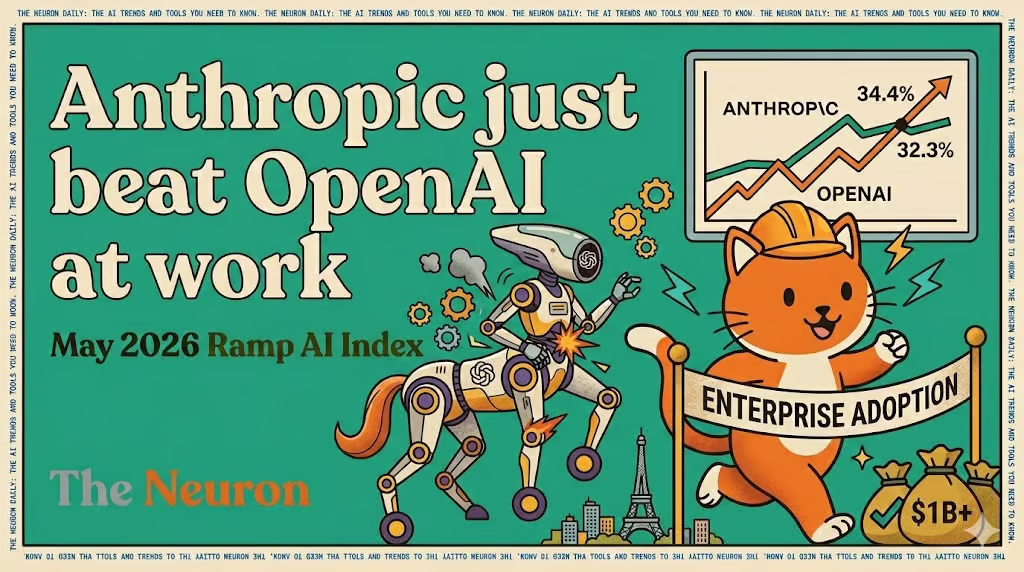
Ramp’s May 2026 AI Index shows Anthropic at 34.4% of business adoption, crossing OpenAI (now at 32.3%) for the first time ever. All of these came from purchase data from thousands of actual companies.
Here’s what happened
- In May 2025, OpenAI had 32% business adoption; Anthropic had 8%. The gap looked insurmountable.
- By March 2026, Axios reported Anthropic was capturing 73% of first-time AI business buyers and Anthropic’s annualized revenue had hit $19B vs. OpenAI’s $25 billion, with Anthropic accelerating faster.
- The engine behind the reversal: Claude Code, Anthropic’s autonomous coding tool, which reached $2.5 billion in annualized revenue by February 2026 alone.
- As of April 2026, Anthropic has crossed $30B in annualized revenue; OpenAI sits at roughly $24 billion.
OpenAI’s response has been swift. Last week, the company launched a $4 billion “Deployment Company” with 19 private equity and consulting partners specifically to fight back, embedding AI engineers inside enterprises to accelerate Codex adoption. Their chief revenue officer told employees in a memo, per Axios: “the market is as competitive as I have ever seen it.”
Why this matters
Enterprise contracts are stickier than consumer downloads. They expand over time, renew annually, and get embedded into company infrastructure. When a company approves Claude as a budget line item, switching requires a procurement cycle rather than just deleting the app. Anthropic winning here is a different kind of win than getting good press.
Our take
The interesting thing about Ramp’s data is that Ramp’s own economist, Ara Kharazian, published the adoption numbers alongside a bearish note on Anthropic — arguing that Claude is incentivized to push users toward pricier models even when cheaper ones would do.
Fair criticism. But “they upsell too well” is a weird thing to complain about when you’re losing market share. Both companies are racing toward IPOs that could come as soon as this fall. This data point just changed who’s negotiating from a position of strength.
Editor’s note: This content originally ran in the newsletter of our sister publication, The Neuron. To read more from The Neuron, sign up for its newsletter here.