







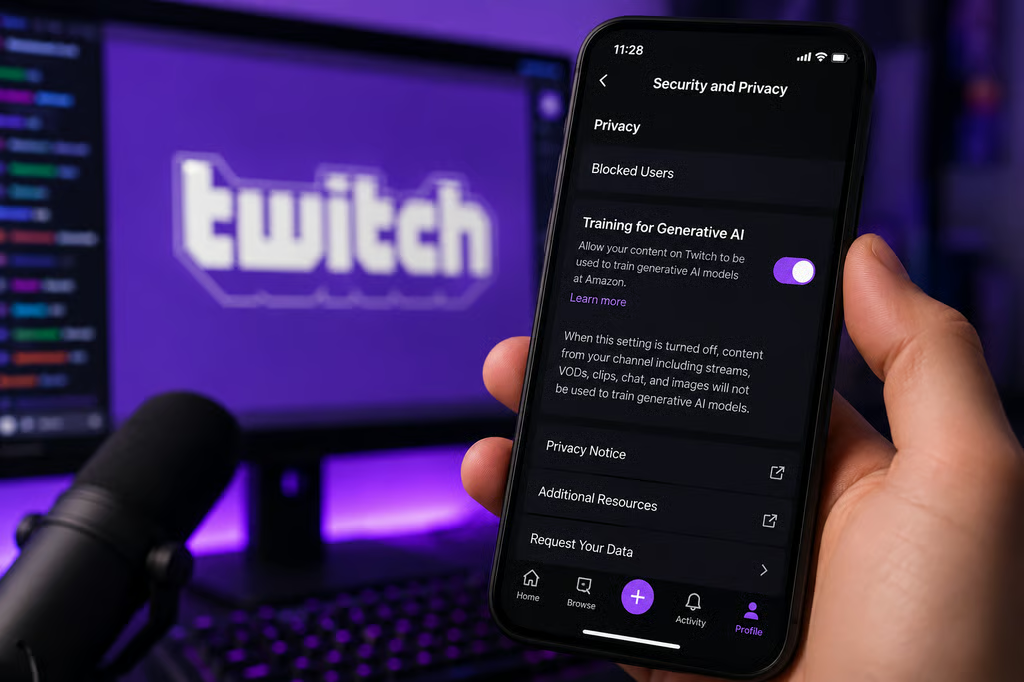
Twitch has introduced a setting that lets creators stop their channel content from being used in future training of Amazon generative AI models.
The catch is that creators have to turn it off themselves.
TechCrunch and BBC News reported the training control is enabled by default, while The Verge found it switched on in a test account and asked Amazon to confirm whether that applies universally.
The change gives streamers a new privacy control over streams, VODs, clips, chat, images, and channel text, but it also reopened a familiar AI consent fight: should creators have to object after their content becomes eligible for training, or approve that use first?
Twitch faces backlash over its AI training default
The criticism landed at an awkward moment for Twitch. CEO Dan Clancy said in June that livestreaming offers a human counterweight to AI, arguing that “AI is trying to take humans out of the equation” while live formats keep people at the center.
When Twitch announced the training control, however, chief product officer Mike Minton gave a more practical explanation for why participation was not opt-in.
“If it’s opt-in, nobody would opt-in. That’s the honest answer,” Minton said during a livestream, according to BBC News.
Twitch community lead Mary Kish also acknowledged that users were unlikely to welcome the change. TechCrunch reported that Kish described the opt-out as a response to community concerns over AI training on user content.
The backlash resembles the fight around Meta’s default-on AI controls for public Instagram content, where creators and privacy groups similarly argued that permission should come before AI use.
The new Twitch setting is narrower than a general ban on Amazon using Twitch data. The Verge reports that switching it off blocks future training of Amazon models designed to generate or synthesize text, audio, images, or video.
Minton also said he did not know what Twitch material Amazon may already have used for model training, leaving the control focused on future use rather than answering what happened before it existed.
How to opt out of Twitch AI training
Creators who do not want their channel content used for future Amazon generative AI training can change the setting in a few steps:
- Sign in to Twitch and open Settings.
- Select Security and Privacy.
- Scroll to Training for Generative AI.
- Find the option allowing your channel content to train generative AI models at Amazon.
- Switch the toggle off.
The control appears under Twitch account settings rather than the Creator Dashboard. The Verge independently found the setting there and confirmed that disabling it applies to streams, VODs, clips, stream chats, and pictures and text on the creator’s channel.
Turning it off does not disable every AI-supported use of Twitch content. Twitch says recommendations, AutoMod safety features, and real-time sponsorship assistance can continue operating.
Twitch’s official Privacy Notice also says information collected by Twitch can be combined with Amazon customer information and used to operate, develop, and improve Twitch and Amazon products and services.
Two other limits are easy to miss:
- Chat follows the channel. If you post in another streamer’s chat, that streamer’s opt-out preference determines whether the chat can be used for training.
- The setting is forward-looking. It blocks future generative AI training but does not remove or clarify any content that may already have been used.
The dispute sits alongside broader fights over who controls AI training material. Publishers are suing Google over books and journal articles allegedly used for Gemini, while a Delhi court recently rejected ANI’s request to stop OpenAI from training on its news content at the current stage of that case.
For Twitch creators, the immediate choice is simpler: if you do not want future channel content used to train Amazon generative AI models, turn the setting off. Just don’t read the switch as a universal AI opt-out, because several Twitch and Amazon data uses remain outside it.
Also read: Amazon’s AI content marketplace plans could give publishers a formal route to license articles, images, and archives for AI development.