End-User Welcome

End-User Welcome
Published: Mar 21, 2012
Updated: Feb 2, 2021
2 minute read
eWeek content and product recommendations are editorially independent. We may make money when you click on links to our partners. Learn More


End-User Welcome

1

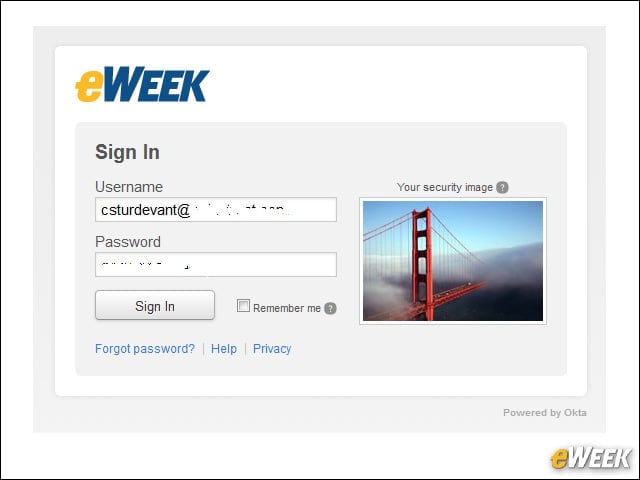
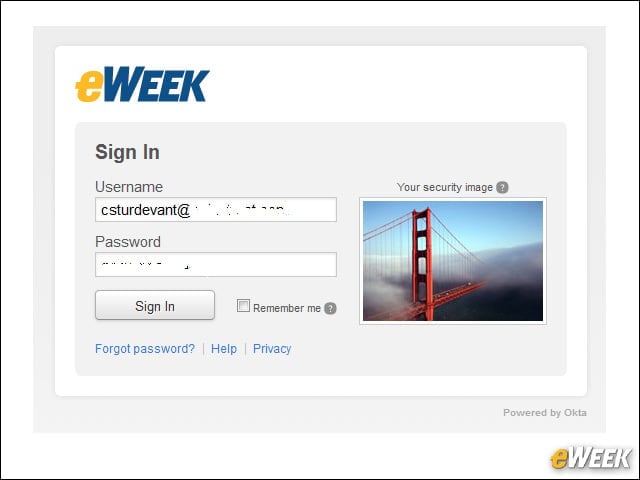
Okta uses a variety of cues to help end users be sure they are logging in to the right system. After I entered my user name, Okta popped up a picture of the Golden Gate Bridge (a picture I selected during my initial log-in) to visually cue me that this was the right SSOÂ portal.


Applications
2

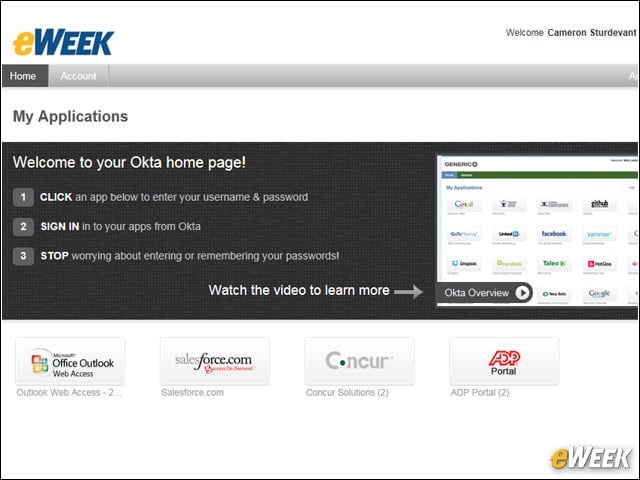
I was able to customize the user portal with an eWEEK logo. Along the bottom of the screen are the applications that a specific user can access.


Redirecting
3

Okta is preintegrated with the log-in procedures of more than 1,200 SaaS systems. Here you see the beginning of a log-in to the Salesforce.com Chatter client.


Chatter
4

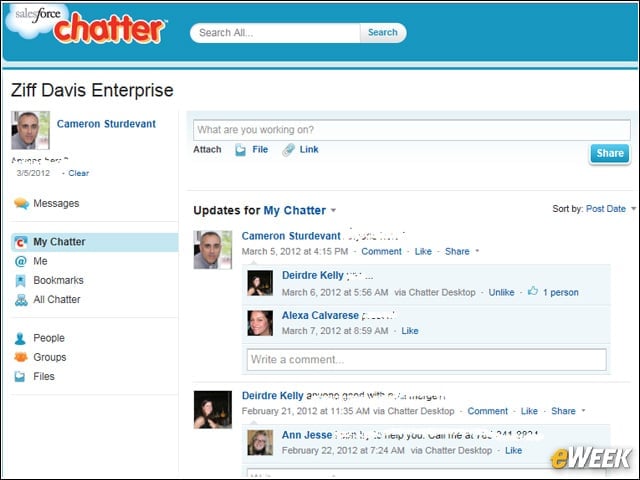
Once logged in, the end user has no further knowledge of Okta. Thus, the Chatter screen seen here is the normal interface to which the user is accustomed.


Administrator Dashboard
5

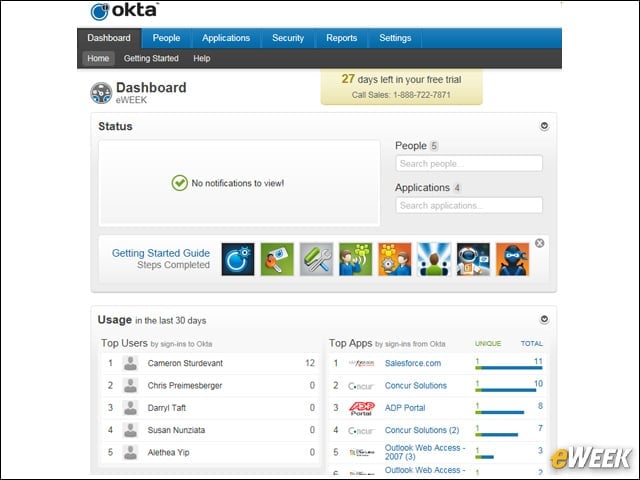
The administrator dashboard takes a rather fanciful approach, as seen in the playful icons in the center ribbon to ensuring that the product is fully utilized. The center activity ribbon shows that I’ve walked through all the setup steps. Other information, such as users and user activity, is shown in summary on the rest of the screen.


Advertisement

People

6

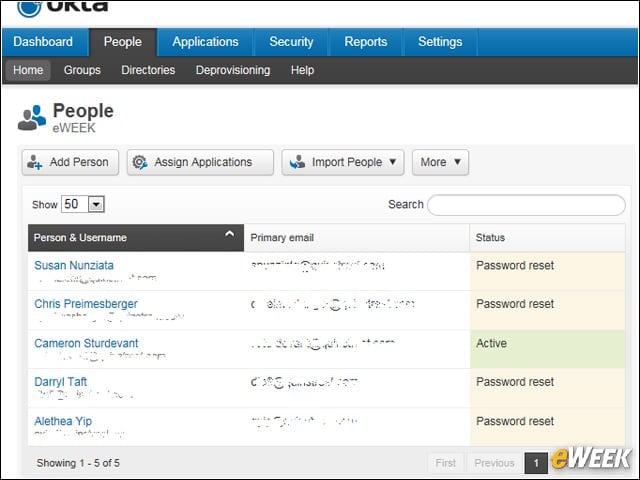
Users are provisioned and deprovisioned in the people module. Administrators can create groups and run user reports from this module.


Applications
7

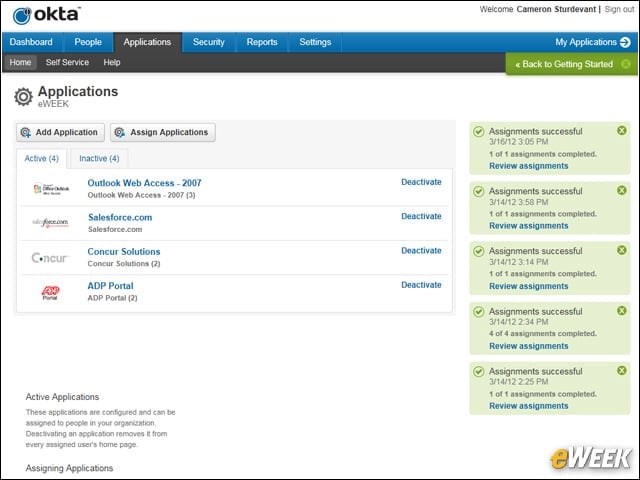
Applications are first activated by administrators, which makes them available to be accessed by users or groups of users.


More Applications
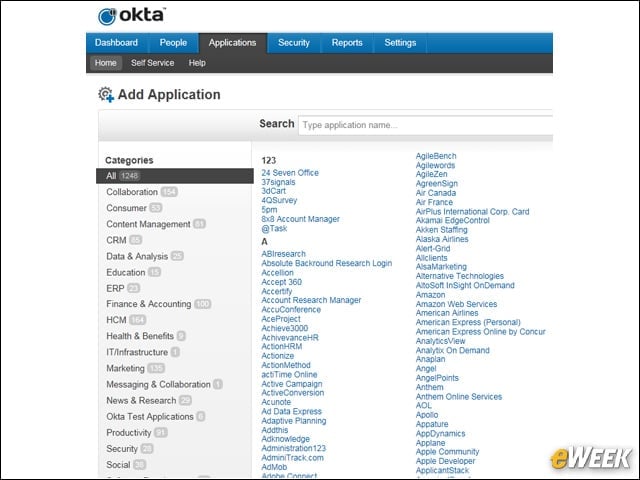
8

My suggestion is to make a list of SaaS applications that are used in your organization, sign up for the no-cost trial and then see how many of your apps are already supported. At this time, Okta seems very open to adding applications quickly, so check with the company if your app isn’t on the list.


Security
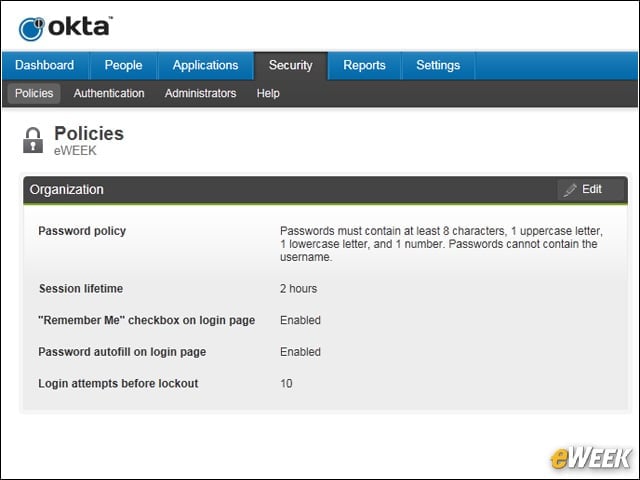
9

Policies, authentication methods and administrators are all controlled from the security module.

Cameron Sturdevant

Cameron Sturdevant

Content Writer

Cameron Sturdevant is the executive editor of Enterprise Networking Planet. Prior to ENP, Cameron was technical analyst at PCWeek Labs, starting in 1997. Cameron finished up as the eWEEK Labs Technical Director in 2012. Before his extensive labs tenure Cameron paid his IT dues working in technical support and sales engineering at a software publishing firm . Cameron also spent two years with a database development firm, integrating applications with mainframe legacy programs. Cameron's areas of expertise include virtual and physical IT infrastructure, cloud computing, enterprise networking and mobility. In addition to reviews, Cameron has covered monolithic enterprise management systems throughout their lifecycles, providing the eWEEK reader with all-important history and context. Cameron takes special care in cultivating his IT manager contacts, to ensure that his analysis is grounded in real-world concern. Follow Cameron on Twitter at csturdevant, or reach him by email at cameron.sturdevant@quinstreet.com.

eWeek Logo

eWeek has the latest technology news and analysis, buying guides, and product reviews for IT professionals and technology buyers. The site's focus is on innovative solutions and covering in-depth technical content. eWeek stays on the cutting edge of technology news and IT trends through interviews and expert analysis. Gain insight from top innovators and thought leaders in the fields of IT, business, enterprise software, startups, and more.

Property of TechnologyAdvice. © 2026 TechnologyAdvice. All Rights Reserved

Advertiser Disclosure: Some of the products that appear on this site are from companies from which TechnologyAdvice receives compensation. This compensation may impact how and where products appear on this site including, for example, the order in which they appear. TechnologyAdvice does not include all companies or all types of products available in the marketplace.