







When I first began reporting on how the internet and the political process interacted, first for my column in those days and then for my book on the topic, I found that there were a few constants.
Political organizations used the internet in those days just like businesses used it—to get the word out and for what passed for ecommerce in those days. They also used it to connect to their followers, to develop loyalty and to create a positive image again in much the same way as businesses.
But there was one distinct difference that went beyond the normal business use and that was to provide a path for unfiltered communications. In those days many in politics did not trust the news media to report their positions accurately, so they adopted a medium that allowed them to communicate with voters directly. That medium was the internet.
Move forward several years and much has changed. Internet marketing has become significantly more sophisticated both in business and in politics. Likewise ecommerce has become the norm, and political organizations of all kinds can raise significant amounts of money using ecommerce tools.
Democratic primary candidate Bernie Sanders, for example, raised millions of dollars through small donations submitted over the internet. But Sanders wasn’t the first. Democratic candidate Howard Dean also raised millions through internet donations during the 2004 presidential campaign.
During that time, social media became an important tool for business and for politicians as well, and for much the same reasons because it provided a way to interact directly. Business have found that social media is extremely important for customers service. Politicians have found social media important for everything from attracting an audience at rallies to testing support for their positions.
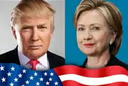
But with the election of 2016, the internet became the primary means of reaching an audience and building support. This was especially the case for the successful campaign of Republican candidate and now president-elect Donald Trump who used Twitter as his digital medium of choice during the campaign.
Trump, already famous because of his reality television presence, found that he could build his audience through brief statements of position in messages of 140 characters or fewer.
Trump found that the internet worked most effectively when used to state positions in simple terms, without explanation. Those statements were frequently outrageous, usually controversial and attention-getting.
As a result they were widely shared which in turn developed more followers. Trump effectively leveraged the limitations of Twitter into a benefit for him, because it became easy for everyone—including the dreaded media—to share his statements and positions.