







- Datameer Offers Its Take on 5 Pillars of Data Governance
- Democratized Data Access
- Quality and Consistency
- Data Policies and Standards: First Line of Defense
- Data Policies and Standards: Multi-stage Analytics
- Data Security and Privacy: Fine-Grained Access Control
- Data Security and Privacy: Role-Based Access Control
- Regulatory Compliance: Data Lineage
- Regulatory Compliance: Audit Logs
- Retention and Archiving
- Future-Proof Open Architecture
Datameer Offers Its Take on 5 Pillars of Data Governance
by Darryl K. Taft
Democratized Data Access
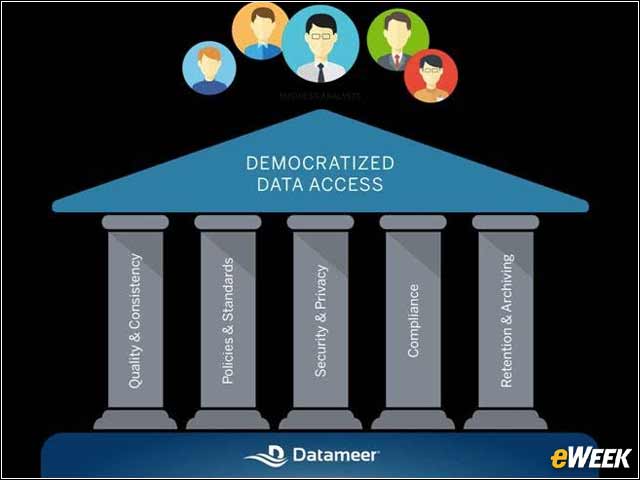
According to Datameer, there are five pillars of democratized data access: quality and consistency, policies and standards, security and privacy, compliance, and retention and archiving.
Quality and Consistency
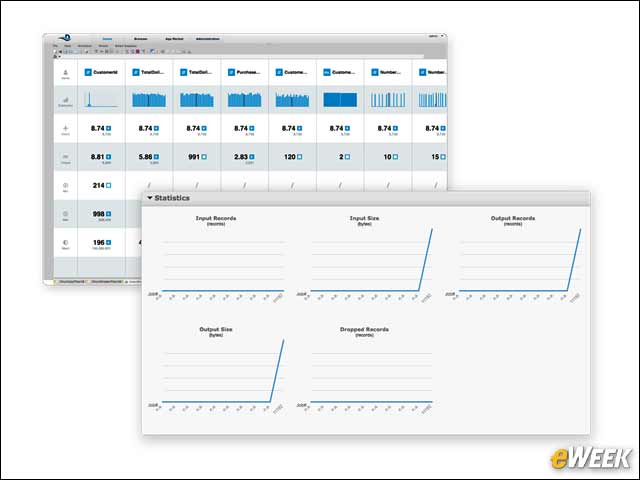
Visual data profiling enables users to spot data outliers early in the cleansing and analysis process, safeguarding downstream analysis from dirty data. Impact analysis allows you to understand who or what will be affected if a change is made in the data pipeline. Detailed data statistics illuminate issues with quality, completeness and throughput.
Data Policies and Standards: First Line of Defense
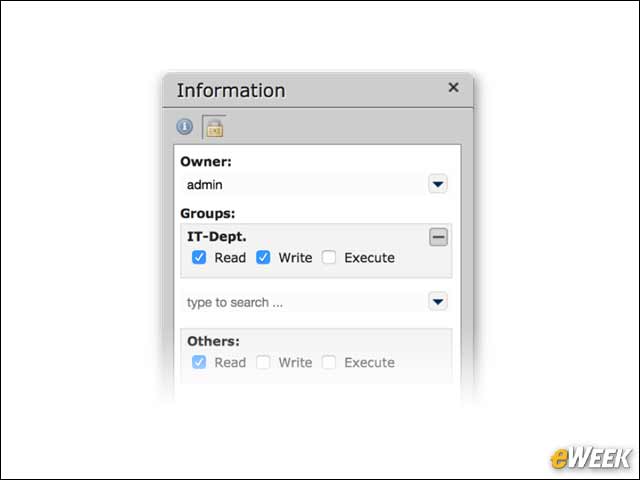
Data access policies are the first line of defense against risk for businesses. For IT, the goal is to implement policies that allow them to manage risk appropriately while still meeting business needs. Secure data views enable administrators and privileged users to expose a subset of fields to specific groups of users, and apply masking and anonymization to sensitive data fields. This ensures all users are always working from a single standard source of truth.
Data Policies and Standards: Multi-stage Analytics
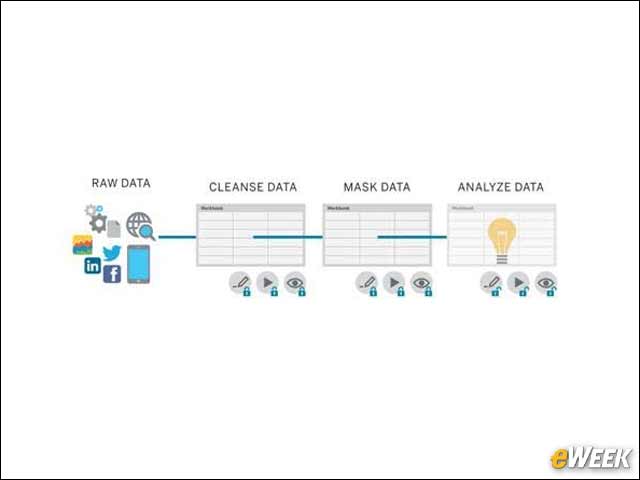
Multi-stage analytics pipelines enable users to build data preparation or analytics workbooks on top of secure data views, and apply policies at every stage of the pipeline from ingest to export.
Data Security and Privacy: Fine-Grained Access Control
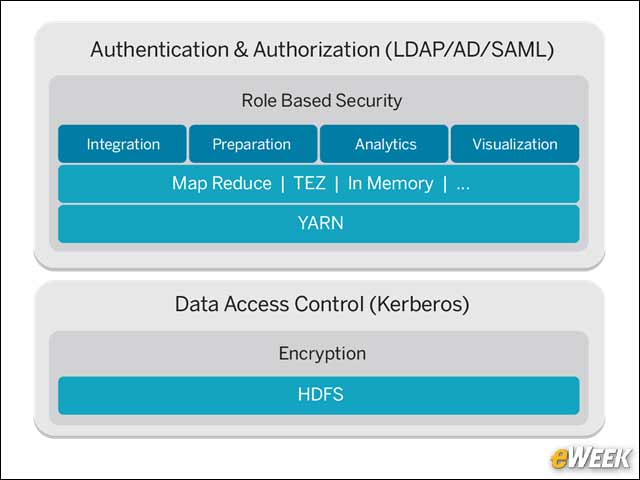
True big data security needs to exceed that of the Hadoop Distributed File System’s built-in capabilities. Fine-grained access control is important, both at the row and column level, and any added metadata needs to carry with it the same level of security. Integration with enterprise identity management systems like Active Directory/LDAP should be a given. Role-based controls on downloading or exporting data and accessing administrative functions are mission-critical.
Data Security and Privacy: Role-Based Access Control
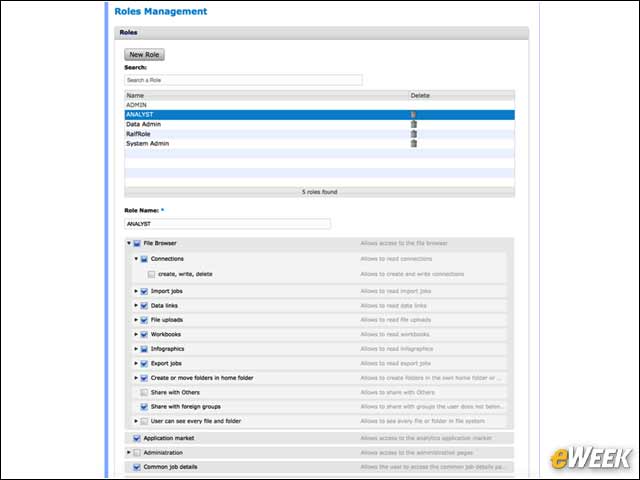
Role-based access control allows IT to control, which users can perform which tasks throughout the Datameer application. For example, you can give bulk ingest abilities to IT staff only, while still allowing analysts to upload their own files on an ad hoc basis.
Regulatory Compliance: Data Lineage
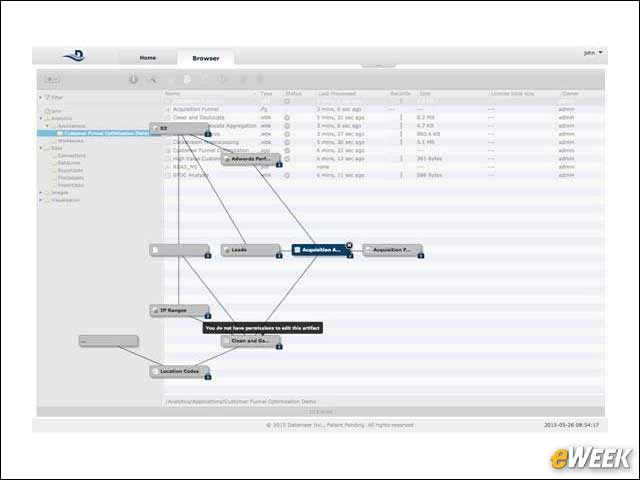
Data lineage allows users to visually understand and track every step that led to their final result, from initial data ingest, across joins and through every single transformation. This allows users to fully understand who did what and when.
Regulatory Compliance: Audit Logs
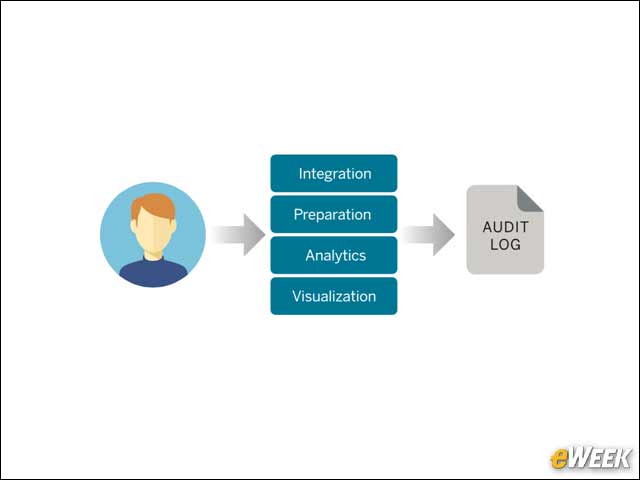
Audit logs capture every login, change of permissions and other privileged actions that might involve sensitive data, including a User Action Log, a log file with relevant user and systems events and information; a Security Audit Log, a dedicated security audit log that captures relevant actions for security investigations and audits; a software development kit (SDK), which allows external systems to be apprised of user and system audit events as they happen; and Audit Reports, pre-built reports that aggregate, analyze and visualize log data in the form of a Datameer application called “HUM” (Health, Usage and Monitoring).
Retention and Archiving
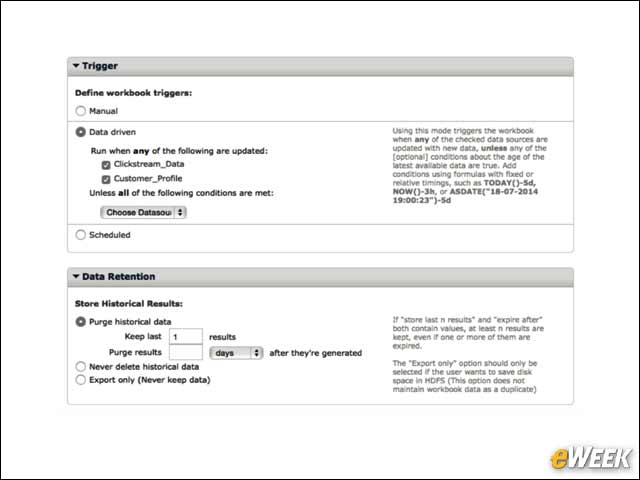
Users can manage their data retention policy with Datameer’s flexible data retirement rules. For each imported data set, an individual set of rules can be configured to keep data permanently or purge records that are older than a specific time window. Datameer’s security rules allow retired data to be instantly removed, retained until a specified time or manually removed after system administrator approval.
Future-Proof Open Architecture
While the Hadoop ecosystem evolves and governance standards and technologies emerge, Datameer offers a pluggable architecture and open APIs so it is future-compatible as new systems and standards are introduced.