







- A Quick Look at Eight Recent Linux Kernel Releases
- Average Kernel Development Cycle Is 66 Days
- Volume of Changes per Kernel Release Varies
- 7.71 Changes Were Accepted Every Hour Into the Linux Kernel
- Lines of Code in the Linux Kernel Continue to Grow
- Number of Developers Participating in Linux Development Is Growing
- Greg Kroah Hartman Is the Top Reviewer
- Intel Is the Top Corporate Code Contributor to Linux
A Quick Look at Eight Recent Linux Kernel Releases
by Sean Michael Kerner
Average Kernel Development Cycle Is 66 Days
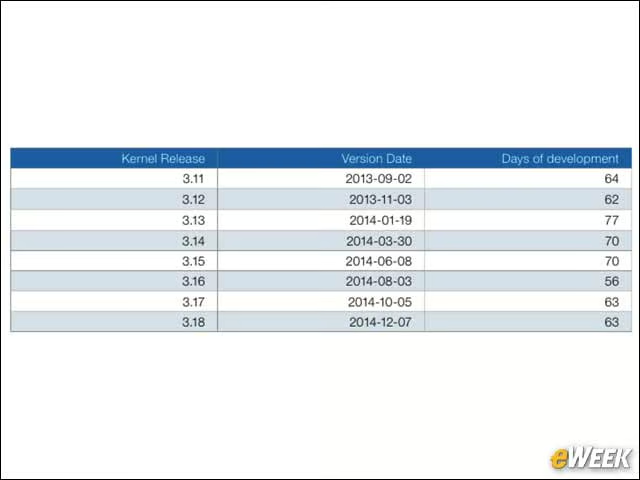
The Linux Foundation report looked at eight Linux kernel releases (from 3.11 to 3.18) and found that the average development time during that period was 66 days. This compares with 70 days in the previous report, which was released September 2013 and focused on Linux 3.3 to 3.10.
Volume of Changes per Kernel Release Varies
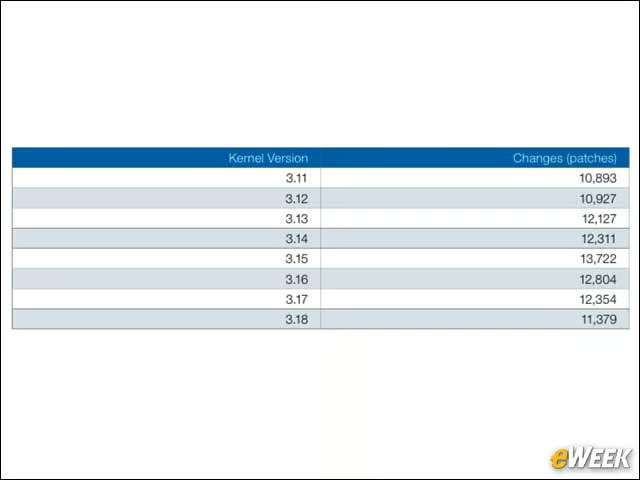
The number of changes merged into each kernel varies for every release. Over the eight releases analyzed in the Linux Foundation report, the Linux 3.15 kernel had the most changes, at 13,722.
7.71 Changes Were Accepted Every Hour Into the Linux Kernel
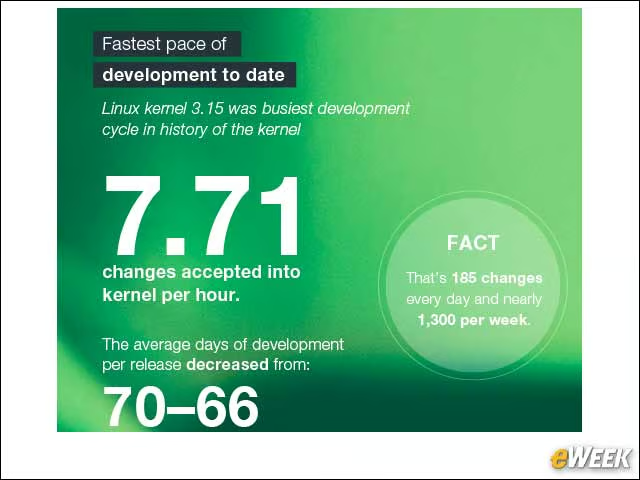
The fastest rate of change for Linux kernel development occurred during the Linux 3.15 development cycle, when an average of 7.71 changes were accepted into the kernel per hour.
Lines of Code in the Linux Kernel Continue to Grow
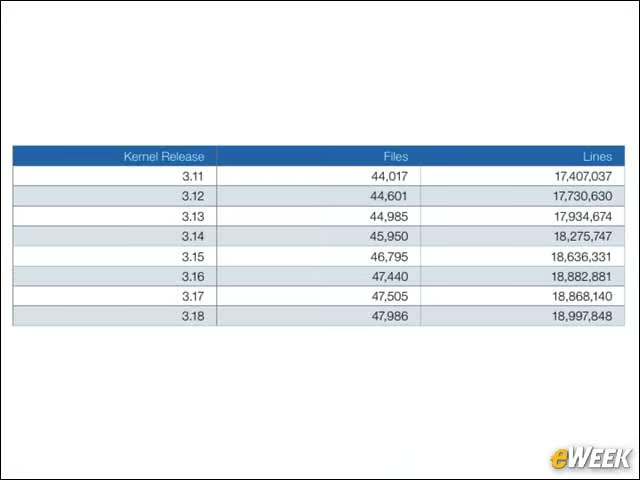
While the number of changes per Linux kernel is variable, the overall size of the kernel has grown steadily, increasing from 17.4 million lines of code in Linux 3.11 to nearly 19 million lines of code in the 3.18 release.
Number of Developers Participating in Linux Development Is Growing
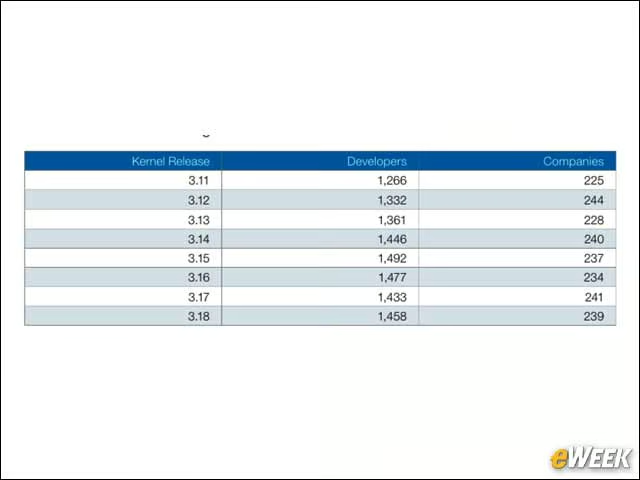
Linux doesn’t write itself, but rather is the result of the work of an increasing number of developers and companies that contribute code. The number of participating developers grew from 1,266 for Linux 3.11 to 1,458 for Linux 3.18.
Greg Kroah Hartman Is the Top Reviewer

From the Linux 3.10 to the Linux 3.18 kernel, Greg Kroah-Hartman is identified as the developer with the most non-author “signoffs.” According to The Linux Foundation report, “When a subsystem maintainer accepts a patch into a subsystem tree, he or she will attach a “Signed-off-by” line to it.” The signoffs of Kroah-Hartman, a Linux Foundation Fellow, represent 14.4 percent of non-author signoffs in the Linux 3.10 to Linux 3.8 timeframe. In contrast, the signoffs of Linux creator Linus Torvalds represented 0.4 percent during the same period.
Intel Is the Top Corporate Code Contributor to Linux
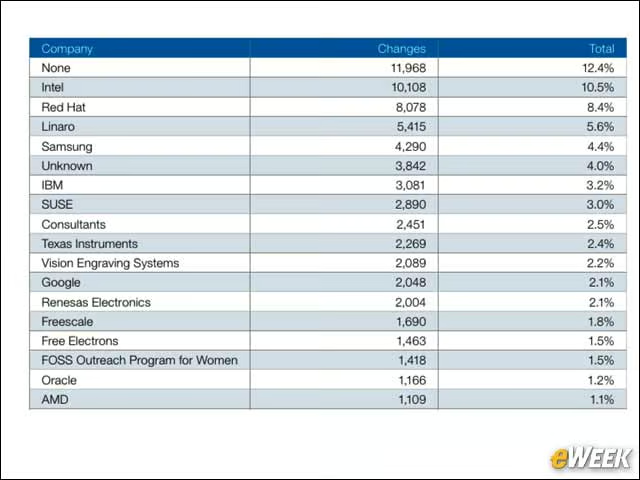
Overall, most Linux kernel development is performed by developers who work for companies. Only 12.4 percent of all changes contributed to the Linux kernel were made by developers with no corporate affiliation. Intel is the leading code contributor, followed by Red Hat.