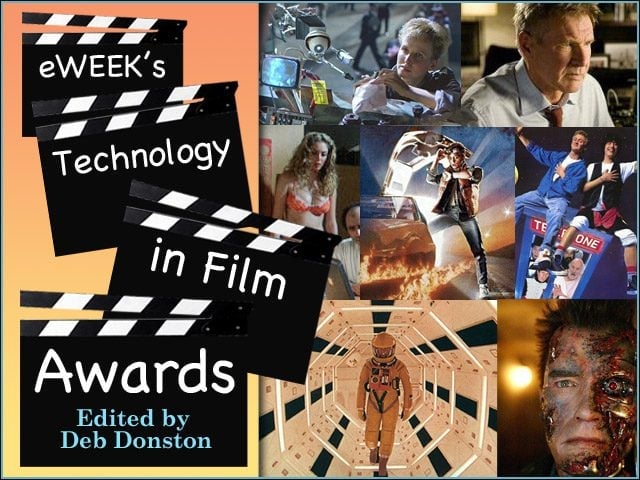

- eWEEK Technology in Film Awards
- eWEEK Technology in Film Awards –Best use of technology as a metaphor for chaos under bureaucratic control
- eWEEK Technology in Film Awards –Best depiction of an operating system that no one understands
- eWEEK Technology in Film Awards –Best sci-fi flick starring Keanu Reeves
- eWEEK Technology in Film Awards –Best legitimate use of technology
- eWEEK Technology in Film Awards –Best use of everyday technology in the service of justice
- eWEEK Technology in Film Awards –Best compost-triumphs-over-reality film
- eWEEK Technology in Film Awards –Best prediction of 20 minutes into the future
- eWEEK Technology in Film Awards –Sappiest use of e-mail
- eWEEK Technology in Film Awards –Best depiction of the dangers of vaporware
- eWEEK Technology in Film Awards –Best example of human voice/computer user interface
- eWEEK Technology in Film Awards –Most effective use of networking
- eWEEK Technology in Film Awards –Best integration of technology into the slasher genre
- eWEEK Technology in Film Awards –Strangest use of an iPod
- eWEEK Technology in Film Awards –Best reverse Nerd-gineering
- eWEEK Technology in Film Awards –Best use of biometrics
- eWEEK Technology in Film Awards –Best peripheral device
- eWEEK Technology in Film Awards – Send your picks
eWEEK Technology in Film Awards
eWEEK Technology in Film Awards –Best use of technology as a metaphor for chaos under bureaucratic control
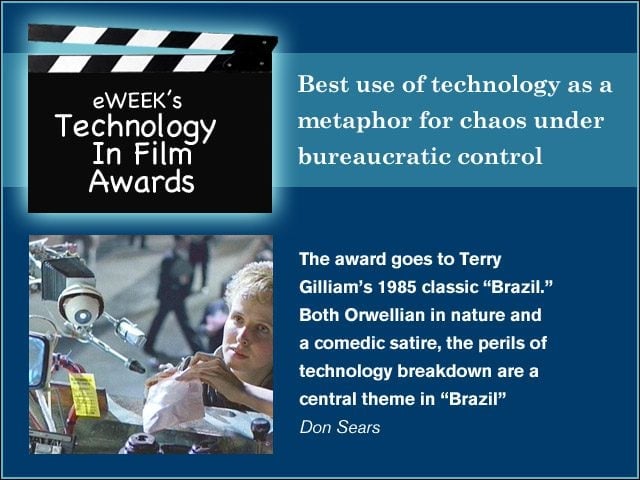
Best use of technology as a metaphor for chaos under bureaucratic control
The award goes to Terry Gilliam??s 1985 classic “Brazil.” Both Orwellian in nature and a comedic satire, the perils of technology breakdown are a central theme in “Brazil.” -Don Sears
eWEEK Technology in Film Awards –Best depiction of an operating system that no one understands
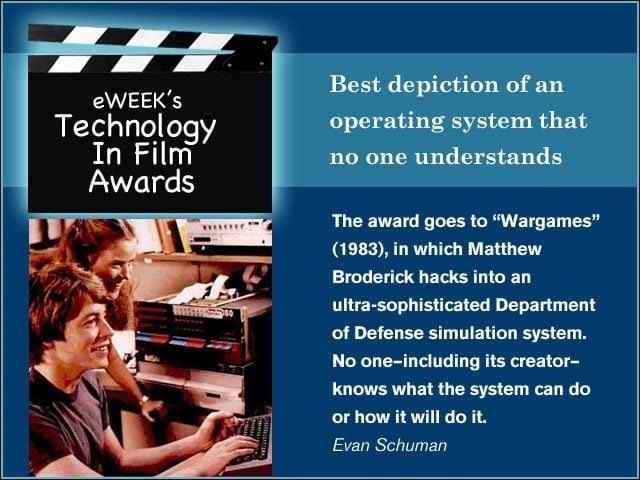
Best depiction of an operating system that no one understands
The award goes to “Wargames” (1983), in which Matthew Broderick hacks into an ultra-sophisticated Department of Defense simulation system. No one including its creator knows what the system can do or how it will do it. -Evan Schuman
eWEEK Technology in Film Awards –Best sci-fi flick starring Keanu Reeves
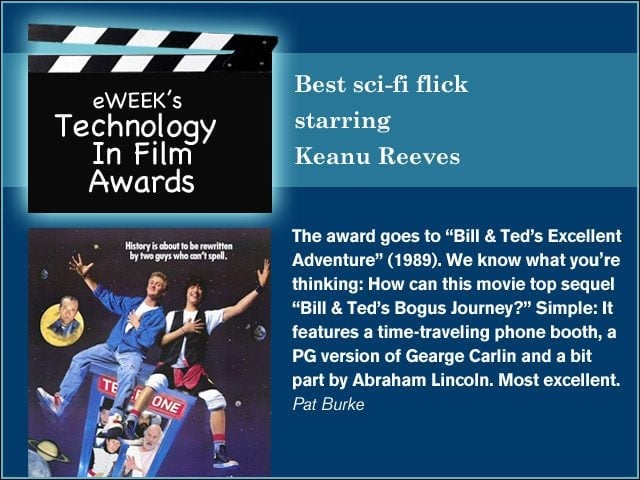
Best sci-fi flick starring Keanu Reeves
The award goes to “Bill & Ted’s Excellent Adventure” (1989). We know what you’re thinking: How can this movie top sequel “Bill & Ted??s Bogus Journey?” Simple: It features a time-traveling phone booth, a PG version of Gearge Carlin and a bit part by Abraham Lincoln. Most excellent. -Pat Burke
eWEEK Technology in Film Awards –Best legitimate use of technology
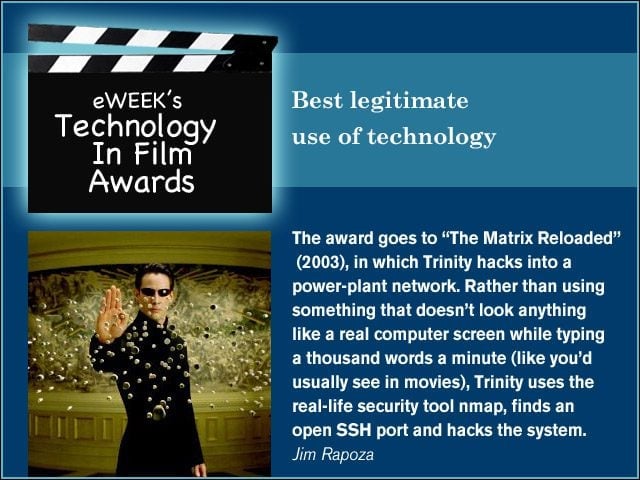
Best legitimate use of technology
The award goes to “The Matrix Reloaded” (2003), in which Trinity hacks into a power-plant network. Rather than using something that doesn’t look anything like a real computer screen while typing a thousand words a minute (like you??d usually see in movies), Trinity uses the real-life security tool nmap, finds an open SSH port and hacks the system. -Jim Rapoza
eWEEK Technology in Film Awards –Best use of everyday technology in the service of justice
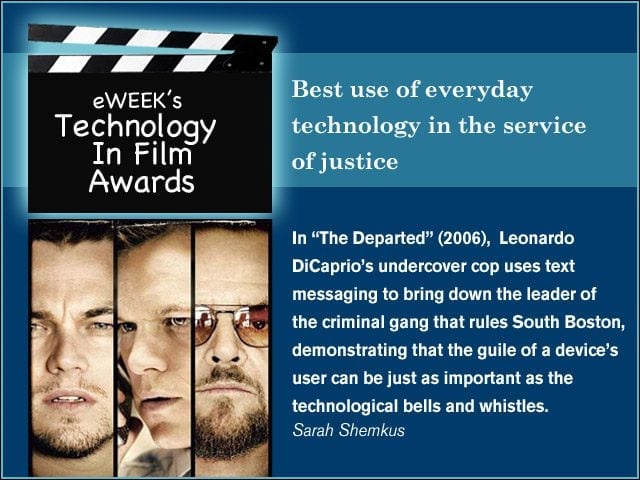
Best use of everyday technology in the service of justice
In “The Departed” (2006), Leonardo DiCaprio’s undercover cop uses text messaging to bring down the leader of the criminal gang that rules South Boston, demonstrating that the guile of a device??s user can be just as important as the technological bells and whistles. -Sarah Shemkus
eWEEK Technology in Film Awards –Best compost-triumphs-over-reality film
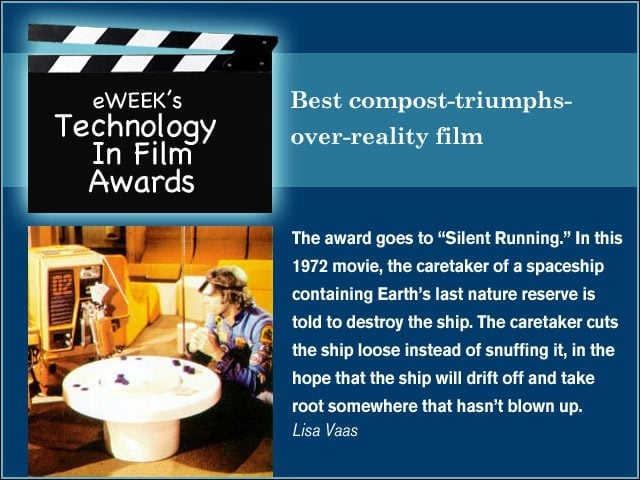
Best compost-triumphs-over-reality film
The award goes to “Silent Running.” In this 1972 movie, the caretaker of a spaceship containing Earth’s last nature reserve is told to destroy the ship. The caretaker cuts the ship loose instead of snuffing it, in the hope that the ship will drift off and take root somewhere that hasn’t blown up. -Lisa Vaas
eWEEK Technology in Film Awards –Best prediction of 20 minutes into the future
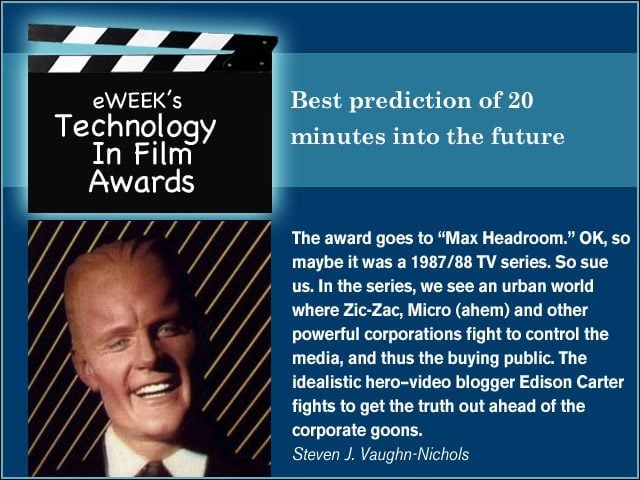
Best prediction of 20 minutes into the future
The award goes to “Max Headroom.” OK, so maybe it was a 1987/88 TV series. So sue us. In the series, we see an urban world where Zic-Zac, Micro (ahem) and other powerful corporations fight to control the media, and thus the buying public. The idealistic herovideo blogger Edison Carter fights to get the truth out ahead of the corporate goons. -Steven J. Vaughn-Nichols
eWEEK Technology in Film Awards –Sappiest use of e-mail
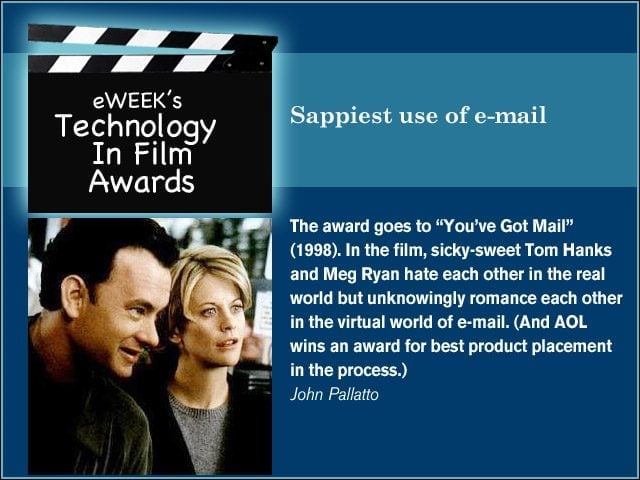
Sappiest use of e-mail
The award goes to “You’ve Got Mail” (1998). In the film, sicky-sweet Tom Hanks and Meg Ryan hate each other in the real world but unknowingly romance each other in the virtual world of e-mail. (And AOL wins an award for best product placement in the process.) -John Pallatto
eWEEK Technology in Film Awards –Best depiction of the dangers of vaporware
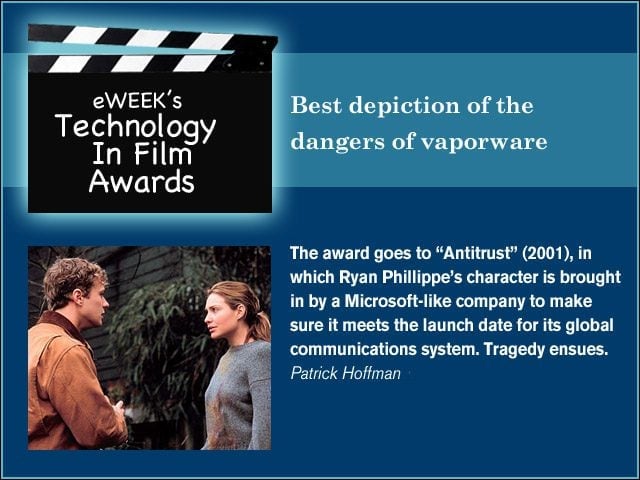
Best depiction of the dangers of vaporware
The award goes to “Antitrust” (2001), in which Ryan Phillippe’s character is brought in by a Microsoft-like company to make sure it meets the launch date for its global communications system. Tragedy ensues. -Patrick Hoffman
eWEEK Technology in Film Awards –Best example of human voice/computer user interface
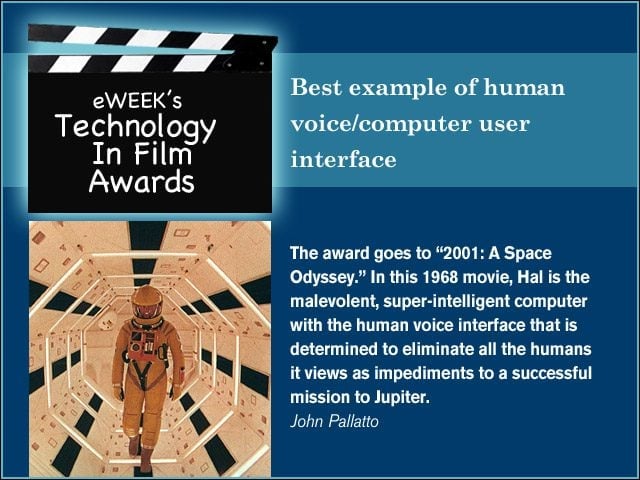
Best example of human voice/computer user interface
The award goes to “2001: A Space Odyssey.” In this 1968 movie, Hal is the malevolent, super-intelligent computer with the human voice interface that is determined to eliminate all the humans it views as impediments to a successful mission to Jupiter. -John Pallatto
eWEEK Technology in Film Awards –Most effective use of networking
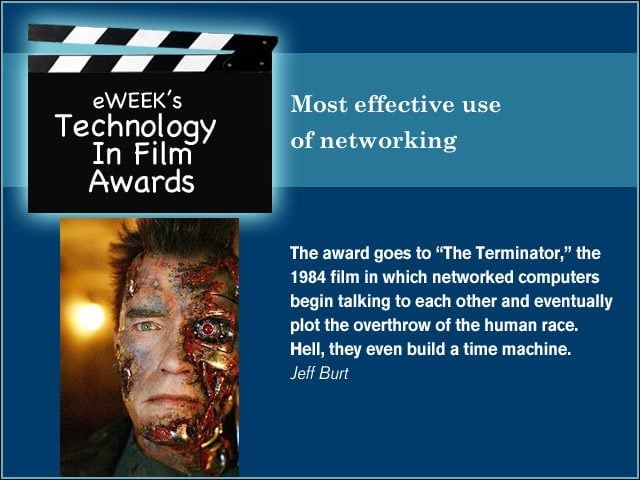
Most effective use of networking
The award goes to “The Terminator,” the 1984 film in which networked computers begin talking to each other and eventually plot the overthrow of the human race. Hell, they even build a time machine. -Jeff Burt
eWEEK Technology in Film Awards –Best integration of technology into the slasher genre
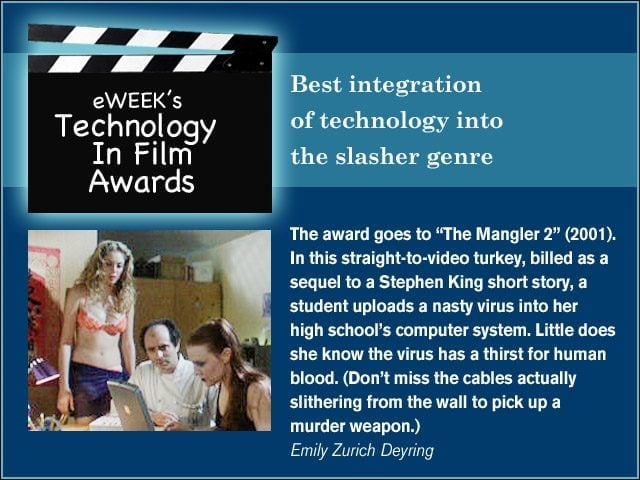
Best integration of technology into the slasher genre
The award goes to “The Mangler 2” (2001). In this straight-to-video turkey, billed as a sequel to a Stephen King short story, a student uploads a nasty virus into her high school’s computer system. Little does she know the virus has a thirst for human blood. (Don’t miss the cables actually slithering from the wall to pick up a murder weapon.) -Emily Zurich Deyring
eWEEK Technology in Film Awards –Strangest use of an iPod
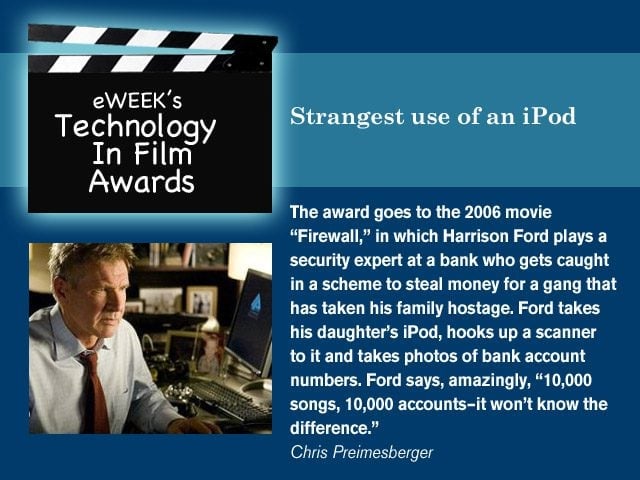
Strangest use of an iPod
The award goes to the 2006 movie
“Firewall,” in which Harrison Ford plays a security expert at a bank who gets caught in a scheme to steal money for a gang that has taken his family hostage. Ford takes his daughter’s iPod, hooks up a scanner to it and takes photos of bank account numbers. Ford says, amazingly, “10,000 songs, 10,000 accountsit won’t know the difference.” -Chris Preimesberger
eWEEK Technology in Film Awards –Best reverse Nerd-gineering
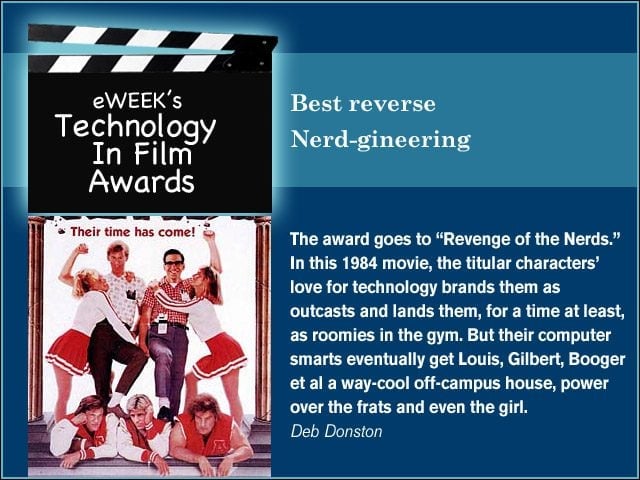
Best reverse Nerd-gineering
The award goes to “Revenge of the Nerds.” In this 1984 movie, the titular characters’ love for technology brands them as outcasts and lands them, for a time at least, as roomies in the gym. But their computer smarts eventually get Louis, Gilbert, Booger et al a way-cool off-campus house, power over the frats and even the girl. -Deb Donston
eWEEK Technology in Film Awards –Best use of biometrics
Best use of biometrics
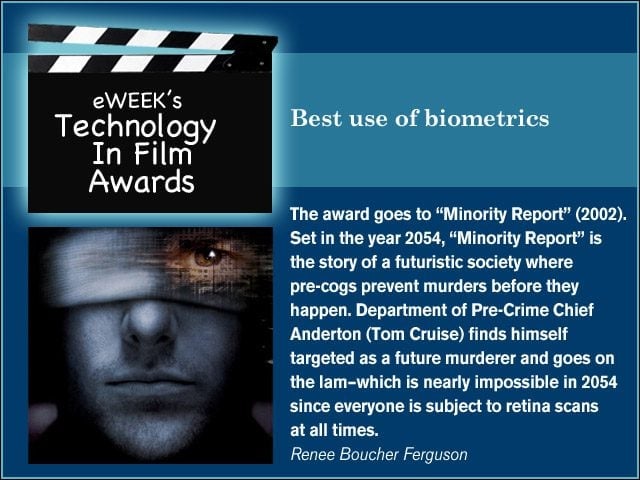
The award goes to “Minority Report” (2002). Set in the year 2054, “Minority Report” is the story of a futuristic society where pre-cogs prevent murders before they happen. Department of Pre-Crime Chief Anderton (Tom Cruise) finds himself targeted as a future murderer and goes on the lamwhich is nearly impossible in 2054 since everyone is subject to retina scans at all times. -Renee Boucher Ferguson
eWEEK Technology in Film Awards –Best peripheral device
/font>
Best peripheral device
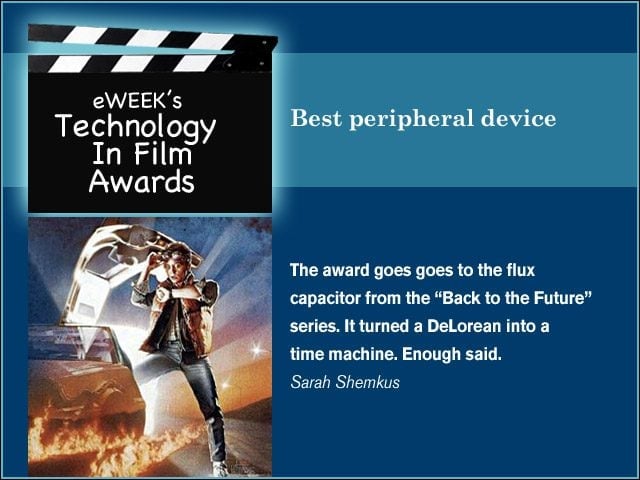
The award goes goes to the flux capacitor from the “Back to the Future” series. It turned a DeLorean into a time machine. Enough said. -Sarah Shemkus
eWEEK Technology in Film Awards – Send your picks