







- Major Milestones in Microsoft’s Storied 40-Year History
- It Started With Bill Gates and Paul Allen
- It’s All About DOS
- Office Keeps Microsoft Ahead of the Pack
- Windows Introduced PC Users to the Graphical Interface
- Internet Explorer: A Web Browsing Giant
- Microsoft and the Government: A Tale of Woe
- Bill Gates Finally Relinquishes Control
- Microsoft Fails to See the Apple, Google Trains Coming
- There’s a New Boss in Town
- Microsoft Looks Beyond Software
Major Milestones in Microsoft’s Storied 40-Year History
By Don Reisinger
It Started With Bill Gates and Paul Allen

The Microsoft story got its start in 1975 with Bill Gates and Paul Allen, the company’s co-founders. That year, Allen and Gates read an issue of Popular Electronics about the Altair 8800, a build-it yourself microcomputer kit, and decided there was an opportunity to develop BASIC for the system. The pair quickly set out to do just that, and in a few years some important business opportunities came their way.
It’s All About DOS
MS-DOS is one of the most important components to Microsoft’s early success. The operating system, which was developed mostly by Microsoft, provided a command line interface that would allow users to work on a line of personal computers designed by IBM. MS-DOS presented a new world for users who wanted to get more out of their computers and provided IBM with a platform on which it could build its PC hardware business. Eventually, Windows replaced MS-DOS, but the operating system survived in one form or another until 2000, when it was finally discontinued.
Office Keeps Microsoft Ahead of the Pack
To understand Microsoft Office, one must first look back at Microsoft Works, an application that combined the features broken out into programs like Excel, Word and others. Works was a hot commodity in the mid-1980s—until 1989, when Microsoft introduced Office. Unlike Works, Office is essentially a bundle of different applications, including Word and Excel, that provide productivity solutions to individuals and companies. Soon, Office took off and has since become Microsoft’s most profitable product.
Windows Introduced PC Users to the Graphical Interface
Unlike MS-DOS, Windows provided a graphical user interface that would allow users to more easily control the operating system. The move made computers more accessible to the average, “non-techy” person and was one of the main reasons PCs from the likes of Dell and others became so popular in the 1990s. The breakout operating system in the Windows ecosystem was Windows 95, which was quickly followed by Windows 98, another mainstream winner. At one point, Windows controlled more than 90 percent of the market.
Internet Explorer: A Web Browsing Giant
Windows 95 actually launched without a Web browser. However, as the Internet grew in popularity, Microsoft developed Internet Explorer. It took some time—and a lengthy battle with Netscape Navigator—but bundling the browser with Windows proved to be a key component in Microsoft’s browser victory. Internet Explorer was the dominant force in browsers until government regulators stepped in to change that. Now, Internet Explorer is being retired in the upcoming Windows 10 in favor of a new Microsoft-designed browser: Spartan.
Microsoft and the Government: A Tale of Woe

It’s been a long road for Microsoft and its government problems. In the U.S. in 2000, Microsoft was called an “abusive monopoly” and was ordered to break into two. However, another court overturned part of the ruling, allowing Microsoft to remain one company. In the EU, the company was not pushed so hard to split, but was nailed by the so-called “browser ballot” that gave Windows buyers a selection of browsers from which to choose, including Internet Explorer, when deploying the OS. The result was a quick loss of browser market share in Europe and hundreds of millions of dollars in fines.
Bill Gates Finally Relinquishes Control

Steve Ballmer, who joined Microsoft in 1980, was appointed CEO in January 2000. While Ballmer played a crucial role at Microsoft for years before that appointment, Bill Gates, as chief executive, had a firm grip on the company. And rumors suggest that even when Ballmer was finally given the CEO job, he wasn’t able to run the company autonomously until Gates finally left the day-to-day operations of Microsoft in 2006. Soon after, major management changes occurred at Microsoft.
Microsoft Fails to See the Apple, Google Trains Coming
Microsoft’s biggest mistakes most likely were failing to anticipate the growth of the Internet, the astounding success of Google’s search engine marketing model and the explosive growth of mobile computing led by the Apple iPhone. With Google, Microsoft didn’t believe that a search engine could become a dominant force in online advertising and that software would take a backseat to the Web. With Apple, Microsoft failed to adapt to the “coolness” factor of the Mac maker’s brand and didn’t anticipate how big an impact a device like the iPhone could have. By the end of the first decade of the 2000s, Microsoft was far behind in search, advertising and mobile, and the company is still playing catch-up.
There’s a New Boss in Town
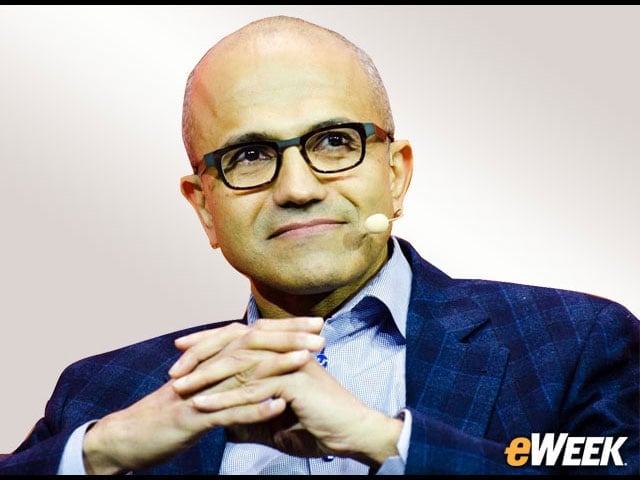
In a surprising twist, Microsoft announced in 2013 that Steve Ballmer would leave his post as Microsoft chief executive. It took nearly a year to find a successor, but finally, in February 2014 Microsoft announced that Satya Nadella would be the company’s third CEO. Nadella’s appointment represented a dramatic shift for Microsoft, as the move made clear that the old guard was gone and a new generation with new ideas was coming in. Months later, Ballmer left Microsoft’s board, leaving Nadella to make his own decisions without fear of oversight from his predecessor.
Microsoft Looks Beyond Software
Satya Nadella’s new ideas mean Microsoft is changing its stance on the future. The company might still live on software, but it’s mobile, the cloud and services that Microsoft and Nadella believe will guide the future. That’s a seismic shift in the way Microsoft operates, and it dramatically changes how the company will generate revenue in the coming years. For decades, Microsoft was a software company. Now, it’s a cloud and services firm. In other words, this isn’t the same old Microsoft you had come to know.