







- Windows 8.1 Is Microsoft OS’ Last Chance for Redemption: 10 Reasons Why
- Windows 7 Is Still Useful
- Windows 8 Has Been a Nightmare
- PC Makers Aren’t Happy With Windows
- PC Sales Are Slowing
- Apple’s OS X Is, Surprisingly, Coming On Strong
- Tablet Sales Are Soaring
- Desktops Aren’t Going to Help
- The Enterprise Is Happy With Windows 7
- Microsoft Needs It For Hardware Appeal
- It Gives Google the Opening It Needs
Windows 8.1 Is Microsoft OS’ Last Chance for Redemption: 10 Reasons Why
By Don Reisinger
Windows 7 Is Still Useful
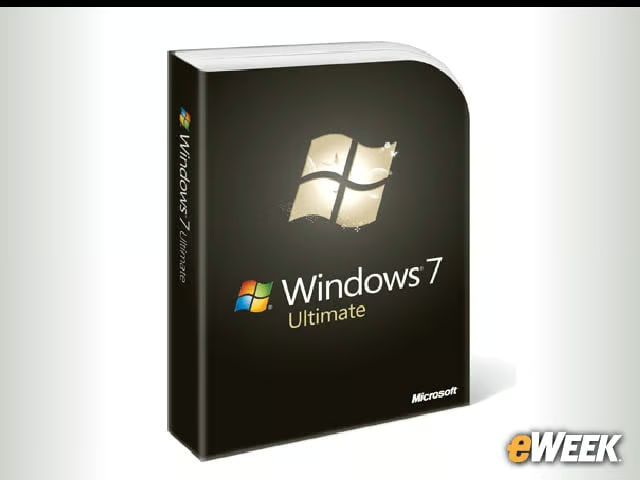
If Microsoft’s Windows 8 came out several more years later when Windows 7 was clearly losing its appeal to consumers and enterprise users, Microsoft would have had an easier sell on its hands. Unfortunately, in users’ eyes, Windows 7 is still reasonably new and works quite well. That means customers don’t feel much incentive to upgrade. And if they don’t find a compelling reason to upgrade to Windows 8.1, there is little Microsoft can do to make them.
Windows 8 Has Been a Nightmare
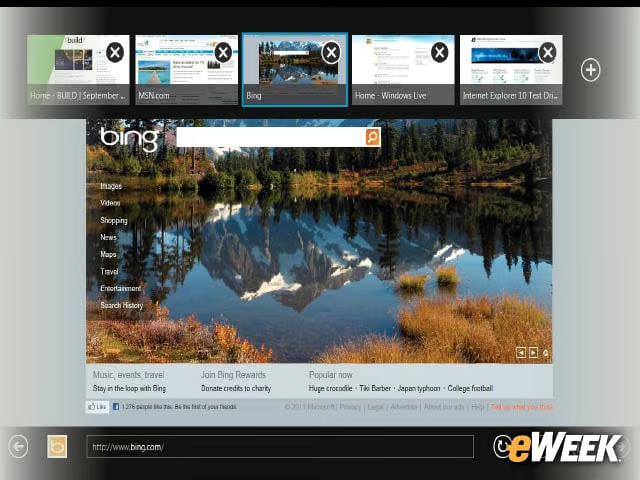
Microsoft needs to find a way to vindicate itself. Windows 8 has been an absolute nightmare for the software company, almost on par with the negative reaction to Windows Vista. This demonstrates that Microsoft hasn’t done anything to prove that it truly understands what today’s customers want. Windows 8.1 is that opportunity. Now, the onus is on Microsoft to prove it understands its customers.
PC Makers Aren’t Happy With Windows
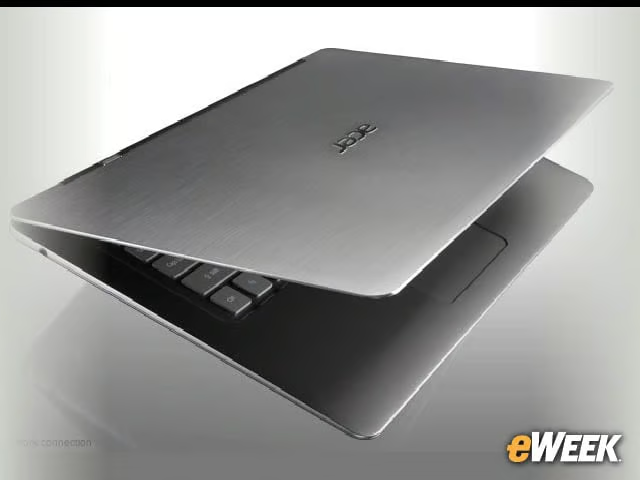
PC makers are not happy with Windows at the moment, either. The operating system has proven ineffective as a sales incentive, and Microsoft hasn’t done enough to improve the operating system’s value proposition. Windows 8.1 is the last chance Microsoft will have to change PC makers’ views about the future hardware sales prospects from this operating system.
PC Sales Are Slowing
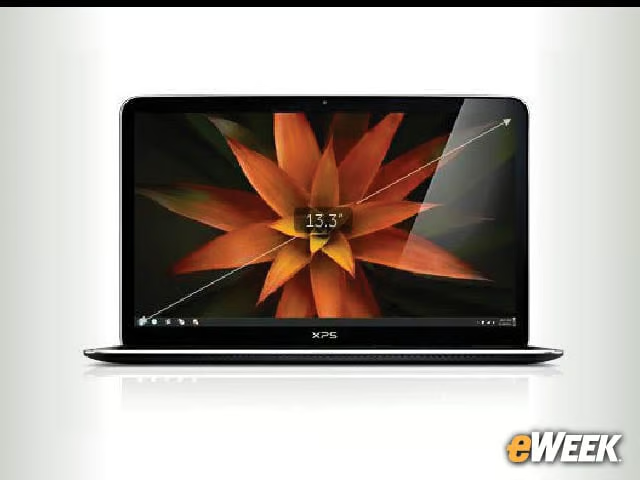
As much as PC makers rely on Windows to sell devices, so too is Microsoft reliant on PC vendors to sell copies of its software. So, when news continues to come out that PC sales are slowing, Microsoft execs can understandably worry. Sales are slowing for reasons besides dissatisfaction with Windows 8. But if Windows 8.1 can’t entice customers to buy more PCs, Microsoft will have to find another way to make up for that potentially major revenue loss.
Apple’s OS X Is, Surprisingly, Coming On Strong
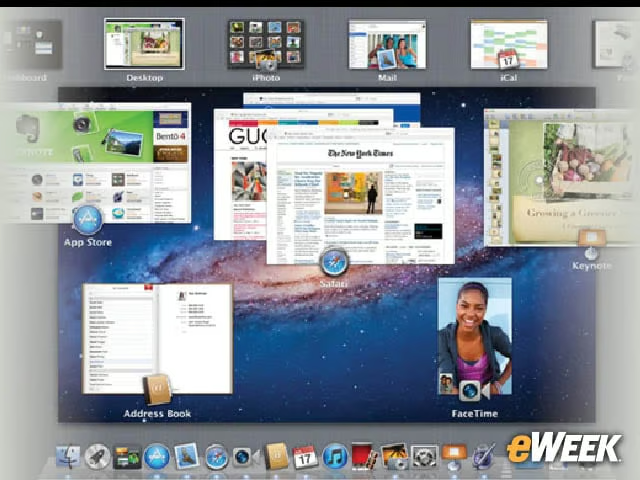
There has been a belief historically that even when Windows doesn’t sell all that well, eventually, customers will have no choice but to upgrade and Microsoft will be just fine. However, Apple’s OS X is selling surprisingly well and MacBooks are the only notebooks on the market producing sales growth. Granted, OS X won’t overtake Windows any time soon, but if it continues to eat away at Windows’ market share, eventually, that can only hurt the software giant.
Tablet Sales Are Soaring
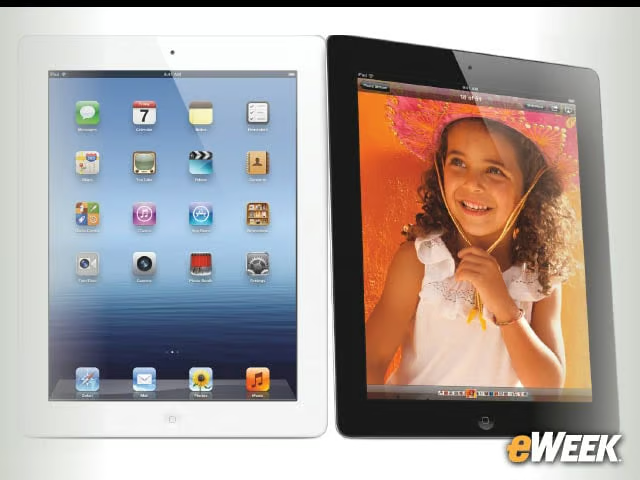
Tablet sales should be Microsoft’s greatest concern. More people are buying tablets than other types of PCs. Unfortunately for Microsoft, it’s not doing all that well in tablet sales. Windows 8.1 could hopefully change that for the better. But it’s difficult to say what Microsoft will do if it doesn’t sell more Windows 8.1 tablets.
Desktops Aren’t Going to Help
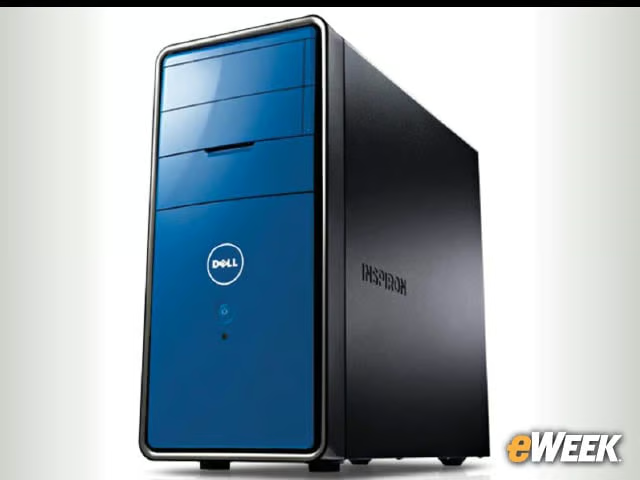
Years ago, Microsoft could always fall back on desktops. Such devices were highly popular in the enterprise, and most desktops deployed in the corporate world were running Windows. Desktop sales, however, are dropping even faster than notebooks, and most analysts expect them to turn into niche products eventually. That’s bad news for Microsoft and Windows 8.1.
The Enterprise Is Happy With Windows 7
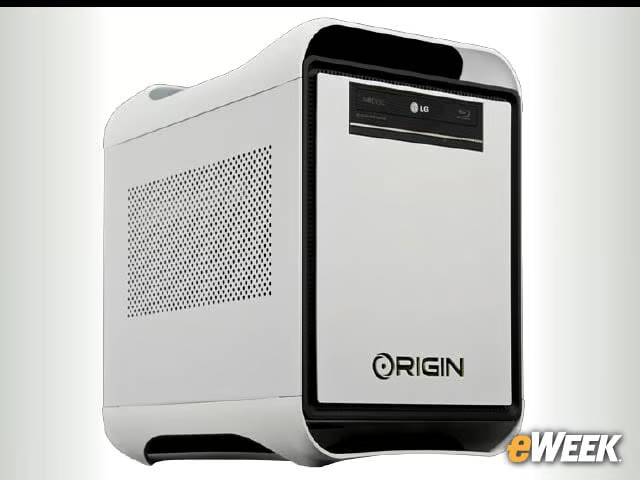
How can Microsoft get the enterprise to care again about Windows? When Windows 8 hit store shelves, CIOs across the globe ignored the OS. Now, they’re left to wonder if Microsoft can ever make a comeback. And in the meantime, they’re just fine with tablets, Windows 7 and even OS X.
Microsoft Needs It For Hardware Appeal
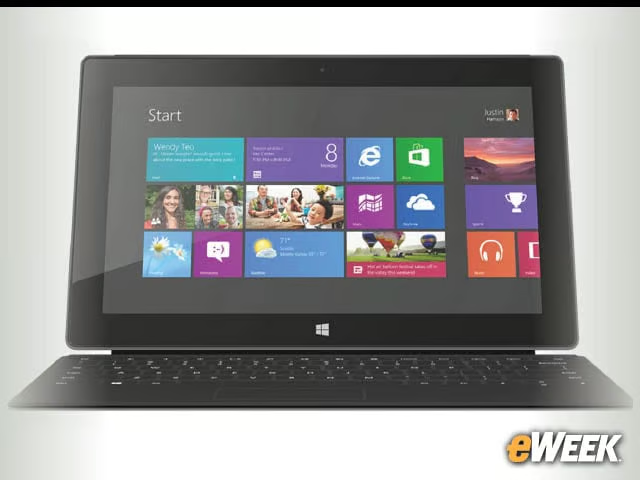
Microsoft’s recent restructuring was designed to accomplish one main goal: for the software company to become a hardware company. Yes, Microsoft will still make software. But hardware is taking on a much greater role at the company. But as history has proven, it’s truly software that sells hardware. If Windows 8.1 can’t deliver on the software front, don’t expect Microsoft’s hardware division to meet its sales goals either.
It Gives Google the Opening It Needs
Google is still a huge concern for Microsoft and for good reason. The Web company has been slowly but surely chipping away at Microsoft’s core businesses with Chrome OS, Chrome, Google Docs and Android. Weak Windows 8.1 sales might make some stakeholders question whether it’s time to start moving to the Google platforms. A Windows 8.1 failure can only help Google. Microsoft simply can’t allow that to happen.