







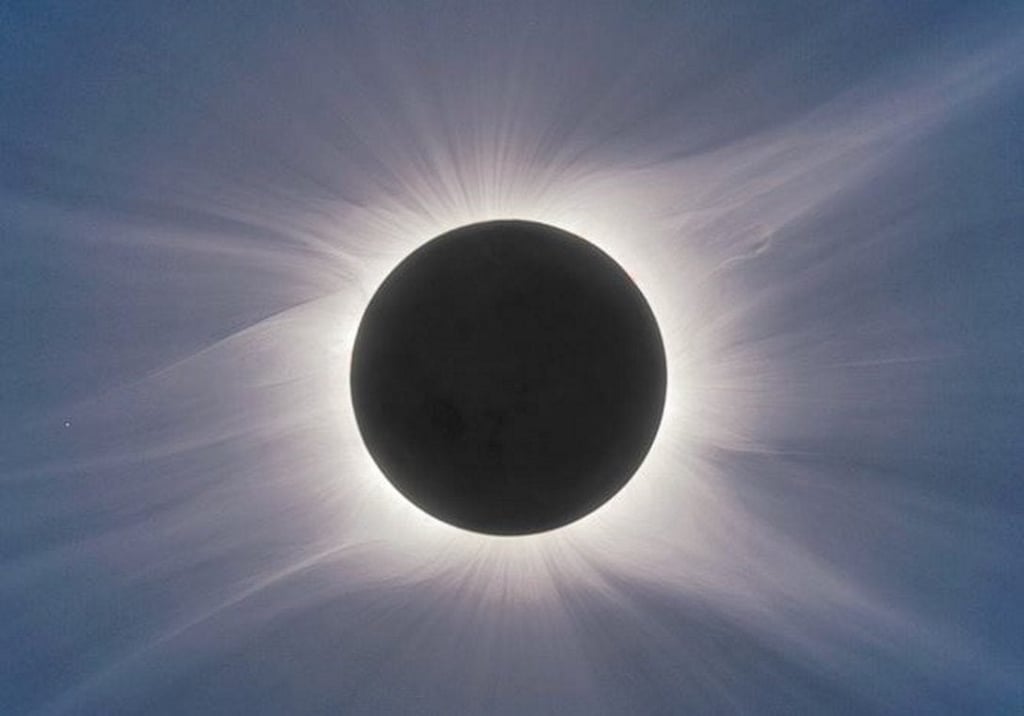
Members of Google’s Making and Science initiative and the Multiverse team at the University of California, Berkeley’s Space Science Laboratory are teaming up on a project to produce a high-definition, time expanded video of the Aug. 21 total solar eclipse using images from more than 1,000 amateur photographers and astronomers.
The group of volunteer photographers will be stationed along the entire path of totality of the eclipse stretching from Corvallis, Oregon to Charleston, South Carolina. The teams from Google and Berkeley will then stitch together the crowd-sourced photos to create a continuous view of the solar eclipse as it traverses the United States.
The dataset from the so-called Eclipse Megamovie Project will be made available to the general public and to the scientific community for further research, according to a description of the initiative.
This solar eclipse is the first in nearly 100 years to cover a major potion of the U.S. The goal of the Megamovie initiative is to study how the Sun’s corona changes over time.
The corona is the glowing outermost layer of the sun’s atmosphere that extends millions of miles into space. Normally the corona is not clearly visible because of the sun’s intense light.
So scientists have to use radio-wave studies to observe rapid variations in it. But during a total solar eclipse, like the one on Monday, the corona becomes clearly visible and allows researchers to study changes using visible light, Google’s Eclipse Megamovie site explained.
Data from the photos submitted by the volunteer photographers and amateur astronomers will allow scientists to analyze the Sun’s corona for years. Significantly, the dataset from this year’s total eclipse will provide a basis for comparison when the next solar eclipse which crosses the U.S from southwest to northeast in 2024, the site explained.
“Of particular interest to our team are the moments when the Sun is almost totally eclipsed and again when it is just coming out of total eclipse,” according to Google’s team. This is when observers can view a “diamond ring” like effect that among other things will let scientists determine the Sun’s size with more precision.
The Eclipse Megamovie 2017 site appears to be still offering people ways to participate in the project if they own a Digital SLR camera and happen to be in the path of totality on Monday. Volunteers do not need any special equipment to participate and can use free apps like the Eclipse Megamovie Mobile app for Android and iOS to automatically take and share their photos with project scientists.
Plans for the Megamovie Project were first into motion by a team of scientists from the Space Sciences Laboratory at UC Berkeley in 2011. From that time, the goal has been to gather as many images as possible from eclipse observers and incorporate them into a single movie.