







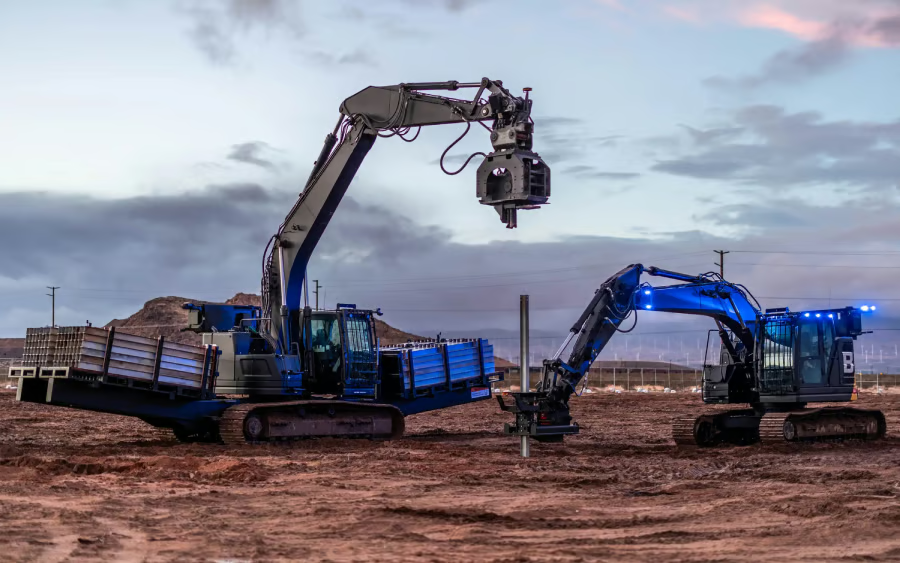
Ten 72-ton robots are driving steel piles for Meta’s Hyperion data center.
At a Louisiana solar site for the company’s largest data center project, autonomous machines are driving nearly 1,000 steel beams into the ground each day. Built Robotics CEO Noah Ready-Campbell told Business Insider the solar project will help power Hyperion.
AI campuses need chips, servers, and huge amounts of electricity. Hyperion’s power needs are pulling robots into the construction work behind the next wave of Meta’s AI models.
Robots take on heavy solar-site work
Built Robotics retrofits large construction machines with sensors, cameras, GPS, and software so they can operate inside marked-off areas. In Hyperion, the machines are handling more than half of the pile-driving work.
Steel piles used for the solar project can be about 14 feet long and weigh 200 pounds. Robots pick up, position, and drive the piles, reducing manual handling by workers.
Built’s RPD 35 robotic pile driver is designed to carry and drive steel piles for solar projects. Its RPS 25 stabilizer helps hold piles in place as they are driven. However, the specific Built models working in Louisiana were not identified.
Parts of the project are low, wet, and muddy. Ready-Campbell told Business Insider that crews sent robots into the swampiest sections “because the robots don’t care.”
Hyperion needs massive power
Hyperion is Meta’s largest data center project to date. The campus is expected to provide more than two gigawatts of compute capacity for future open-source large language models.
A campus with that much compute capacity requires a major energy plan. The company has said it is working with Entergy to add enough clean, renewable energy to the grid to meet the site’s electricity needs.
Meta has said the project is a $10 billion-plus investment. It expects more than 5,000 skilled trade workers on site at peak construction.
Machines change the labor equation
Ready-Campbell compared the human role to a “robot foreman.” Workers manage the machines, keep them fueled and supplied, and monitor the work across the project.
A conventional crew would need three to four times as many workers to complete the same amount of work as the 10 robots in Louisiana, Ready-Campbell estimated. Construction firms facing labor shortages on large energy projects may have a clear reason to test autonomous equipment.
For workers, the change is less about leaving the job site than changing the role on it. More work could focus on supervising autonomous machines while robots handle repetitive lifting and pile-driving.
UBTech’s U1 launch brings China’s humanoid robot race closer to homes, elder care, and everyday companionship.