








- 10 Tips for Testing Mobile Apps, Devices
- Android vs. iOS: Who Leads in the Enterprise?
- Device Wars: What Device Brand Is Being Tested Most?
- Different Markets, Different Phones: The Breakdown
- Many Faces of Android: Popular OS Versions to Test
- Don’t Forget Legacy Devices
- Use Web Analytics as a Crystal Ball
- Look at Regions, Carriers and Network Technologies
- Smartphone Size Does Matter
- Tablets Are Changing the Game
- BYOD Brings Fragmentation, Security Risks and Limitations
10 Tips for Testing Mobile Apps, Devices

by Darryl K. Taft
Android vs. iOS: Who Leads in the Enterprise?
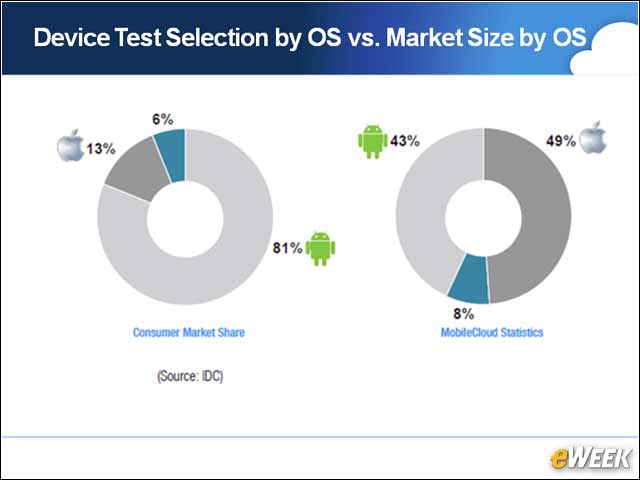
Despite the latest studies that show Android leading with more than 80 percent market share globally and 60 percent in the U.S., Perfecto Mobile’s data shows that enterprises in North America and Europe actually spend close to 50 percent of their time testing on iOS devices. This is most significant within the retail and airlines industries, with well over 50 percent of testing hours spent using iOS.
Device Wars: What Device Brand Is Being Tested Most?
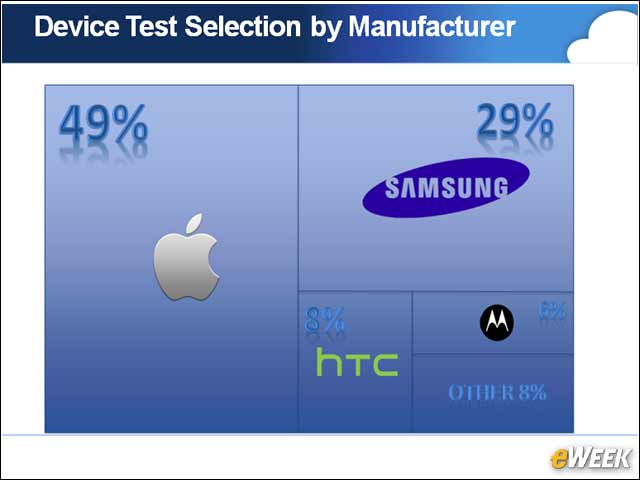
To determine the right mix of devices for testing, enterprises need to research and understand what devices are in the market, what devices are being used by their end users and what devices are coming. As opposed to OS selection, data shows 49 percent of enterprises’ test hours are dedicated to Apple, followed by Samsung at 29 percent.
Different Markets, Different Phones: The Breakdown
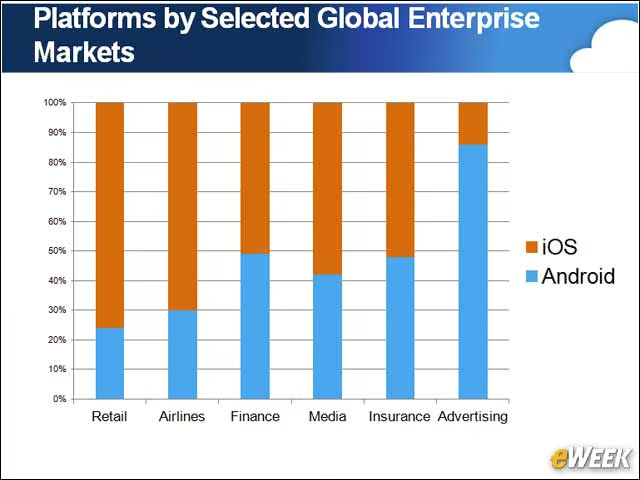
Device strategies vary by vertical market. For example, iOS is the overwhelming preference in the retail and airline industries while Android accounts for more than 80 percent of testing in the mobile advertisement segment. Another interesting comparison is between tablets and smartphones. While the airline industry conducts 85 percent of their testing on smartphones, media and entertainment sees a 60/40 split testing on smartphones and tablets, respectively.
Many Faces of Android: Popular OS Versions to Test
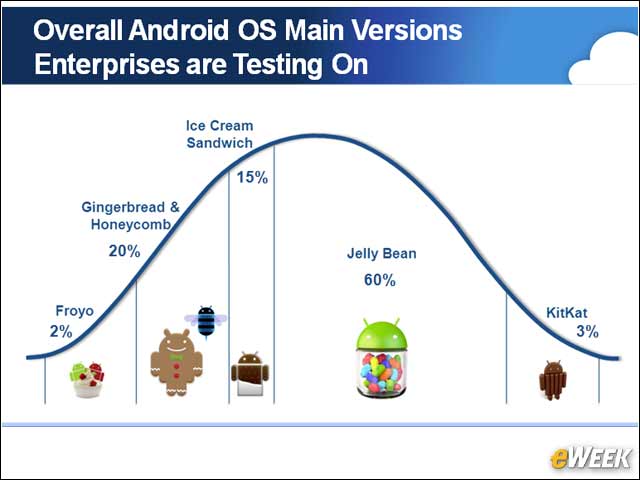
Android version updates have a naturally long deployment cycle, especially in comparison to Apple’s strategy to develop devices and update OSes at the same time. There are multiple Android OS versions that enterprises should be testing on. Jelly Bean, the most widely adopted Android version, released July 2012, represents the naturally long deployment cycle; Android sold millions of units during the release of Jelly Bean and many of its users have yet to update. This is due to the recertification required with each OS update; major carriers are deploying the update 5-plus months following the release.
Don’t Forget Legacy Devices
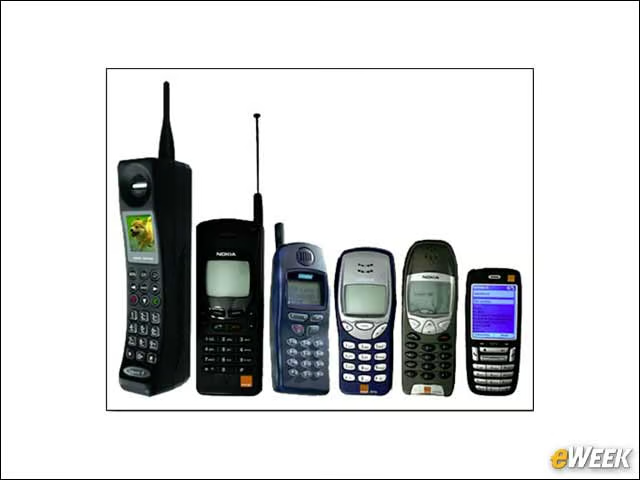
According to the data collected, iPhone 5S/C and Google Nexus 5 are the fastest-growing operating system versions in use. And despite nearing three years old, the Samsung Galaxy S 2 continues to be included by most customers.
Use Web Analytics as a Crystal Ball

For mobile Websites and hybrid applications using Web technology, excellent tools exist for analyzing your target market. Google Analytics, for example, helps breaks down site visits by device and OS. This knowledge helps you know the exact makeup of your market and where to focus your testing efforts.
Look at Regions, Carriers and Network Technologies

As your market expands, your reach into different regions also grows, and with that, your enterprise mobile strategy needs to ensure its mobile apps are being tested in all regions, and with all carriers and networks. For instance, a function on your application may work in the United States but not in Canada. Knowing how to fix your app by testing locally will prevent the app from failing.
Smartphone Size Does Matter

With 9 billion connected devices today and that number expected to jump exponentially to 24 billion devices by 2020, there are now more screen sizes and form factors to consider when building out the overall enterprise testing strategy. Screen resolution will impact how the app will be viewed by the end user on the various devices. In the study, Perfecto found the leading resolution on the market today is 640 by 1,134 (4 inches) for the popular Android phones.
Tablets Are Changing the Game

IDC recently reported that U.K. tablet shipments, which included two-in-one devices, in the fourth quarter of 2013 grew by 50 percent from the same period in 2012, based on sales of more than 5 million units. This trend will continue well into 2014. If tablets aren’t part of the device mix for your strategy, you’re missing a huge component of the market.
BYOD Brings Fragmentation, Security Risks and Limitations

With the BYOD policies being adopted within enterprises, not only are security issues foremost on CIOs and IT managers’ minds, but there are more challenges to consider now that will impact your mobile enterprise strategy, as well. According to Gartner, by 2016, 20 percent of enterprise BYOD programs will fail due to deployment of mobile-device management measures that are too restrictive.