







- Android O, Google Lens Grabbed Most Attention at Google I/O
- Google Reveals Fresh Details About Android O
- Google Lens Links Information to Camera Images
- Google Assistant Coming to the iPhone
- Google Home to Support Hands-Free Calling
- Bluetooth Support Comes to Google Home
- Google Finds Daydream VE Headset Partners
- Google Investing in ‘Visual Positioning’ System
- Google Photos Gain New Facial Recognition Features
- Android in Use on 2 Billion Devices
- Google in Quest of 1 Billion More Android Users
Android O, Google Lens Grabbed Most Attention at Google I/O
Google I/O demonstrated once again the company’s ability to develop diverse mobile, cloud computing and internet of things products and services. The all-important Android O mobile operating system—already a well-known quantity—was overshadowed by some interesting initiatives. Most interesting was Google Lens, which will enable Android device users to use their mobile devices to shoot a picture of objects around them and obtain more information that is in context with their location and interests. For example, you could shoot a picture of a new car on the street and get details on features, prices and the nearest dealer. Google also discussed a partnership with an internet of things platform developer, Particle, to give enterprises a way to make IoT devices geolocation-aware without installing power hungry GPS modules on each device. Read on to learn more about what went on at Google I/O.
Google Reveals Fresh Details About Android O
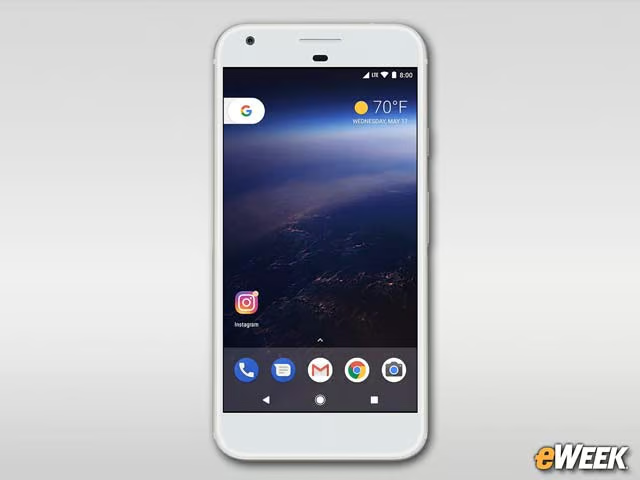
Google’s Android O was one of the biggest announcements at the show. Google said the operating system will be available “later this year” and feature improved notifications handling, to deliver more relevant information for users. Android O will enable users to multitask at once and includes features to improve battery and performance.
Google Lens Links Information to Camera Images
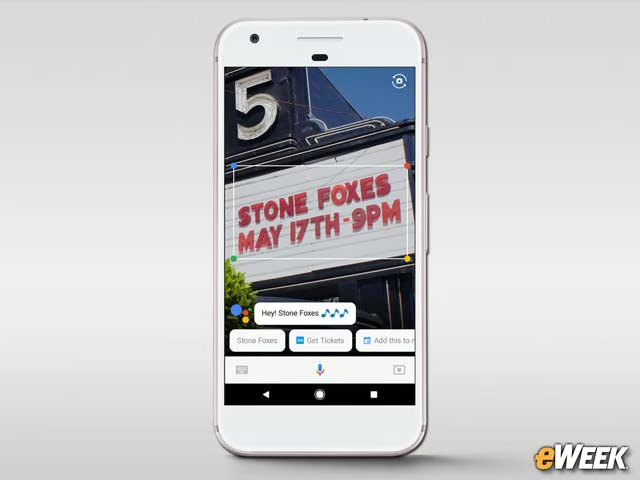
Google Lens is similar to Bixby Vision, in that it can deliver contextual information about an object when users focus on it with their phone camera. For example, users could point the camera at a marquee promoting a band and Google Lens will deliver information about the band, tickets and more via Google Assistant.
Google Assistant Coming to the iPhone
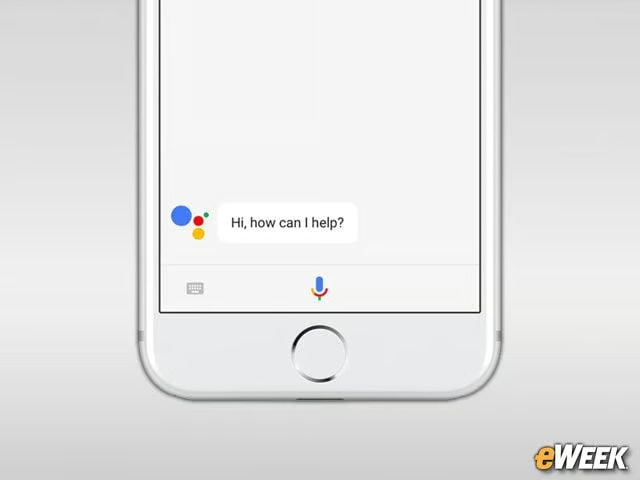
Google is bringing Google Assistant to the iPhone also. Google Assistant offers a personal virtual assistant-alternative to Apple’s Siri for devices running iOS 9.1 or later. The free app lets users search the internet, get answers to questions, create calendar events and more.
Google Home to Support Hands-Free Calling
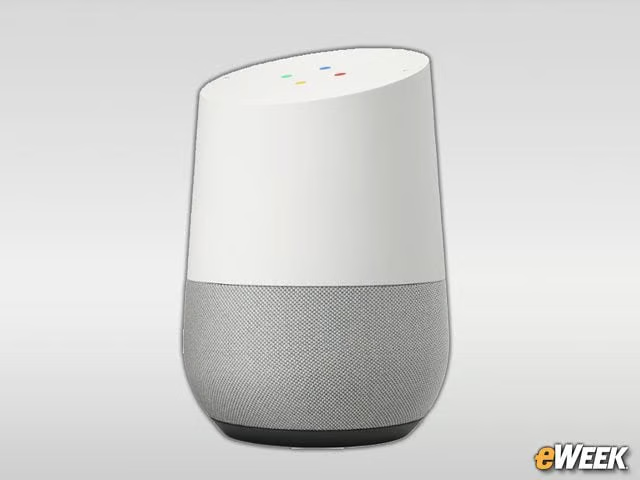
The Google Home hub now supports hands-free calling. Using vocal commands, users can place calls through Google Home and the calls will be connected at no charge to landlines and mobile numbers in the United States and Canada.
Bluetooth Support Comes to Google Home
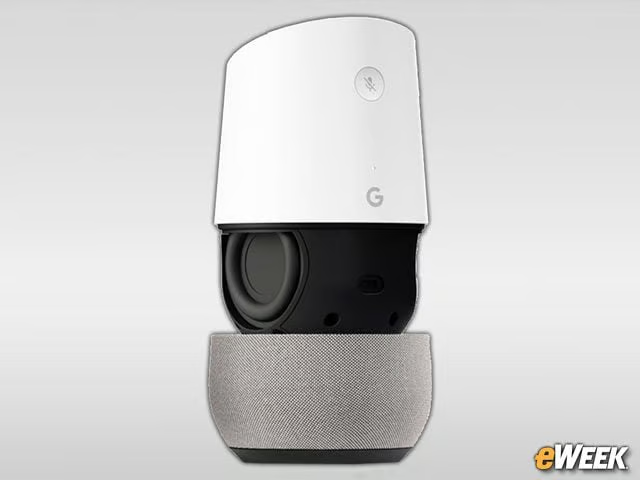
Perhaps the biggest new Google Home feature is Bluetooth support, enabling users to stream music from an iPhone or Android device. Google Home also includes voice-command support for a range of services including HBO Now and CBS All Access, and when used with Chromecast, answers from Google Assistant are displayed on-screen.
Google Finds Daydream VE Headset Partners
As part of its effort to move deeper in the virtual-reality market, Google announced alliances with third-party vendors to build Daydream-compatible VR headsets. HTC and Lenovo are among the first that will develop headsets that work with Google’s Daydream VR platform.
Google Investing in ‘Visual Positioning’ System
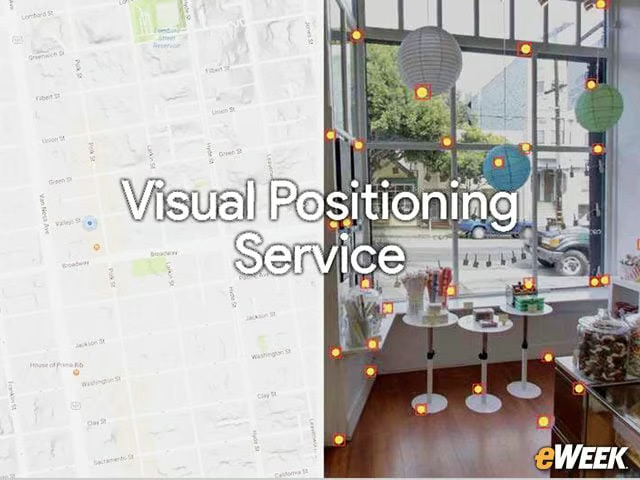
At I/O, Google announced it is investing heavily in visual positioning system, a service that’s similar to GPS but better, the company said. Google is combining Tango, its visual-recognition platform, with 3D technology to create VPS, which will be able to recognize objects around a person and determine their location within a few centimeters.
Google Photos Gain New Facial Recognition Features
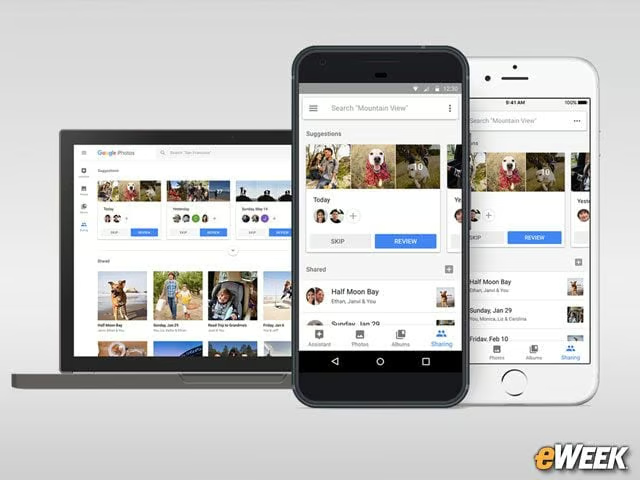
Google’s Photos app, which boasts 500 million users, received some big updates. The app now has enhanced facial recognition that automatically identifies a person in the picture and can send photos to them. Also new is Shared Libraries, which intelligently shares content between users. And new AI features can remove objects from pictures.
Android in Use on 2 Billion Devices
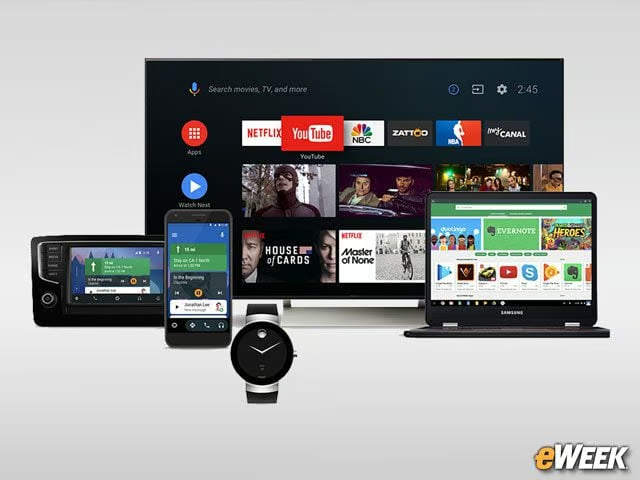
At I/O, Google announced Android is now running on more than 2 billion devices worldwide. That number includes only those devices that are currently in use, Google noted, so total Android devices worldwide is actually higher.
Google in Quest of 1 Billion More Android Users
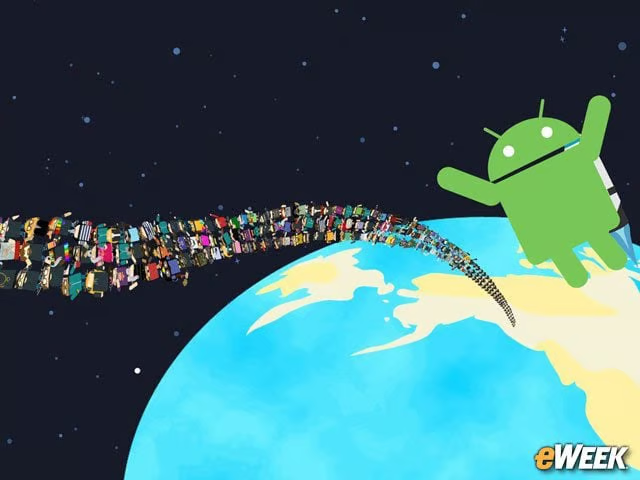
Google believes it’s on pace to reach 3 billion active devices in the coming years and it intends bring a billion more people into the Android smartphone market. It will do that through Android Go, an initiative to make Android work well on devices with 1GB or less of memory. Android Go will use optimized Google apps and support similarly optimized third-party apps in the Google Play store. Google hopes to release Android Go in 2018.