






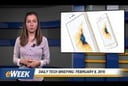


Today’s topics include a new broken iPhone trade-in policy introduced by Apple, the Bing mobile app now includes a price comparison tool, MIT researchers revealed they could be bringing artificial intelligence to smartphones and Internet of things devices, and Google will start testing autonomous vehicles in Washington.
Apple customers can now trade in damaged iPhones toward the purchase of new iPhones under a program that the company started last week. This replaces Apple’s long-standing policy of not accepting damaged iPhones on trade.
According to a Feb. 4 report by 9to5mac.com, Apple will also begin selling aftermarket screen protectors for iPhones in Apple Stores and will install them for customers in hopes that smartphone damage can be prevented in many cases by the protectors.
The Bing apps for iOS and Android from Microsoft can now help users save some cash. According to a company announcement released on Feb. 4, the update includes a new barcode scanner that lets users compare product prices from online catalogs of major retailers.
Users can activate the barcode reader by long-pressing the search icon and training their phones’ camera lenses on a product’s barcode.
Researchers from the Massachusetts Institute of Technology believe they have found a way to bring deep-learning capabilities to smartphones.
At the International Solid State Circuits Conference last week, the MIT researchers introduced a 168-core chip that they said will enable smartphones and other mobile and embedded devices to run artificial intelligence algorithms locally. This will allow much of the work of collecting and processing data to be done on the device itself.
Google’s fleet of modified Lexus SUVs equipped with autonomous vehicle technologies could soon become a familiar sight in Kirkland, Wash.
The company has been given the green light to test its self-driving vehicles in the state—which has now become the third in the country to do so. In addition to Washington, Google has received permission to test its self-driving vehicles in California and Texas.
According to Google, Kirkland offers an ideal location for the company to test its autonomous vehicle technology in rainy and wet weather conditions.