







Verizon is the latest U.S. cellular phone carrier to reject the idea of directly selling Huawei smartphones to its customers through its stores and website, due to concerns about security.
Huawei, the biggest telecommunications equipment manufacturer in China, has been seeking to dramatically increase its sales in the United States by selling them directly through carriers, which would have made it easier for consumers and business users to get them and would have given the company a direct pipeline for sales.
The proposal has apparently been squashed due to U.S. government concerns about the security of Huawei’s handsets as the relationship between China and the United States continues along a chilly path.
A Verizon spokesman declined to comment when contacted by eWEEK on whether such plans were being considered and whether they had been dropped.
A Huawei spokesman also declined to comment on the matter.
Similar reported talks between Huawei and AT&T reportedly also fell through earlier in January when AT&T also ended those purported discussions due to security concerns. AT&T never confirmed that such a deal was under consideration and declined to comment on the matter at the time when asked by eWEEK.
The original rumors about an AT&T sales channel to U.S. consumers in 2018 began with comments in December from a Huawei executive who promised additional details at the 2018 Consumer Electronics Show. Richard Yu, the president of Huawei Technologies’ consumer business, had said his company was pursuing such deals to directly sell smartphones in the United States.
In the recent past, Huawei has only sold its handsets in the U.S. through its own website, Amazon.com and other online retailers, giving its phones less market exposure and making it impossible for buyers to examine the devices before making a purchase.
That placed Huawei’s smartphones at a considerable disadvantage compared with Apple, Samsung and other phone makers whose products are readily available from mobile carriers’ stores.
For many consumers, the opportunity to buy their smartphones directly from their mobile carriers makes their purchases easier because the handsets can be set up with a SIM card, data transfer services and related application services by a store employee without user intervention. It also makes it easier to switch carriers as well by taking their old phone to a store for a replacement.
Huawei is the world’s third-largest producer of smartphones, behind Samsung and Apple.
Had the Verizon-Huawei merchandising proposal come to fruition, it could have helped Huawei increase its market share in the U.S.
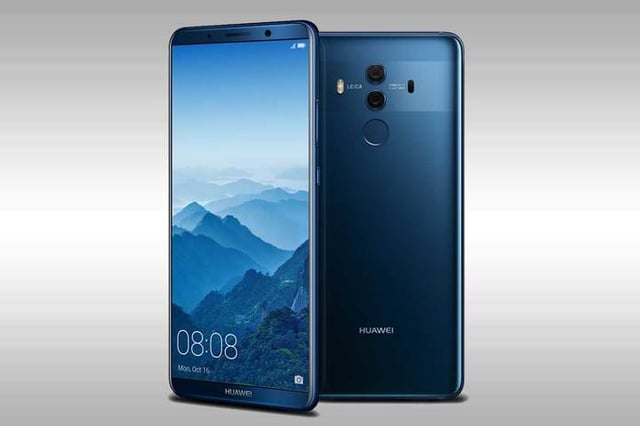
Huawei continues, however, to work to increase its smartphone sales in the U.S. market. Earlier in January, the company announced that preorders for its $799 unlocked flagship handset, the Mate 10 Pro, will begin on Feb. 4. Sales of the phone, which was launched in October 2017 in other parts of the world, will begin in U.S. stores on Feb. 18.
The handsets will be offered for sale on Huawei.com and through major electronics retailers including Best Buy, Amazon, Microsoft, Newegg and B&H. The Mate 10 Pro is built to operate on GSM networks in the U.S. including AT&T, T-Mobile, Cricket, MetroPCS, Simple Mobile and Tracfone.