








- Running Enterprises on Mobile Devices: Key Use Cases, Best Practices
- Use Case: GSA Public Building Service
- Use Case: State of Ohio Office of Budget and Management
- Use Case: Bank of Tennessee
- Use Case: Crawford & Company Insurance
- Use Case: Energy Alloys
- Use Case: Punch Taverns
- Enterprise Mobility Best Practice No. 1: Write Once, Deploy Everywhere
- Enterprise Mobility Best Practice No. 2: BYOD Shouldn’t Be an Issue
- Enterprise Mobility Best Practice No. 3: Real Business Requires Real Data
Running Enterprises on Mobile Devices: Key Use Cases, Best Practices
by Chris Preimesberger
Use Case: GSA Public Building Service
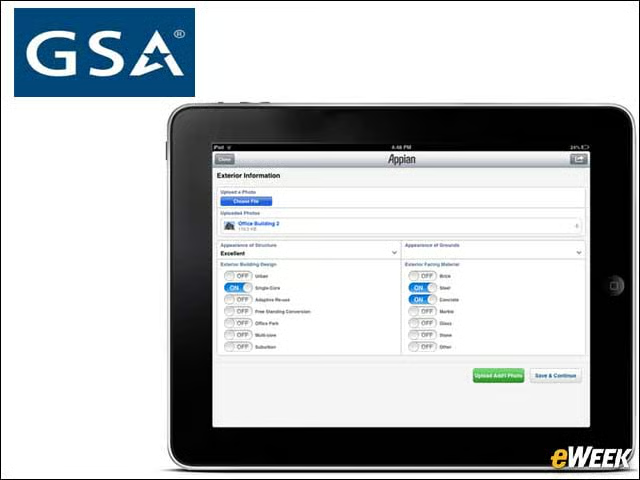
The landlord for the civilian federal government uses the GSA Real Estate Exchange (G-REX) application to accelerate property-leasing decisions in the field and responses to federal policy changes in the back office.
Use Case: State of Ohio Office of Budget and Management
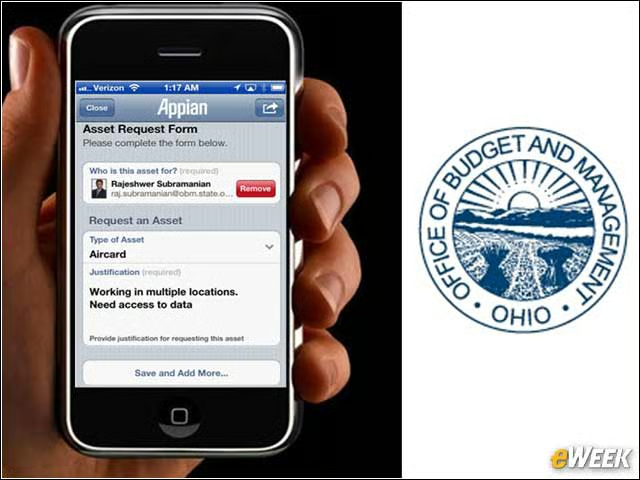
This busy state office has created a centralized platform for application creation with a focus on mobility. Deployed mobile apps include agencywide Service Desk, Disaster Recovery, Inventory Management and Project Governance.
Use Case: Bank of Tennessee

The bank uses the speed and increased customer engagement offered by mobile devices as a competitive differentiator in its mortgage application process. Through a simple social interface, all parties involved can see the status of an application and can quickly collaborate to move it to completion. The app includes features such as a loan rate calculator and multimedia uploads for completion of home inspections.
Use Case: Crawford & Company Insurance
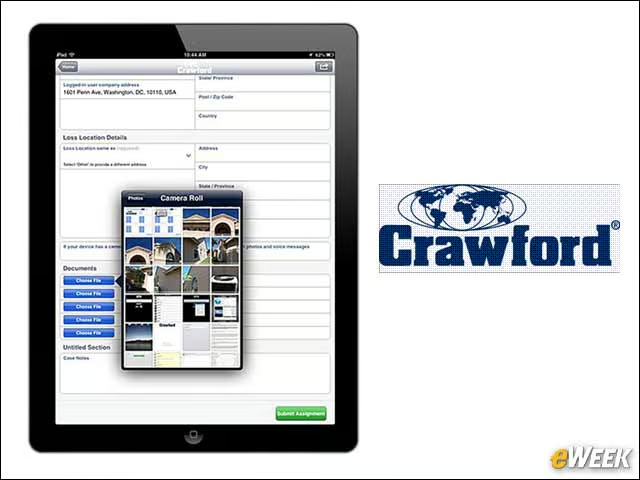
Crawford & Company deploys its insurance claim adjuster teams to major catastrophes such as floods and earthquakes with mobile devices that use geo-location, electronic forms and multimedia uploads to accelerate claim submissions in devastated regions. Other national insurance providers, such as vehicle insurance providers Progressive and Geico, also have iPad apps.
Use Case: Energy Alloys
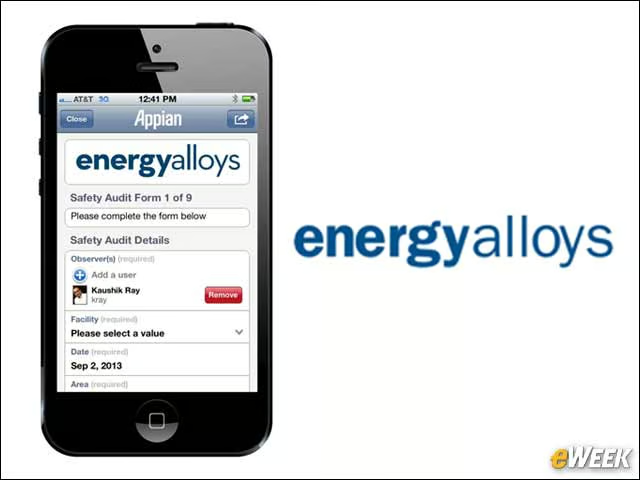
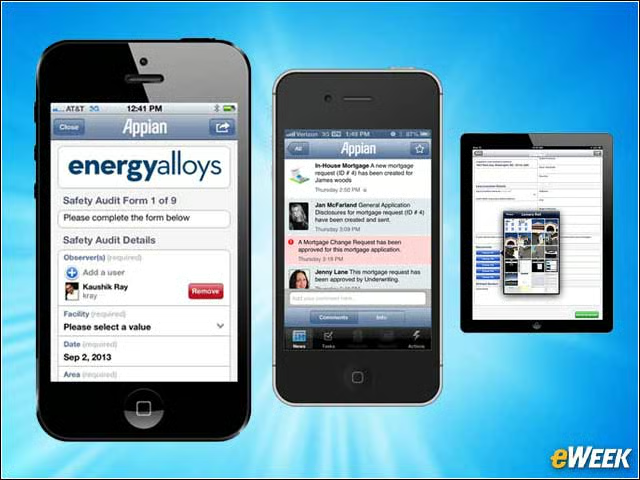
Energy Alloys, a leading provider of metals, services and solutions to oil and gas manufacturers, uses mobile devices to ensure the safety of its manufacturing facilities. The company’s Safety Audit app allows site managers and executives to initiate and complete safety inspections on the shop floor, instead of being tied to an office desktop. When the safety inspection is completed, the app produces complete audit documentation that can be reviewed on the mobile device and submitted with a single click. System participants also receive an email with the documentation enclosed.
Use Case: Punch Taverns
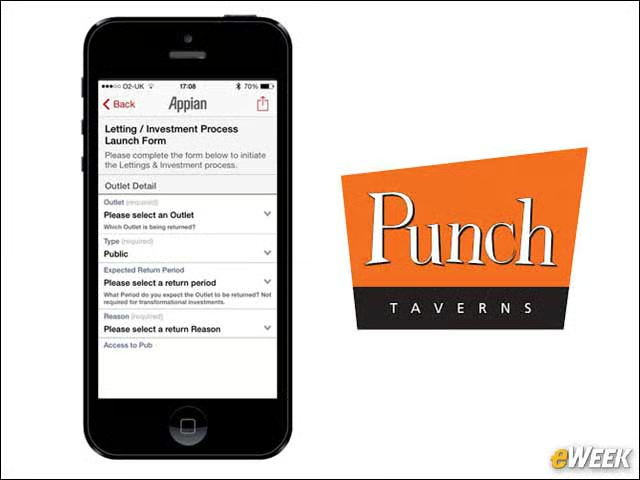
With more than 4,000 pubs under its management, Punch Taverns is one of the UK’s leading leased-pub companies. Punch uses mobile apps to accelerate its processes for investing in new pub properties and for creating close relationships with its pub lessee, Partners. Because half of its workforce is field-based, Punch needs data, collaborations and process execution all mobile-enabled.
Enterprise Mobility Best Practice No. 1: Write Once, Deploy Everywhere
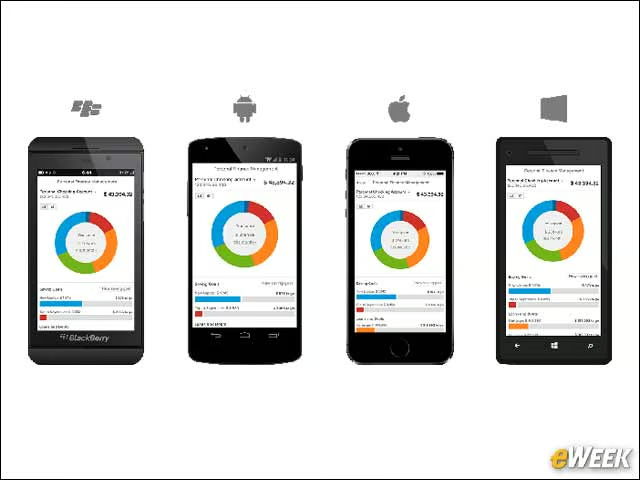
Broad enterprise mobility cannot be achieved through traditional development. Application-by-application coding and maintenance of mobile apps across all platforms and devices is just too slow and costly. IT teams need to look at new breeds of application development platforms that enable an application to be written once and will automatically be rendered on the desktop and as native mobile apps simultaneously.
Enterprise Mobility Best Practice No. 2: BYOD Shouldn’t Be an Issue

Bringing your own device to work, a practice known as BYOD, should never be a problem. In fact, it should be encouraged, as mobile access to data and processes increases productivity and collaboration. An organization’s enterprise mobility strategy should take advantage of the BYOD phenomenon—not discourage it—through a native apps approach that is platform- and device-agnostic. This will prevent mobile platform “lock-in.”
Enterprise Mobility Best Practice No. 3: Real Business Requires Real Data

Enterprise mobility is not a toy. It is a powerful tool for maximizing how quickly and effectively real work gets done. But to do real work, employees need access to real data. Sufficient safeguards for mobile data security exist—such as secure network communication, local data storage, authentication and remote disablement. Organizations must align data security policies to give employees access to critical business records so they can navigate and act on enterprise data while on the go.