








Bubbling on the Top 100
In 2011, IBM celebrated its Centennial, and the Blue Gene supercomputer is one of the company’s 100 top achievements.
Blue Gene/Q
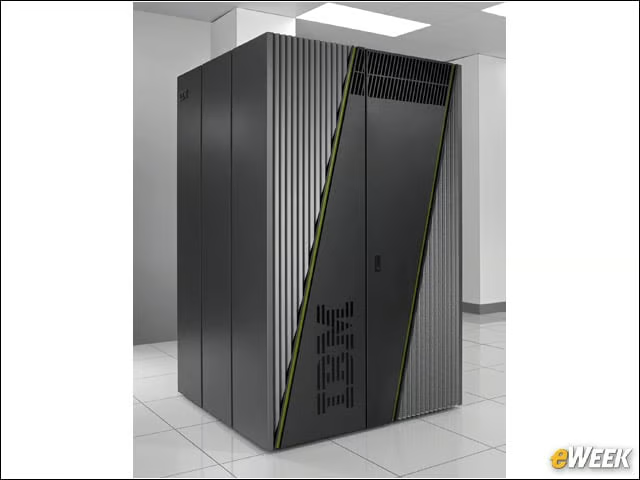
Coming in 2012, Blue Gene/Q will be the latest in IBM’s seminal Blue Gene supercomputing line, which was introduced in 2004. Part of a collaboration between Argonne National Laboratory, IBM and Lawrence Livermore Lab—and the result of a $100 million development effort—Blue Gene was a radical departure from the supercomputers of its time, consuming only a fraction of the energy and floor space.
Mira
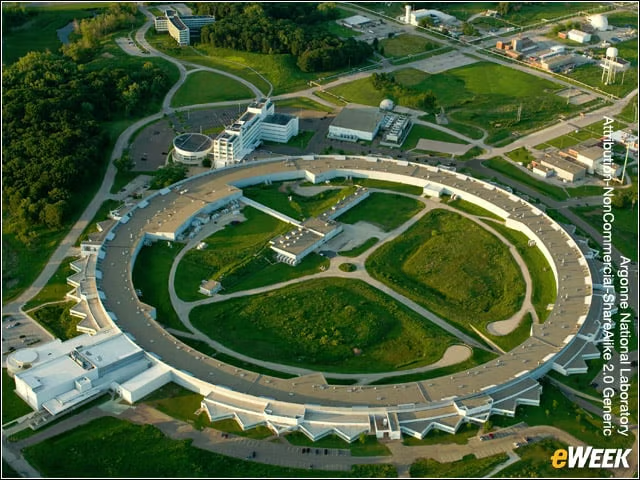
In February, IBM announced the 10-petaflop Blue Gene/Q supercomputer Mira, in collaboration with the Argonne National Laboratory. Mira will enable advances in designing ultra-efficient electric car batteries, understanding global climate change, exploring the evolution of our universe and more.
Sequoia

Blue Gene/Q will also power a 20-petaflop supercomputer at Lawrence Livermore National Lab to be called “Sequoia.” ??ÃWith all that computing power, meteorologists could predict local weather down to the 100-meter range. For an event like a tornado, that could mean being able to predict the path that the twister takes through a town, allowing for targeted evacuations that save lives.
The Green500

A prototype of the Blue Gene/Q supercomputer is No. 1 on the Green500 list of the world’s most efficient supercomputers. For every $1 spent on electricity with the No. 2 system on the Green500 list, clients would spend 56 cents on a petascale system based on Blue Gene/Q, which is 77 percent more energy-efficient than the next system on the list.
Blue Gene Chips
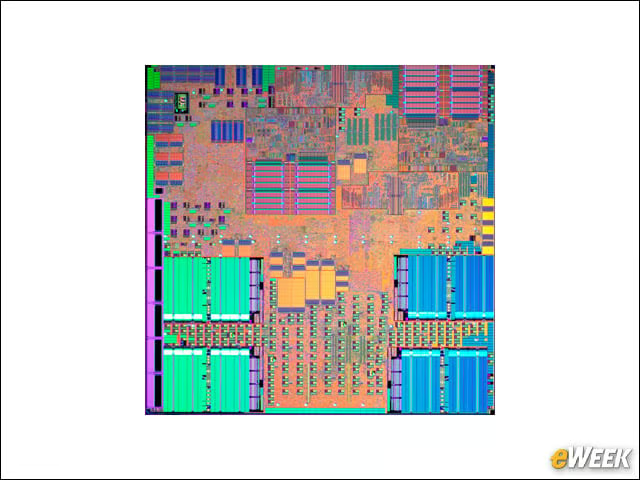
Columbia University and the University of Edinburgh contributed to Blue Gene/Q’s processor chip design. Both institutions plan to use the system to advance quantum chromodynamics, which is a part of the study of particle physics. Pictured here is the Blue Gene/L chip.
Blue Gene/L
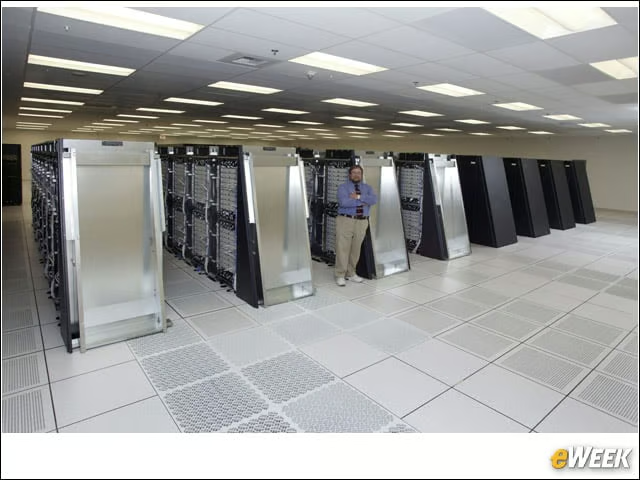
On Sept. 29, 2004, the first Blue Gene—the Blue Gene/L—surpassed NEC’s Earth Simulator as the fastest computer in the world. It was also the most efficient, consuming only a fraction of the energy and floor space of any other supercomputer.
Blue Gene/P
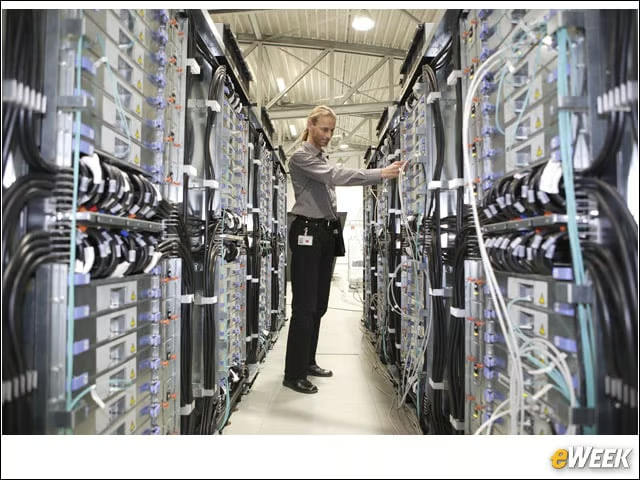
When Blue Gene/P, the family’s second generation, was unveiled in 2007, it nearly tripled the performance of Blue Gene/L, immediately becoming the most energy-efficient and space-saving computing package built at that time.
Blue Gene Achievements

Blue Gene systems have helped map the human genome, investigated medical therapies, simulated radioactive decay, replicated brain power, flown airplanes, pinpointed tumors, predicted climate trends and identified fossil fuels.
National Medal of Technology
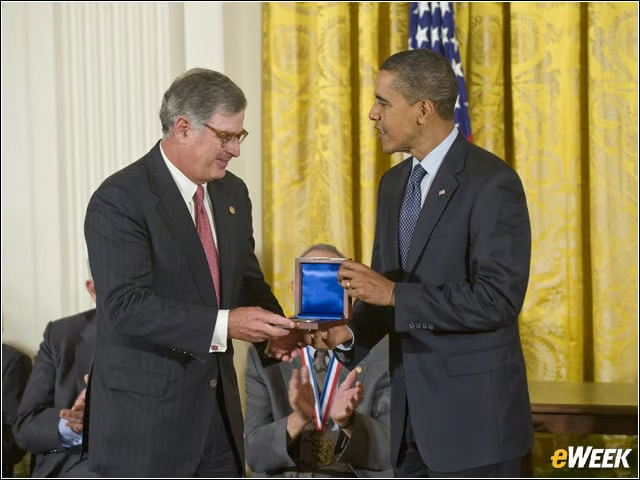
In September 2009, President Barack Obama recognized IBM and the Blue Gene family of supercomputers with the National Medal of Technology and Innovation, the country’s most prestigious award given to leading innovators for technological achievement.