







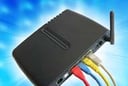
Cisco Systems is offering an 802.11ac wireless access point that can be deployed and managed through the cloud, enabling organizations to address the growing number of mobile devices connecting to the network in a faster, more secure and more manageable environment.
Cisco officials Aug. 13 unveiled the Meraki MR34, the networking company’s latest offering to support the new 802.11ac wireless standard, which offers three times the speed of the current 802.11n WiFi standard and twice the bandwidth.
“You can fit more devices on the air,” Sanjit Biswas, vice president and general manager of Cisco’s Cloud Networking Group, told eWEEK.
The 802.11ac standard is gaining momentum as market transitions such as cloud computing and high-bandwidth applications like video, IT mobility and bring-your-own-device (BYOD) are fueling demand for greater speed and bandwidth from wireless networks. In addition, broadband carriers continue to look to offload traffic onto WiFi networks where possible to reduce the skyrocketing demand on their networks.
The 802.11ac standard—also called 5G WiFi—will bring significant improvements over 802.11n. Along with the faster speeds, it also will allow for greater network capacity, which will mean more devices can be connected to the network without impinging too much on performance. In addition, 802.11ac will work in two bands—the 2.4GHz band that WiFi now works in, and the 5GHz band, where users can get a higher data rate.
The IEEE is still months away from ratifying the 802.11ac standard, but vendors already are running out of products that support the standard. In addition, the WiFi Alliance in June announced it was beginning to certify devices—including routers, adapters, smartphones, notebooks, tablets and other computing systems—based on the draft standard.
Cisco is aggressively pursuing the 802.11ac market. Most recently, company officials in April release the first of the company’s 802.11ac modules for its Aironet 3600 Series access point, enabling businesss to migrate to the new WiFi standard without having to invest in an entirely new appliance.
Now Cisco is introducing the Meraki MR34, which not only comes with 802.11ac support, but also with new management and security capabilities, according to Biswas, who came to Cisco last year after the vendor bought Meraki, the company he founded that made cloud-based wireless network management tools.
The Meraki acquisition gave Cisco another avenue into the midmarket space, which the company sees as a strong growth area, he said. Biswas said the midmarket represents about a $5 billion opportunity for Cisco.
The Meraki MR34 will help businesses and service providers address such issues as the growing number of devices and users accessing the wireless networks and the increased radio-frequency (RF) noise and interference, he said. The MR34 offers data rates of up to 1.75 G bps, double that of existing 802.11n access points. It will enable networks to support more mobile devices and high-bandwidth applications, and can prioritize business-critical applications—such as voice and video conferencing—over such traffic as peer-to-peer file sharing.
The access point also includes a third radio to both offer greater security and deal with RF interference, Biswas said. The MR34 scans the surrounding RF environment to protect against wireless attacks and interference, making it ideal for such industries as retail, health care and financial services.
In addition, the MR34 offers a range of cloud-based features, including multi-site management and location analytics, and new features can be delivered via the cloud. The access point also can be automatically configured through the cloud, features zero-touch provisioning, and can support a mix of 802.11ac and a/b/g/n networks.
“We want to make sure, from an IT perspective, that they can plug it in and it works,” Biswas said.
It also can be managed through Cisco’s Meraki Managed Services Dashboard, software that offers a range of managed services. Through the dashboard, service providers and third-party partners can manage a number of end-user networks from a single, central point. In addition, service providers can apply their own logo to the dashboard.
The Meraki MR34 will be available later this summer, starting at $1,399.