







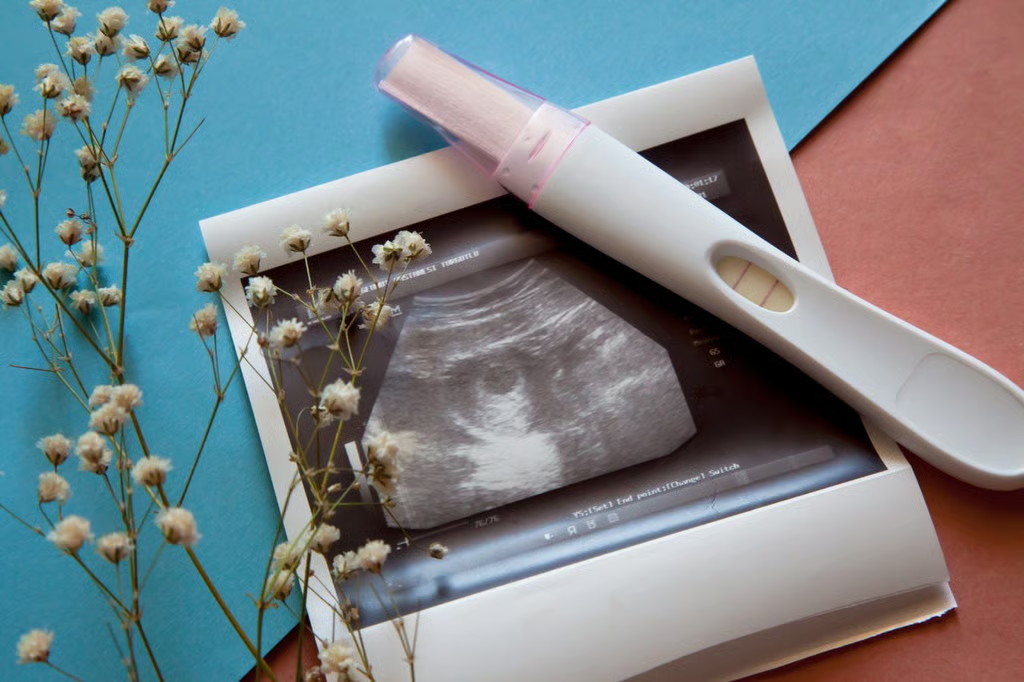
A couple is expecting their first child after nearly 19 years of failed fertility treatments, thanks to AI.
Doctors at Columbia University Fertility Center have achieved the first known AI-assisted pregnancy using a system designed to detect what traditional methods could not detect. The breakthrough offers new hope for couples facing severe male infertility, in what researchers are calling a “game-changer” for reproductive medicine.
Fifteen IVF rounds and nothing left to try
Before arriving at Columbia, the couple, who requested anonymity, had spent nearly two decades in and out of fertility clinics. The husband had been diagnosed with azoospermia, meaning no sperm were detectable in his semen samples.
Azoospermia affects around 10% of men with infertility and often goes unnoticed until they undergo testing. Despite normal-looking semen, microscopic analysis reveals no sperm, only debris; the diagnosis is unexpected and difficult to accept. Sperm are so rare and small in these cases that even experienced embryologists often find none, despite hours of searching.
The couple went through 15 IVF cycles across multiple countries, all unsuccessful. Surgical attempts and manual searches by specialists failed to find viable sperm.
By early 2025, their chances had narrowed to zero until they were referred to Dr. Zev Williams, who offered a final, untested option powered by artificial intelligence.
Doctors found no sperm — until AI looked a little closer
The final attempt used STAR, short for Sperm Tracking and Recovery, an AI system developed at Columbia by Dr. Williams and his team to detect sperm in men with azoospermia. Built over five years, STAR combines a custom microscope chip, high-speed imaging, and an AI model trained to recognize sperm cells.
When a sample is placed on the chip, STAR captures over eight million images in under an hour. The AI tool scans each frame, flags potential cells, and isolates them in a droplet of fluid for recovery.
In this case, embryologists had spent two days examining the husband’s sample without finding any sperm; STAR found 44 in less than 60 minutes. This allowed the team to fertilize the wife’s eggs using the recovered sperm, leading to the first AI-assisted pregnancy of its kind.
The STAR method is currently available only at the Columbia University Fertility Center, though the team hopes this breakthrough will soon expand access and transform male infertility treatment worldwide.
From disbelief to hope
Now four months pregnant, the wife still struggles to believe the outcome. “It took me two days to believe I was actually pregnant,” she said. “I still don’t believe it until I see the scans.”
Dr. Aimee Eyvazzadeh, a reproductive endocrinologist and host of The Egg Whisperer Show, called the STAR system “a game-changer.” According to CNN, she said AI is helping clinicians detect what isn’t visible to the human eye. The technology, she explained, doesn’t generate sperm, but makes it possible to find the few viable cells that already exist but are nearly impossible to see. Its strength, she added, lies in supporting, not replacing, clinical expertise, which she sees as a defining feature of the future of fertility care.
AI may not create life, but in this case, it did help reveal there was hope for a pregnancy.
Curious how AI finds hidden patterns — and hidden sperm? Start with this plain-language guide to what artificial intelligence really is and why it matters.