








By the time Vivian Ruvalcaba realized what was happening, her mother, Abigail, had already lost almost everything. Abigail had sent more than $81,000 in cash, gift cards, and bitcoin, and even sold her Harbor City condo for $350,000, believing she was helping the man she thought she loved.
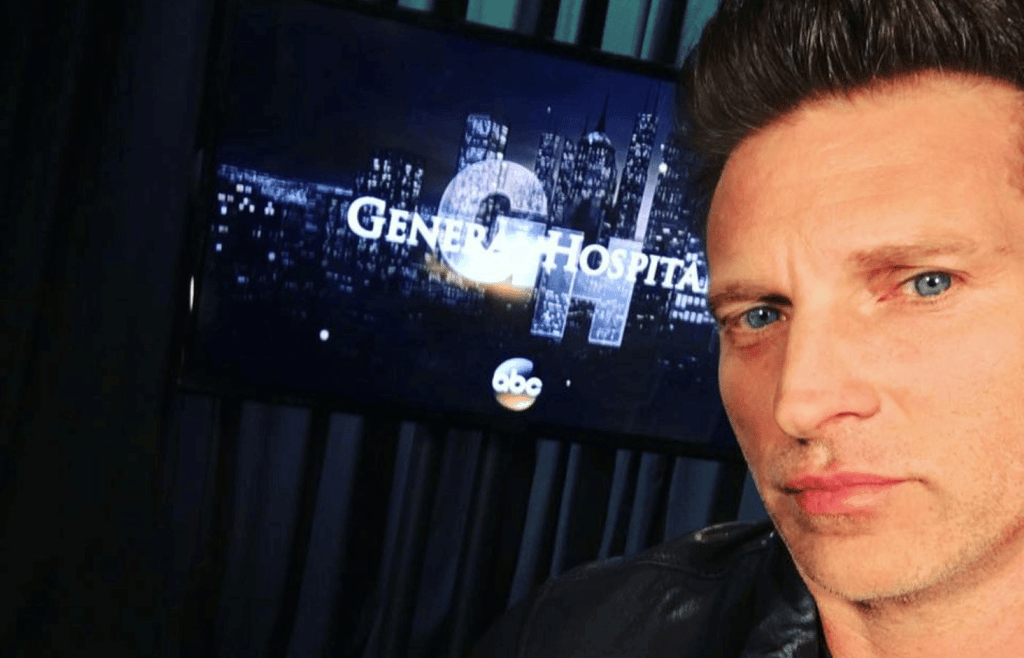
That “man” was “General Hospital” star Steve Burton. At least, that’s who she believed she was talking to. In reality, it was a scammer, using convincing AI technology to fool her completely.
“She’s ashamed,” Vivian told ABC7 in Los Angeles. “To put that stress on me, on herself, on my dad, the entire family — I know it weighs heavy on her.”
How the scam worked
The scheme started last October when Abigail received a video on Facebook Messenger. It looked and sounded like Burton, who has played the character Jason Morgan since 1991. In the clip, the soap star’s AI double told her: “Hello, Abigail. I love you so much, darling. I had to make this video to make you happy, my love.”
Experts who watched the footage agreed it was likely created with AI software that convincingly cloned Burton’s likeness and voice. Abigail, however, didn’t doubt the video for one second. She believed the actor was in love with her.
The scammer quickly moved the conversation to WhatsApp, writing lines like, “Steve Burton and Abigail Burton sounds like a dream come true.” He claimed he’d lost property in the L.A. fires and promised they’d share a beach house. When he asked for money, Abigail gave it willingly… over and over again.
‘In her head, there was no scammer’
Vivian said her mother has long struggled with bipolar disorder, making her particularly vulnerable to the manipulation.
“In her head, there was no scammer,” she told ABC7. “She was talking to Steve Burton the entire time.”
The scam might have gone even further if Vivian hadn’t stepped in. At one point, Abigail was preparing to send $70,000 from the proceeds of her condo sale.
“I’m sickened by it because it went this far,” Vivian said. “Why didn’t I know this? Why didn’t I see what was happening? What did I miss?”
Soap opera star responds
Seeing the video that duped Abigail, even Burton admitted, “Sounds like my voice for sure, 100%.” He called scams like these an epidemic.
Now, Abigail and Vivian are suing to undo the condo sale, arguing Abigail lacked the mental capacity to sign such a contract.
For the Ruvalcabas, though, the case is about more than money. They hope sharing their story will serve as a warning. AI has undoubtedly reached a point where scams can feel all too real.
The bigger picture for AI and security
Cases like Abigail’s are warnings about the broader risks of unchecked AI.
As technology continues to become “smarter,” scams are becoming more prevalent, harder to detect, and easier to create. For IT and security professionals, that means the challenge is not just protecting systems and data, but also protecting people from increasingly convincing social engineering attempts.
Awareness, education, and stronger verification measures will be more vital than ever. Because if a fake video can fool someone into giving away their life savings, the implications for businesses, governments, and society as a whole are even more alarming.
Abigail’s case isn’t unique. A 53-year-old French woman was recently scammed out of $800,000 through a similar AI-powered hoax using deepfakes of Brad Pitt.