








Washington’s next front in the AI technology conflict may be a component small enough to fit in one hand.
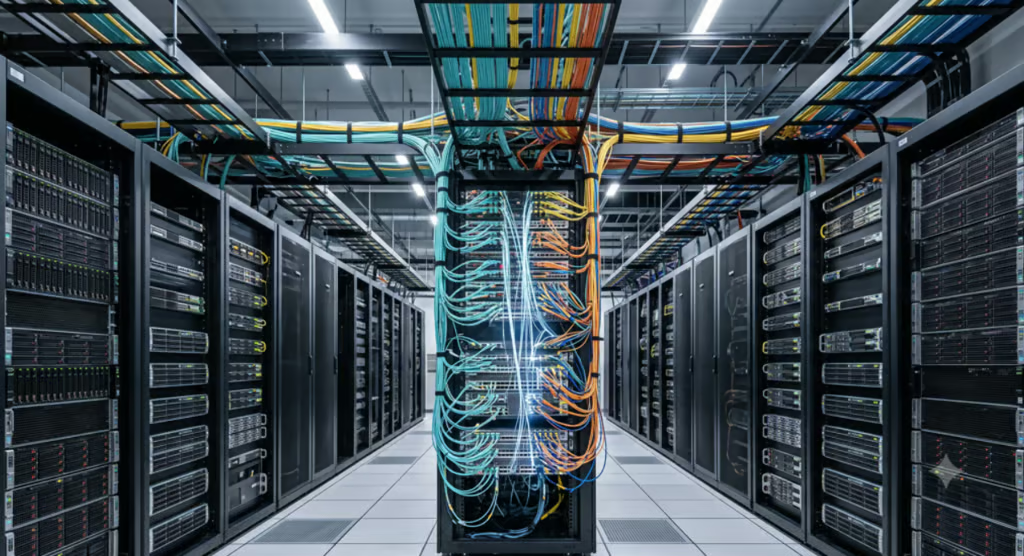
The Federal Communications Commission (FCC) is reportedly drafting a measure that would bar imports of new models of Chinese optical transceivers, according to Reuters. The components convert electrical and optical signals, helping move enormous volumes of data across the fiber networks connecting servers inside AI data centers.
Officials reportedly fear compromised components could enable data theft, malware installation, or service disruption. The proposal has not been published, however, and Reuters reported that the FCC could still revise or abandon it.
Chinese supplier could be among the biggest targets
A ban would likely have its biggest impact on Zhongji Innolight, one of the world's largest suppliers of optical transceivers. Reuters reported that the company holds about 27% of the global data center transceiver market, citing Counterpoint Research. The company was also added to the Pentagon's list of alleged Chinese military-backed companies in June.
The Chinese embassy in Washington criticized the reported proposal, saying the US should "heed the objective and rational voices of the business communities in both countries" and "stop smearing Chinese companies and threatening them with sanctions," per Reuters report.
The embassy added: "China will take all necessary measures in response to any action that causes material harm to its interests."
Security concerns drive the proposal
The proposed transceiver ban reflects a deliberate pivot by the administration. After the Commerce Department shelved a suite of broad import restrictions following trade talks late last year, the FCC has aggressively stepped in using its Covered List authority.
This strategy mirrors recent agency actions that restricted imports of foreign-made drones in December, Wi-Fi routers in March, and power inverters and heavy robotics last month. Administration hawks frequently point to Huawei as a cautionary tale—where Chinese equipment became so deeply entrenched in US telecom networks that tearing it out proved extraordinarily slow, complex, and costly.
Reuters reported that administration officials have pointed to Huawei as a cautionary example, arguing that removing the Chinese telecom giant's equipment from US networks proved slow, costly, and incomplete because it had already become widespread.
Read next: Optical transceivers are only one potential constraint on America’s AI buildout. AI Data Center Power Demand Is Testing the Grid examines how surging electricity needs are creating another infrastructure bottleneck.