






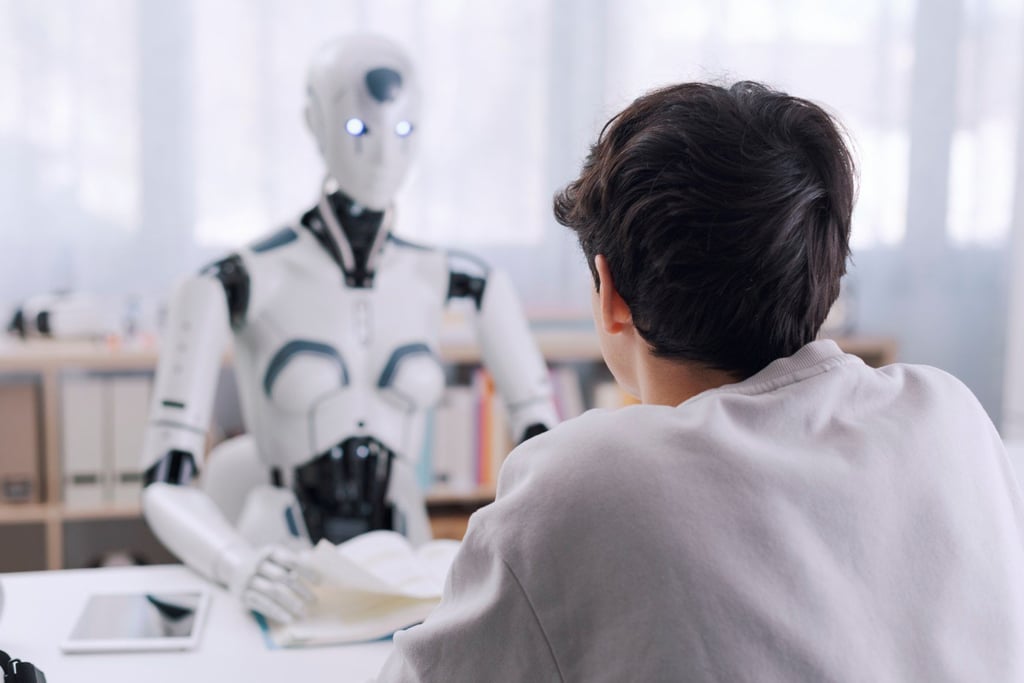


Job seekers interviewed by AI agents were about 12% more likely to receive job offers, and those who were hired were 17% more likely to remain on the job for at least the first month, according to an extensive study from the University of Chicago and Erasmus University Rotterdam.
One of the more striking results was that nearly 78% of the 14,000 applicants opted for an AI-led interview when given the choice.
The AI disclosed itself at the start of each call, and all hiring decisions were ultimately made by humans. The jobs were entry-level customer service positions in the Philippines. In addition to nailing the interview, candidates also had to perform well on a standardized test.
AI positive
Feedback from the participants revealed that 70% found the call with an AI agent to be a positive experience, something that took Brian Jabarian aback; he is the lead investigator of the study and an economist at the University of Chicago. Jabarian told Bloomberg he was surprised that the agent was so adept at collecting data through social interaction, which is more typically a strength of humans.
Researchers also noted that nearly four in five applicants who had the option chose to schedule their interviews with AI rather than a human recruiter, citing convenience as a possible factor.
AI negative
Roughly 7% of AI interviews were disrupted by technical glitches, according to the findings. Applicants rated the AI voice agent as “significantly less natural,’’ according to Bloomberg.
While the AI system allowed job seekers to book interviews faster, recruiters needed about twice as long to review the AI-generated interview notes compared to human-led sessions, raising questions about efficiency and return on investment.
Looking ahead
“This research offers a rare look at how AI performs in a complex and socially nuanced human task,” said Luca Henkel, an assistant professor at the Erasmus School of Economics, who co-authored the study with Jabarian. “The findings suggest that, when thoughtfully designed, AI can be a powerful tool in the hiring process without compromising the applicant experience.”
Jabarian stated, “What we found from data in our large-scale study was that AI can match human recruiters in conducting job interviews — a complex but key task in hiring — while preserving candidate satisfaction, maintaining smooth operations, and improving hiring efficiency and early retention.”
LinkedIn is weaving artificial intelligence into recruiting, with new tools that may change how candidates and companies find each other. See how the platform’s vision could reshape the future of hiring.