







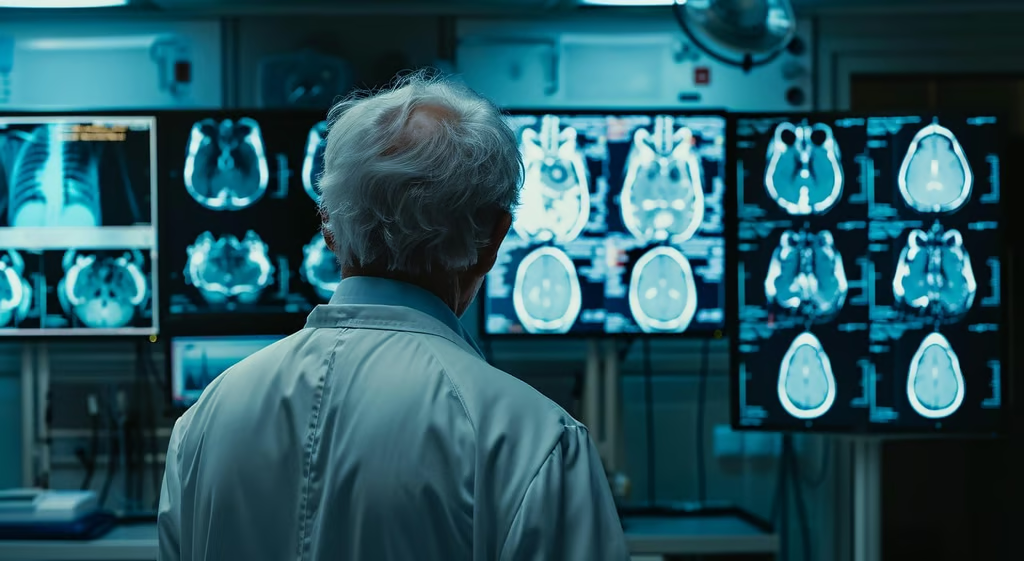
In today’s hospitals and clinics, AI is rapidly becoming a powerful diagnostic partner for radiologists, transforming how medical images are read and understood. It’s turning medical scans into faster, more accurate, and sharper diagnoses.
From spotting tiny tumors on mammograms to detecting brain bleeds in emergency CT scans, AI models can sift through thousands of images with astonishing speed. These tools act like a second set of expert eyes, trained on massive datasets to recognize patterns and subtle signals that might escape even experienced professionals.
What’s the real game-changer? AI can triage images by severity. That means patients with life-threatening conditions jump to the front of the line instead of waiting hours behind routine cases. It’s not just about speed — it’s about saving lives when every second counts.
More precision, less guesswork
AI is already making waves in critical areas like cancer detection and stroke analysis. For example, in mammography, deep learning tools can spot early signs of breast cancer that might be too subtle for even specialists. In stroke cases, AI can rapidly interpret brain scans to help doctors decide — within minutes — whether to proceed with life-saving interventions.
According to a Washington Post article, more than 75% of the AI software approved by the FDA for medical use is designed to support radiology practice, said Curtis Langlotz, a radiology professor at Stanford University and past president of the Radiological Society of North America’s board of directors.
What this means for patients
For patients, the rise of AI in radiology might not replace their doctors, though AI has the potential to make them better at what they do. By improving accuracy and slashing turnaround times, AI gives doctors more confidence in their diagnoses and reduces the need for repeat scans or unnecessary tests.
AI can also help bridge the gap in care. In rural areas or hospitals with fewer radiologists, AI can step in to support doctors who don’t specialize in imaging. This means faster, more accurate care for patients who might otherwise face long waits or misdiagnoses. AI is sharpening the skills of radiologists, enabling them to unravel medical mysteries with greater clarity and speed.
Looking ahead: Trusting the tools we build
As AI becomes more embedded in radiology workflows, building trust is critical. Patients may never see the algorithms assisting their doctors, but their outcomes increasingly rely on them. That’s why transparency, ethical oversight, and data privacy must evolve alongside the technology. We trust doctors because of their training and accountability; AI should be held to similar standards.
And while AI adds speed and precision, it lacks human context and empathy. Radiologists bring critical judgment that machines can’t replicate. The future of radiology belongs to those who can combine both — keeping care human, even as technology becomes more powerful.